
The best mic windscreen or pop filter depends on your microphone and recording environment. The Mudder five-pack is best for standard handheld microphones, while the LEFXMOPHY three-pack is designed for several Shure-style handheld models. Blue Yeti owners can choose the YOUSHARES foam-and-furry set, and the Eboot covers suit small lapel or headset mics. For a studio-style barrier against plosives, the NEEWER dual-layer filter attaches separately to a microphone stand.
| Product | Best For | Style |
|---|---|---|
| Mudder 5 Pack | Standard handheld microphones | Foam cover |
| LEFXMOPHY SM58 Windscreen | Listed Shure microphone models | Replacement foam cover |
| YOUSHARES 2PCS Blue Yeti Filter | Blue Yeti and Yeti Pro microphones | Foam and furry covers |
| Eboot Mini Windscreens | Small lapel and headset microphones | Foam cover |
| NEEWER Professional Pop Filter | Studio vocals, streaming, and acting | Dual-layer screen |
Mudder 5 Pack Foam Mic Cover
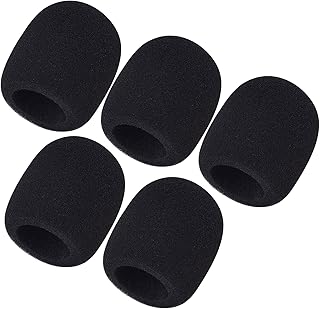
The Mudder set includes five ball-shaped foam covers measuring 2.9 by 2.5 inches, with a listed caliber size of 1.4 inches. The soft, thick foam is designed to stretch and shrink for fitting onto a microphone. The product information describes it as suitable for most standard handheld microphones and lists karaoke, conference rooms, interviews, and stage performances as possible uses.
Best for: Buyers who need multiple foam covers for standard handheld mics, such as for a shared event or a collection of microphones. The five-piece quantity and general handheld fit make this a flexible option when an exact model-specific replacement is not required.
Limitation: The manufacturer says it is not for headset microphones. Check the microphone head dimensions before ordering, since “most standard” does not mean every handheld model.
LEFXMOPHY SM58 Replacement Windscreens

This three-pack is a black foam replacement cover listed for Shure SM58, SM48, 565SD, Beta 58A, PG48, PG58, and several other models named in the product details. It is described as having a shape similar to the original windscreen and snapping into place. The foam is intended to help block plosives, breath, and wind noise while protecting the microphone from dust and moisture.
Best for: Owners of one of the specifically listed microphone models who want a simple replacement cover. Compared with a universal handheld cover, this option is more targeted to a stated group of mic shapes and provides three covers in one set.
Limitation: Compatibility is not universal. Confirm the exact microphone model against the seller’s list before choosing it; the product details do not establish fit for every microphone that resembles an SM58.
YOUSHARES Blue Yeti Foam And Furry Covers

YOUSHARES supplies two cover styles: a foam windscreen and a furry cover. The product is designed for Blue Yeti and Yeti Pro condenser microphones. The listed purpose is to reduce wind and other unwanted background noise, while helping protect the microphone from dust and moisture.
Best for: Blue Yeti or Yeti Pro owners who want two types of microphone covering for different settings. The foam and furry options make this set distinct from single-style covers, particularly for a user choosing between a compact foam cover and a furry outer cover.
Limitation: The listed fit is specific to Blue Yeti and Yeti Pro microphones. Do not assume it fits other USB microphones, and note that a cover is not a substitute for room treatment or control of background noise.
Eboot Mini Lapel And Headset Windscreens

The Eboot set contains five black foam covers for small lapel and headset microphones. The listed features describe breathable material and identify wind interference and other noises as issues the covers are intended to help address. Its small-microphone focus makes it a different fit category from ball-shaped handheld windscreens.
Best for: Buyers using a small lavalier-style lapel mic or headset microphone who need foam covers sized for compact microphone capsules. Choose this set over a handheld cover when the microphone is worn on clothing or positioned near the mouth on a headset.
Limitation: The product details do not provide exact dimensions or a list of compatible mic models. Check the capsule size and shape before purchasing, especially if the microphone has an unusual profile.
NEEWER Professional Dual-Layer Pop Filter

The NEEWER filter uses two screens with a gap between them. According to the product details, the first screen blocks air blasts and the space between the layers disperses remaining pressure before it reaches the second screen. Its adjustable steel gooseneck allows the user to position the filter at different angles and distances from the microphone.
Best for: Singers, streamers, and actors recording at a fixed microphone who want a separate screen positioned between their mouth and the mic. It is the clearest choice in this selection for a stand-mounted studio-style pop filter rather than a cover fitted directly over a microphone.
Limitation: This is an external screen with a gooseneck, not a foam windscreen. The provided information does not specify mounting dimensions, so check the attachment requirements for your recording setup before ordering.
Buying Guide: How To Choose A Mic Windscreen Or Pop Filter
Do you need a foam cover or a separate pop filter?
A foam windscreen fits over the microphone itself. It can help reduce wind, breath, and plosive noise while also covering the mic. Foam covers are generally the more direct choice for handheld microphones, small lapel mics, and microphones used while moving. They are also useful when you want a compact accessory that stays on the mic.
A pop filter is a separate screen positioned in front of a microphone. The NEEWER model in this selection uses two layers and an adjustable gooseneck. This format is suited to a stationary recording position where the screen can be placed between the speaker and the microphone. It can help manage sharp air bursts from sounds such as “P” and “B.”
How can you check microphone fit?
Start with the microphone type: handheld, headset, lapel, or desktop USB. Then compare the product’s listed compatibility and measurements with the microphone’s shape and capsule size. A cover described for standard handheld microphones may not fit a headset mic, while a model-specific replacement may not fit a different mic even if the microphones look similar.
When exact dimensions are not listed, prioritize a product that names your microphone model or microphone category. If the fit remains uncertain, consult the microphone’s dimensions and the accessory seller’s compatibility information. A cover that is too tight may be difficult to install, while a loose cover may not remain in position.
Which option works for handheld microphones?
For a general-purpose handheld cover, compare the Mudder five-pack’s stated dimensions with the microphone head. For a compatible model named in the listing, the LEFXMOPHY three-pack is a more targeted replacement choice. Both are foam covers, but their stated fit differs: one is described for most standard handheld microphones, and the other names particular Shure and related models.
For shared microphones or events, consider how many covers are included and whether each microphone needs an individual cover. The Mudder set contains five pieces, and the LEFXMOPHY set contains three. Quantity can matter for a group, but fit should remain the first check.
What should desktop microphone users consider?
Blue Yeti and Yeti Pro users can compare the YOUSHARES set because its listed compatibility specifically names those microphones. It includes both foam and furry cover styles. For a fixed recording position and a screen placed in front of the mic, the NEEWER pop filter offers a different approach. Choose based on whether you need a fitted cover, a separate plosive barrier, or both types of protection in your setup.
A windscreen or pop filter does not remove every source of unwanted sound. It is intended to address airflow and related noise at the microphone. Room noise, microphone placement, and recording technique can still affect the result.
What matters for lapel and headset microphones?
Small microphones need small covers. The Eboot set is described for lapel and headset microphones, unlike the Mudder handheld covers, which are specifically not intended for headset use. Since the Eboot listing does not provide exact dimensions, compare the microphone capsule size with the cover before buying. Do not select a handheld foam ball simply because it is also described as a microphone windscreen.
How many covers do you need?
Choose the quantity based on how many microphones you use and whether you want spares. A multi-pack can be practical for a group, a shared recording space, or replacing several worn covers. For a single desktop microphone, compatibility and cover style may matter more than the number of pieces. Check the listed contents carefully: some sets provide multiple covers of one style, while others offer different styles.
Frequently Asked Questions
Does a mic windscreen reduce plosive sounds?
A foam windscreen can help reduce breath and plosive noise, depending on the microphone and how it is used. The NEEWER pop filter is specifically designed to block and disperse air blasts through two screen layers. Neither accessory guarantees that all plosives will disappear.
Is a pop filter the same as a foam windscreen?
No. A foam windscreen fits over a microphone, while a pop filter is a separate screen positioned in front of it. They serve related purposes but use different designs and may suit different recording setups.
Can I use a handheld mic cover on a headset microphone?
Not necessarily. The Mudder product information says its covers are not for headset microphones. Choose a cover specifically intended for small lapel or headset microphones, and verify the capsule dimensions.
Which product is listed for Blue Yeti microphones?
The YOUSHARES set is listed for Blue Yeti and Yeti Pro condenser microphones. It includes a foam cover and a furry cover. Confirm the microphone model before ordering.
Should I choose a universal cover or a model-specific replacement?
A general handheld cover may be suitable when the mic matches the stated dimensions and category. A model-specific replacement is preferable when your exact microphone appears on the compatibility list. In either case, verify fit rather than relying on appearance alone.