
The best high-end speaker selector depends on whether you prioritize smart control, impedance protection, independent zone volume, or capacity for more speaker pairs. The Audioflow is best suited to buyers seeking Wi-Fi and voice-assistant control. The Monoprice SSVC-4.1 adds zone volume and automatic impedance protection, while the Pyle six-channel model serves setups that need to distribute audio to as many as six speaker pairs. Compare the listed power, wiring, and control details with your amplifier and speakers before choosing.
| Product | Best For | Standout Feature |
|---|---|---|
| Audioflow 4 Way Smart Wi-Fi | App and voice control | Wi-Fi, app, and Alexa control |
| Monoprice SSVC-4.1 | Four zones with volume adjustment | Impedance protection and zone controls |
| Monoprice SS-4 Premium | Simple four-zone switching | Impedance protection and 12–16 AWG wire support |
| Pyle PSLSW6 | Up to six speaker pairs | Independent volume controls |
| Pyle PSLSW4.5 | Compact four-zone setups | Independent zone volume |
Audioflow 4 Way Smart Wi-Fi Speaker Selector
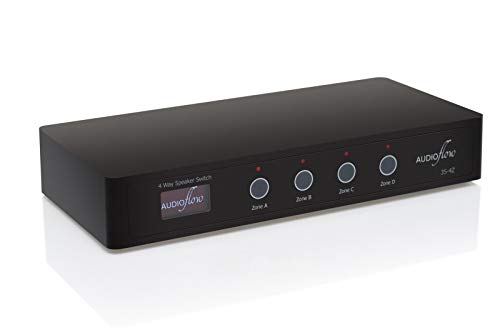
The Audioflow is the most control-focused option in this group. It connects up to four pairs of speakers to a stereo amplifier and lets users switch zones through Wi-Fi using the Audioflow app for iOS or Android. It also supports control through Amazon Alexa, adding hands-free zone selection for a compatible voice-control setup.
Best for: Buyers who want to select speaker zones through an app or Alexa rather than relying only on controls on the selector. It is also a relevant choice for a four-pair system where remote switching is a priority.
Why it was selected: Its app and voice-control features distinguish it from the other listed models, which emphasize manual buttons, volume controls, or impedance protection. Those functions make it the clearest fit for shoppers looking for a more convenient control experience.
Consideration: The supplied product details do not specify power handling, impedance protection, or independent zone volume. Check those requirements with the seller and confirm they suit the amplifier and speakers before purchase.
Monoprice SSVC-4.1 Four-Zone Selector
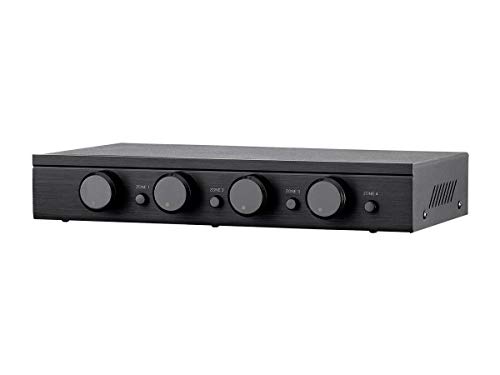
The Monoprice SSVC-4.1 combines individual zone on/off buttons and volume controls with automatic impedance protection. It is designed to connect multiple speaker pairs to one amplifier, with a stated continuous handling capacity of 100 watts per channel and peak capacity of 200 watts per channel.
Best for: Buyers who want to adjust the volume of each of four zones independently and also want impedance protection circuitry. The individual switches let a user select zones separately, while the volume controls allow zone-level adjustment without changing the other zones.
Why it was selected: Compared with a basic selector that only turns speaker pairs on or off, this model provides both zone volume adjustment and automatic impedance protection. The listed impedance guidance specifies a 5-ohm minimum amplifier impedance with four selected 4-ohm speakers, or 6 ohms with 8-ohm speakers.
Consideration: Confirm that your amplifier meets the stated minimum impedance for the speakers and zones you plan to use. Its stated power capacity is not a substitute for checking the amplifier and speaker requirements together.
Monoprice SS-4 Premium Four-Channel Selector

The Monoprice SS-4 is a straightforward four-zone selector with automatic impedance protection and individual on/off buttons. It supports 12–16 AWG speaker wire and is rated for 100 watts RMS per channel. The listed impedance guidance is a 5-ohm minimum amplifier impedance with four 4-ohm speakers selected and 6 ohms with 8-ohm speakers.
Best for: Buyers who want to switch up to four speaker pairs with a single amplifier and do not need separate zone volume controls. Its stated support for 12–16 AWG wire is useful when choosing a selector to match an existing speaker-wire gauge.
Why it was selected: It offers the key details many buyers need to compare a manual selector: four channels, individual zone switching, impedance protection, power capacity, and supported wire gauges. It is a better fit than the SSVC-4.1 when on/off control is sufficient and individual volume adjustment is not required.
Consideration: The listed features do not include independent volume controls. Choose another model if different rooms need their own level adjustment at the selector.
Pyle PSLSW6 Six-Channel Speaker Selector

The Pyle PSLSW6 is designed to control up to six speaker pairs connected to a stereo system, either at the same time or in combination. Push-button controls activate each pair individually, and separate volume controls let users adjust the output to each pair. Its screw-type terminals accept speaker wire up to 14 AWG.
Best for: Buyers whose system needs more than four speaker pairs and who want independent volume adjustment for each pair. Its six-pair capacity makes it the largest multi-zone option among these selected products.
Why it was selected: It addresses two practical needs at once: expanded zone capacity and separate channel volume controls. The product information lists a maximum of 100 watts per channel and use with 8-ohm impedance speakers.
Consideration: The listed use is for 8-ohm speakers, and the details do not state automatic impedance protection. Verify that the combined speaker load and the selector’s requirements are suitable for your amplifier before operating multiple pairs together.
Pyle PSLSW4.5 Compact Four-Channel Selector
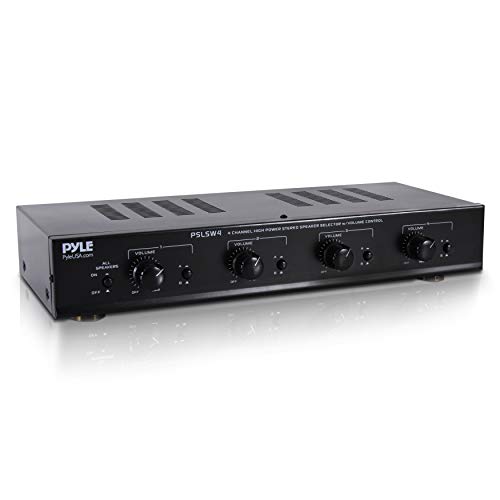
The Pyle PSLSW4.5 distributes audio to up to four speaker pairs and provides an independent volume control for each channel. Its compact tabletop design is intended to fit into a home stereo or home theater setup. The listed specifications support up to 100 watts per channel and identify 8-ohm speakers as the intended load.
Best for: Buyers who need four zones, want to adjust each zone’s volume, and prefer a compact tabletop unit. It is a practical alternative to the six-channel Pyle when the system does not need more than four pairs.
Why it was selected: It combines independent zone volume with a smaller stated system capacity, making it easier to compare against the six-pair selector. The product details also provide a stated power and speaker-impedance reference for shoppers to check against their equipment.
Consideration: The listed details specify 8-ohm speakers and do not mention automatic impedance protection. Confirm that your planned speaker configuration meets the selector and amplifier requirements.
Buying Guide: How To Choose A Speaker Selector
A speaker selector routes one amplifier’s output to multiple speaker pairs. It can help organize audio zones, but it does not replace an amplifier or make incompatible speakers safe to use. The right model depends on how many pairs you need, whether each zone needs separate volume control, and whether the selector provides protection suited to your system.
How many speaker pairs do you need to connect?
Count the speaker pairs you expect to use, not just the number of rooms. The Audioflow, Monoprice SSVC-4.1, Monoprice SS-4, and Pyle PSLSW4.5 are four-pair options. The Pyle PSLSW6 supports up to six pairs. A four-zone selector is a better fit for a smaller setup, while a six-zone model avoids running out of listed channels if you plan to distribute audio to more areas.
Do you need independent volume controls?
Independent zone volume is useful when speakers are in rooms with different listening needs. The Pyle PSLSW4.5 and PSLSW6, along with the Monoprice SSVC-4.1, list separate volume controls. The Monoprice SS-4 lists individual zone on/off buttons but not separate volume controls. Audioflow lists app and Alexa switching, but its supplied features do not specify zone volume adjustment.
What does impedance protection mean for your setup?
When multiple speaker pairs are connected to one amplifier, the total load can affect the amplifier. Impedance protection circuitry is a feature of the two selected Monoprice models. The SSVC-4.1 and SS-4 list minimum amplifier impedance guidance for selected 4-ohm and 8-ohm speakers. The Pyle details identify 8-ohm speakers but do not list impedance protection. Check your amplifier manual, speaker impedance, and the selector’s requirements before connecting multiple pairs.
How should you compare power ratings?
Compare the selector’s stated power handling with the amplifier’s output and the speakers’ requirements. The Pyle four- and six-channel models list up to 100 watts per channel; the Monoprice SSVC-4.1 lists 100 watts continuous and 200 watts peak per channel; and the SS-4 lists 100 watts RMS per channel. These rating terms are not interchangeable, so do not treat them as a direct measure of sound quality or assume the highest number is automatically best.
Which wire connections and controls matter?
Check whether the selector accepts your speaker-wire gauge and connection type. The Monoprice SS-4 specifies support for 12–16 AWG wire. The Pyle PSLSW6 lists screw-type terminals that accept up to 14 AWG, and the Pyle four-channel selector also lists support up to 14-gauge wire. Audioflow’s supplied feature list does not state a wire gauge, so verify the connection details before choosing it for an existing installation.
Also consider how you want to operate the zones. Physical buttons provide direct switching at the unit. The Audioflow adds app-based Wi-Fi and Alexa control, which may suit users who prefer remote or voice selection. The supplied details do not say that app control changes individual speaker volume, so treat switching and level adjustment as separate features.
What should you check before connecting speakers?
- Confirm the number of speaker pairs you intend to use and whether they may play at the same time.
- Check the amplifier’s supported speaker impedance and output rating.
- Match the selector’s stated impedance and power guidance to the connected speakers.
- Verify the accepted wire gauge and terminal type against your installed cable.
- Decide whether each zone needs independent volume adjustment or only on/off selection.
- Review product specifications for any feature not stated in the supplied details, including protection or power limits.
Frequently Asked Questions
What is a speaker selector used for?
A speaker selector connects one amplifier to multiple speaker pairs and lets users choose which zones receive audio. Some models add separate volume controls or impedance protection.
Can one speaker selector control speakers in multiple rooms?
Yes. The listed products are intended to distribute audio to multiple speaker pairs. Choose a model with enough channels for the rooms or zones you plan to connect, and confirm that the amplifier can support the speaker configuration.
Which selected model supports the most speaker pairs?
The Pyle PSLSW6 is the selected model that supports the most pairs, with capacity for up to six. The other four selected products list capacity for up to four pairs.
Which of these selectors has independent zone volume controls?
The Monoprice SSVC-4.1, Pyle PSLSW6, and Pyle PSLSW4.5 list independent volume controls. The Monoprice SS-4 lists individual on/off buttons without separate volume controls. The Audioflow feature list describes app and Alexa switching but does not specify independent zone volume.
Does a speaker selector replace an amplifier?
No. A speaker selector distributes an amplifier’s output to speaker pairs; it is not described as an amplifier. Connect it only in a configuration that meets the selector, speaker, and amplifier requirements.
Is Wi-Fi control necessary for a speaker selector?
No. Wi-Fi is useful if you want to switch zones using an app or Alexa. Manual selectors may be more suitable when direct on-unit controls meet your needs. Choose based on how you plan to operate the system.