
The best stereo guitar output jack depends on the instrument’s wiring, mounting dimensions, and the type of connection it needs. The Switchcraft Type 12B is a strong choice for a traditional three-conductor replacement, while the Pure Tone jack is best for buyers prioritizing multiple contact points. For specific Roland VG Stratocaster or listed Fender bass applications, consider the 9-pin replacement only after checking the part number and fit. The products below include individual jacks, a two-pack, and a six-pack of panel-mount sockets.
| Product | Best suited for | Notable detail |
|---|---|---|
| Switchcraft 12B Stereo TRS | Single-jack replacement | Made in USA; nickel finish |
| Switchcraft Type 12B, two-pack | Keeping a spare or repairing two instruments | Two nickel-plated jacks |
| Pure Tone Multi-Contact | Buyers seeking a multi-contact design | Dual tension grounds and positive tips |
| 9-pin 007-3618-049 replacement | Listed instrument models that use this part | Compact, nine-pin format |
| LOCHSOEL panel-mount sockets | General panel-mount audio projects | Six solder-type sockets |
Switchcraft 12B Stereo TRS Jack
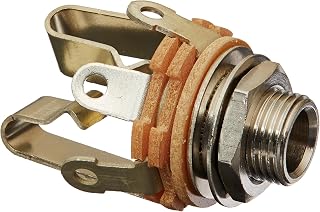
This Switchcraft 12B is a single female 1/4-inch stereo TRS jack supplied with a washer and nut. Its listed features include heavy-duty metal construction, a nickel finish, and manufacture in the USA. The three-conductor TRS format is relevant when an instrument’s circuit uses tip, ring, and sleeve connections rather than a standard two-conductor mono connection.
Best for: Guitar or bass owners replacing one compatible, traditional stereo jack who want the included mounting hardware. It is a straightforward choice when the existing jack’s format and physical fit match the replacement.
Why it was selected: The product listing clearly identifies it as a stereo TRS female jack and specifies its finish and construction, making it easier to compare with a removed part.
Limitation: The listing does not provide detailed mounting dimensions or a wiring diagram. Verify the jack’s fit and terminal layout before installation; do not assume every guitar uses the same jack or wiring.
Switchcraft Type 12B Stereo Jack, Two-Pack

This listing offers two Switchcraft Type 12B three-conductor 1/4-inch input jacks. The stated features are a nickel-plated finish and manufacture in the USA. A two-pack can be useful when maintaining more than one compatible instrument or keeping a matching spare available for a future repair.
Best for: Buyers who need two compatible jacks or prefer to keep a spare. It is better suited to multi-instrument maintenance than a shopper who only wants one part and does not need an extra.
Why it was selected: It provides the same named Type 12B format as the single-jack option, but the pack size makes it a distinct choice for planned repairs and spares.
Limitation: The product information does not specify included nuts or washers, terminal dimensions, or a wiring guide. Confirm the package contents and compare the replacement with the original jack before ordering.
Pure Tone Multi-Contact Stereo Output Jack

The Pure Tone jack is a 1/4-inch stereo output jack with a black nickel finish. Its listed design uses dual-tension grounds and dual positive tips. The manufacturer’s feature description says the increased contact area is intended to provide a more stable connection, help secure the cable, and reduce metal fatigue on the jack.
Best for: Players or repair technicians looking for a multi-contact jack design and whose instrument can accept this jack’s format and dimensions. Choose this if the contact design is a priority rather than simply matching a standard replacement part by name.
Why it was selected: Its dual ground and positive-tip contacts distinguish it from the conventional Switchcraft options in this list.
Limitation: The product details provided do not state exact mounting dimensions or list specific guitar models. Check the instrument cavity, mounting hardware, and wiring requirements before purchase. A different contact design does not guarantee a fit in every guitar.
9-Pin 007-3618-049 Guitar Stereo Jack

This listing is for two compact 6.3 mm, or 1/4-inch, stereo output jacks identified by part number 007-3618-049. The seller lists compatibility with a Roland VG Stratocaster, American Deluxe basses, and American Elite Jazz basses. Stated dimensions are 29 × 17 × 16.6 mm, with a thread outer diameter of 8.7 mm.
Best for: Owners of one of the listed instrument types who have confirmed that their existing jack uses part number 007-3618-049. Its nine-pin construction makes it a model-specific option rather than a general-purpose substitute for a conventional three-terminal jack.
Why it was selected: It addresses buyers seeking a compact replacement with a stated part number and named instrument applications.
Limitation: Compatibility claims should be checked against the exact instrument version and original part. Do not choose it solely because it accepts a 1/4-inch plug; its pin layout and mounting dimensions also need to match.
LOCHSOEL Six-Pack Panel-Mount Sockets
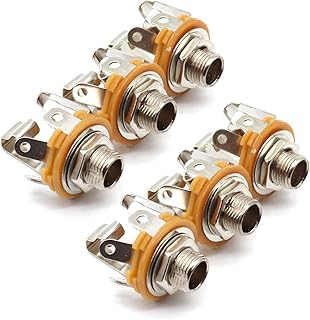
This six-pack contains 6.35 mm (1/4-inch) female stereo sockets described as panel-mount and solder-type. The listing mentions possible use with microphone jacks, earphone plugs, audio-video and PC applications, and demanding live-sound or studio-recording settings. It also describes the threading, nuts, and washers as high quality.
Best for: Buyers who need multiple panel-mount sockets for a general audio project, or who are comparing jack options beyond a single guitar repair. The quantity may be useful for installations that require several matching sockets.
Why it was selected: It offers a larger pack size and explicitly identifies a stereo socket with solder connections and panel mounting.
Limitation: The listing’s broad application description does not establish that the socket will fit a particular guitar body or cavity. Check panel thickness, thread size, terminal arrangement, and available clearance before using it as a guitar replacement.
Buying Guide: How to Choose a Stereo Guitar Output Jack
Does the guitar need a stereo jack or a mono jack?
A stereo 1/4-inch jack generally has three electrical connections: tip, ring, and sleeve. A mono jack generally has two: tip and sleeve. The plug may look similar from the outside, so appearance alone is not a reliable way to identify the required part. Check the original jack’s terminals and the instrument’s wiring diagram, or ask a qualified repair technician to identify them.
A stereo jack does not automatically make a guitar produce a stereo signal. The instrument’s circuit must use the ring contact for a specific purpose, such as carrying a separate signal or controlling a connection. Replacing a stereo jack with a mono jack can change how a circuit works if the ring terminal is in use.
How can you check whether a replacement will fit?
Compare the new jack with the original part before installation. Check the mounting-hole size, threaded barrel diameter and length, body shape, terminal positions, and clearance inside the control cavity. Also confirm that the supplied washer and nut, if included, work with the instrument’s mounting surface.
Part numbers are especially useful for compact multi-pin jacks. If the old part has a number printed on it, compare that number with the replacement listing. A general 1/4-inch plug size is not enough to establish that a jack’s pins, wiring, or physical body will match.
What should you know about terminals and soldering?
Terminal layout can differ between jack designs. Identify the tip, ring, and sleeve connections before removing wires, and document the existing wiring with a clear photo. Use the instrument’s wiring diagram when available. If the jack has several pins or the wiring is unfamiliar, a technician can help prevent a misconnection.
Solder-type jacks require appropriate soldering tools and careful work. Excess heat can damage components or nearby wiring, and a poorly secured connection can cause intermittent sound. Disconnect the instrument from amplifiers and other equipment before beginning a repair.
Should you buy one jack or a multipack?
A single jack is suitable when replacing one confirmed match. A two-pack can make sense when maintaining multiple instruments or keeping a spare. A six-pack is aimed at buyers with several panel-mount applications, but its quantity does not make it a better fit for a guitar. Compare the pack contents with the actual number of repairs you plan to do.
Does a different contact design matter?
Some jacks use a conventional contact arrangement, while the Pure Tone product describes dual tension grounds and dual positive tips. These design details may matter to buyers seeking a particular contact approach, but they do not replace fit and wiring checks. Choose a jack that matches the instrument first, then compare construction and contact features among compatible options.
Frequently Asked Questions
Can I use a stereo jack with a mono guitar cable?
It depends on the guitar’s wiring. A mono cable has tip and sleeve connections, while a stereo jack also has a ring contact. If the guitar circuit uses the ring, a mono cable may not provide the intended connection. Check the instrument wiring before choosing a cable or replacement jack.
Is a 1/4-inch jack the same as a 6.3 mm jack?
They refer to the same nominal plug size in these product descriptions. Matching the plug diameter alone does not confirm that the jack has the correct number of terminals, mounting dimensions, or wiring layout for a particular instrument.
What does TRS mean on a guitar jack?
TRS stands for tip, ring, and sleeve, the three conductive sections used by a stereo-style connection. A TRS jack is appropriate when the instrument’s circuit is designed to use those contacts.
How do I identify the correct replacement jack?
Check the original jack’s part number, terminal count, mounting dimensions, and wiring. Compare those details with the replacement listing and the guitar’s wiring diagram. For a multi-pin or model-specific jack, verify the exact instrument version before ordering.
Can I replace a guitar output jack myself?
A repair may be manageable for someone experienced with soldering and the instrument’s wiring. However, unfamiliar terminal layouts, cramped cavities, or multi-pin connectors can make the job more difficult. If you cannot identify the connections confidently, consult a qualified guitar technician.