
The best pop cover for a mic depends on the microphone style and the sound problem you need to address. Handheld vocalists can choose a fitted foam windscreen, Blue Yeti owners can use a model-specific cover, and lavalier users may prefer a small furry wind muff. For close-up podcast or streaming speech, a mesh pop filter is a different option to consider. The five picks below are selected for these distinct use cases; check size and microphone fit before ordering.
| Product | Best For | Cover Type |
|---|---|---|
| Mudder 5 Pack Foam Mic Cover | Handheld microphones and shared use | Foam windscreen |
| YOUSHARES Blue Yeti Pop Filter | Blue Yeti and Yeti Pro owners | Foam and furry covers |
| 6 Pack Foam Microphone Covers | Standard handheld mics and repeated washing | Dense foam windscreen |
| Movo WS10m 5 Pack Lavalier Windscreen | Small lapel microphones | Furry wind muff |
| FIFINE U1 Mic Pop Filter Screen | Streaming and podcast recording | Metal mesh screen |
Mudder 5 Pack Foam Mic Cover
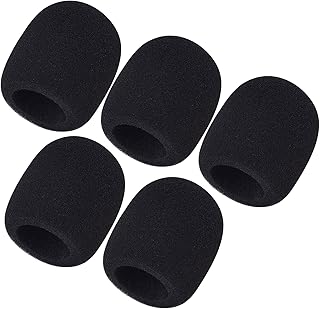
The Mudder set contains five ball-shaped foam covers sized 2.9 by 2.5 inches, with a 1.4-inch opening. The listed dimensions make it a useful option for people seeking several covers for standard handheld microphones. The manufacturer describes the foam as thick, soft, elastic, and easy to fit over a microphone.
Best for: KTV, conference rooms, interviews, stage performances, or other settings where handheld microphones are used. A five-piece pack can also suit situations where several covers are needed. It was selected for its clearly stated dimensions and broad handheld-mic use.
Limitation: The listing says the covers are not for headset microphones. Measure the microphone head and compare it with the stated opening rather than assuming every handheld model will fit.
YOUSHARES Blue Yeti Pop Filter

This two-piece set includes a foam windscreen and a furry cover. It is designed for Blue Yeti and Yeti Pro condenser microphones. The product description says the covers are intended to reduce wind noise and unwanted background noise, while helping protect the microphone from dust and moisture.
Best for: Blue Yeti or Yeti Pro owners who want two cover styles for different recording conditions. The foam cover provides a simple windscreen option, while the furry cover is aimed at wind-noise reduction. Its stated microphone-specific design is the main reason it stands out from universal handheld foam covers.
Limitation: The listed fit is for the named Blue Yeti microphones. Do not treat it as a universal pop filter for every USB microphone, and confirm your model before buying.
Six-Pack Foam Microphone Covers

This set includes six black foam covers measuring 2.8 by 2.3 inches, with a 1.4-inch opening. Its product details describe thick, high-density foam designed to retain its shape and install quickly. The listing also says the covers can withstand repeated washing without tearing and are intended to reduce pops, breath, and wind noise without muffling high and low frequencies.
Best for: Buyers who need several covers for standard handheld microphones, particularly where washing and reuse are important. The six-piece quantity and specific opening measurement make it easier to compare with the Mudder pack. It was selected for its stated washable construction and focus on plosive and wind-noise reduction.
Limitation: These covers are listed for standard handheld microphones, not headset mics. Foam covers can also alter the feel or appearance of a microphone, so consider that if presentation matters.
Movo WS10m Lavalier Windscreens

The Movo WS10m is a five-pack of furry windscreens for lavalier microphones. The product name identifies compatibility with lapel microphones measuring 8–13 mm and references Shure and Rode models. Unlike a ball-shaped handheld cover, this style is intended for small microphones worn on clothing.
Best for: People recording with a lavalier or lapel mic who want a furry cover rather than a large foam ball. The compact microphone-size range and five-piece pack are the reasons to consider it for this use case.
Limitation: The supplied details do not give the windscreen’s full dimensions or a specific reduction rating. Check the mic’s diameter and the product listing before choosing it, especially if your lavalier is outside the stated 8–13 mm range.
FIFINE U1 Metal Mesh Pop Filter

The FIFINE U1 is described as a mic pop filter screen with metal mesh and is positioned for streaming and podcast recording. A screen-style filter is a different form factor from foam covers that stretch directly over a microphone grille. The supplied product information does not specify its dimensions, mounting method, or microphone compatibility.
Best for: Streamers and podcasters looking for a mesh-screen pop filter rather than a foam windscreen. It was selected to represent a screen-style option for speech recording.
Limitation: Check the current listing for fit, mounting details, and what microphones it supports before buying. The supplied information is not enough to confirm compatibility with a particular setup.
Buying Guide: How To Choose A Mic Pop Cover
What kind of microphone do you have?
Start with the microphone format. A handheld vocal mic generally needs a ball-shaped foam windscreen sized to fit its grille. A lavalier mic needs a much smaller cover made for its capsule. A Blue Yeti owner should check a model-specific cover, while a desk-based podcast setup may use a screen-style pop filter. These products are not interchangeable just because they are all described as microphone covers.
Do you need a windscreen or a pop filter?
Foam and furry windscreens can help reduce wind and breath noise around the microphone. A pop filter is commonly used between a speaker and a microphone to help manage bursts of air from plosive sounds such as “p” and “b.” The listed products include foam and furry covers as well as a metal mesh screen, so choose based on the sound issue and the way the mic is used.
A cover does not replace good microphone technique. Speaking at a suitable distance and angle can also help manage plosives and breath noise. If the room or outdoor setting is noisy, a mic cover alone should not be treated as a complete solution for background sound.
How can you check whether a foam cover will fit?
Compare the cover’s stated opening and outside dimensions with the microphone grille. The Mudder and six-pack options each list a 1.4-inch opening, but their outside measurements differ. A snug fit is important: a cover that is too small may not install properly, while one that is too large may not stay securely in place. For products without listed measurements, verify the details in the current product listing.
When is a multi-pack useful?
Multi-packs can be useful when several handheld microphones are used, when covers need to be replaced, or when a recording setup includes multiple people. The Mudder and six-pack foam products are aimed at standard handheld microphones, while the Movo five-pack is for small lavalier mics. Select pack size after confirming that the covers fit the actual microphones; quantity does not compensate for a mismatch.
Should you choose foam, furry fabric, or mesh?
- Foam: A straightforward cover for many standard handheld microphones. Check the opening size and whether the listing excludes headset microphones.
- Furry: A style offered for the Blue Yeti set and the Movo lavalier pack. Match the cover to the microphone type and size.
- Mesh screen: A separate screen-style option for podcasting or streaming. Confirm the mounting and microphone-fit details because they are not supplied here.
What should you consider for shared microphones?
For microphones used by multiple people, consider how many covers are included and whether the listing describes washing or replacement. The six-pack listing specifically says its foam covers can withstand repeated washing without tearing. Follow the product’s care instructions and allow covers to dry completely before use. Do not assume that every foam or furry windscreen is washable if the product details do not say so.
Frequently Asked Questions
Does a foam mic cover stop plosive sounds?
Foam covers can help reduce breath and pop noise, but their performance depends on the microphone, fit, and speaking technique. The six-pack product specifically states that it is designed to reduce pops, breath, and wind noise.
Can I use a handheld foam cover on a headset microphone?
Not necessarily. The Mudder and six-pack listings say they are not for headset microphones. Choose a cover designed for the headset capsule and confirm its dimensions.
Are all microphone pop filters universal?
No. Some are made for particular microphones, such as the YOUSHARES set for Blue Yeti and Yeti Pro models. Others list a size range or dimensions. Check the microphone model and fit details before purchase.
What is the difference between a furry windscreen and a foam cover?
They are different cover styles, and the appropriate choice depends on the mic and recording conditions. The listed YOUSHARES set includes both styles for specified Blue Yeti microphones; the Movo product is a furry windscreen for lavalier microphones.
Is a metal mesh pop filter the same as a foam windscreen?
No. A metal mesh filter is a screen-style product, while foam stretches over or around a microphone. The FIFINE U1 is listed as a metal mesh screen, but its fit and mounting details should be checked before buying.