
The best telephone audio interface depends on what you need to connect: the TAP-1 is designed to connect audio with an analog phone line, while the Bogen UTI1 is built for telephone-system paging. For recording or live streaming, the Focusrite Scarlett Solo, M-AUDIO M-Track Duo HD, and KYXAIN pocket interface serve different audio workflows, but they are not described as telephone-line interfaces. Check the connection type before buying so the interface matches your telephone system, computer, or mobile device.
| Product | Best suited for | Primary distinction |
|---|---|---|
| TAP-1 Telephone Audio and Power Interface | Analog telephone-line audio | 600-ohm RCA connections and telephone-line simulation |
| Bogen UTI1 | Paging through a telephone system | Paging outputs and background-music input |
| Focusrite Scarlett Solo 3rd Gen | Vocal and instrument recording | USB-C recording interface with mic preamps |
| M-AUDIO M-Track Duo HD | Computer-based audio work | USB-C audio interface; listed features are limited |
| KYXAIN Pocket Interface | Mobile guitar recording and streaming | Type-C and Lightning connection options |
TAP-1 Telephone Audio and Power Interface

The TAP-1 is the most directly relevant option for connecting audio to an analog telephone line. It is specified with 600-ohm RCA line input and output and simulates the electrical characteristics of an analog phone line. The listed features also say it provides -48-volt DC for telephone operation and separates audio into transmit and receive signals.
Best for: Buyers whose project specifically requires a telephone-line interface with separate send and receive audio paths. Its phone-line simulation and stated DC supply make it more relevant to that task than a standard USB recording interface.
Limitation: The listed information describes analog phone-line operation. It does not establish compatibility with a particular modern phone service, telephone system, or digital line, so verify the connection requirements before purchasing.
Bogen UTI1 Universal Telephone Interface
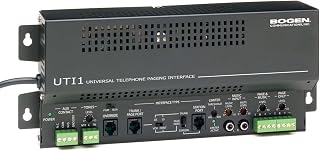
The Bogen UTI1 is a telephone-system paging adapter for one-way paging through standard analog phone ports. It provides two independent audio outputs: one for paging with background music and another for paging only. Separate level controls allow the output levels to be adjusted independently.
Best for: Businesses or facilities that need telephone-initiated announcements through a self-amplified speaker system. The background-music input and variable music mute are useful when music should play between announcements and reduce during a page.
Limitation: This is described as a single-zone, one-way paging interface, not a general-purpose recording interface or a two-way telephone audio device. Confirm that the phone port and speaker system match the intended installation.
Focusrite Scarlett Solo 3rd Gen

The Scarlett Solo 3rd Gen is a USB-C audio interface for recording vocals and instruments, rather than a dedicated telephone-line adapter. Its listed features include microphone preamps, a switchable Air mode, two high-headroom instrument inputs for guitar or bass, and Gain Halos intended to help identify clipping or distortion.
Best for: Home recordists, musicians, and podcasters who need to capture voice or instruments on a computer. It is the better fit than a telephone interface when the goal is studio-style recording, with converters specified for recording and mixing up to 24-bit/192kHz.
Limitation: The supplied features do not describe telephone-line simulation, telephone power, or paging connections. Choose it for recording, not as a substitute for an analog phone interface.
M-AUDIO M-Track Duo HD

The M-AUDIO M-Track Duo HD is identified as a USB-C audio interface. The supplied product information does not include further features, such as its input types, recording specifications, monitoring options, or telephone connections. Buyers should consult the current product listing and manufacturer details to confirm that its specifications fit a planned setup.
Best for: Buyers comparing USB-C interfaces for computer-based audio who are willing to verify detailed specifications before choosing. Its product category makes it a candidate to investigate for recording workflows, but the available information does not support a more specific performance recommendation.
Limitation: No detailed features were provided here, and the product name does not establish compatibility with a telephone line. Do not select it for telephone paging or phone-line audio without confirming those functions.
KYXAIN Pocket Guitar Audio Interface

The KYXAIN pocket interface is aimed at recording or live streaming electric guitar and bass with smartphones, laptops, and other listed devices. Its features specify 24-bit/48kHz recording, Type-C connectivity, a Lightning-to-Type-C adapter for iPhone and iPad, a 1/4-inch instrument jack, and a 1/8-inch headphone output for monitoring.
Best for: Beginners who want a compact, plug-and-play way to send guitar or bass audio to a mobile device or laptop. The listed low-latency processing is intended to keep audio synchronized with video, and the product is described as requiring no batteries.
Limitation: The listing says this is for recording only, without editing or mixing functions. It is not described as a telephone-line interface, despite being suitable for some mobile streaming workflows.
Buying Guide: How To Choose A Telephone Audio Interface
Do you need a phone-line connection or a recording interface?
Start by identifying the signal path. A telephone-line interface connects audio to a telephone circuit, while a USB audio interface connects microphones or instruments to a computer or mobile device. These products may all handle audio, but their connections and purposes are not interchangeable. For an analog phone-line task, the TAP-1 is the clearest match in this list. For computer recording, the Scarlett Solo is described with recording-specific features.
Is the goal telephone paging?
For announcements through a telephone system, look for paging functions rather than general recording specifications. The Bogen UTI1 is listed for one-way, single-zone paging through standard analog phone ports and self-amplified speaker systems. It also has separate paging outputs and a background-music input. Check the existing phone port, amplifier or speaker arrangement, and required zone count before choosing a paging adapter.
What connection types should you verify?
Compare the interface’s stated connections with the equipment you already own. The TAP-1 specifies RCA line input and output and a 600-ohm rating. The Bogen UTI1 is described for analog phone ports and paging outputs. The Scarlett Solo and M-Track Duo HD are USB-C interfaces, while the KYXAIN lists Type-C and Lightning options plus instrument and headphone jacks. Do not assume that a connector alone proves a device can perform telephone-line functions.
Do you need two-way audio?
Some applications require audio to travel both into and out of a phone connection. The TAP-1 listing specifically says it separates audio into transmit and receive signals. By contrast, the Bogen UTI1 is described as a one-way paging adapter. Decide whether the system needs a return audio path, announcements only, or recording input before comparing models.
Are recording quality and controls important?
For music or podcast production, compare recording resolution, input types, monitoring, and controls. The Scarlett Solo lists recording and mixing up to 24-bit/192kHz, microphone preamps, Air mode, instrument inputs, and Gain Halos. The KYXAIN lists 24-bit/48kHz recording and headphone monitoring, but says it does not include editing or mixing functions. The supplied M-Track Duo HD details are limited, so verify its full specifications rather than infer them from the name.
How should you confirm compatibility?
Check the exact telephone service or device port, required power, audio connections, and intended direction of signal flow. Analog-line simulation does not by itself establish support for every telephone service. Likewise, a USB-C interface is not automatically suitable for connecting to a phone line. For business paging, confirm zone count and speaker-system requirements. When specifications are unclear, consult the current product documentation before buying.
Frequently Asked Questions
What is a telephone audio interface?
A telephone audio interface connects or adapts audio for a telephone-related system. Depending on the model, it may support phone-line audio, paging through a telephone system, or a separate recording workflow. Check the stated purpose and connections because these device types are not interchangeable.
Which product here is designed for analog telephone-line audio?
The TAP-1 is described as simulating the electrical characteristics of an analog phone line, providing -48-volt DC for telephone operation, and separating transmit and receive audio.
Which product is for telephone-system paging?
The Bogen UTI1 is described as a single-zone, one-way paging adapter for standard analog phone ports and self-amplified speaker systems.
Can a USB audio interface replace a telephone-line interface?
Not based on the information provided. The Scarlett Solo and M-Track Duo HD are USB-C audio interfaces, and the KYXAIN is a mobile and instrument recording interface. Their listed details do not establish telephone-line compatibility.
Which option is best for recording guitar on a phone?
The KYXAIN is the most directly suited to that use among these products. It lists a 1/4-inch guitar or bass input, Type-C and Lightning connection options, and headphone monitoring. Its listing describes recording, not editing or mixing.