
A true diversity wireless microphone system uses two receiver antennas and switching circuitry to help maintain a reliable signal and reduce dropouts. The Phenyx Pro PTAU-2 is best for frequency management and flexible setup; the PTU-1U is better for one speaker or performer; and the PTU-2U-1H1B suits users who need both a handheld microphone and a bodypack option. The picks below compare channel count, frequency tools, and included microphone formats so you can match a system to your venue and use.
| System | Best For | Notable Feature |
|---|---|---|
| Phenyx Pro PTAU-2 | Flexible frequency management | Auto-scan and spectrum analyzer |
| Phenyx Pro PTU-1U | One microphone user | Single channel and 1,000 selectable frequencies |
| Phenyx Pro PTU-2U-2H | Two handheld microphone users | Dual channel and two handheld mics |
| GTDaudio 2×800 Channel | Multi-system setups | Frequency scanning and stated support for up to 20 sets |
| Phenyx Pro PTU-2U-1H1B | Handheld and bodypack use | Handheld and bodypack transmitter options |
Phenyx Pro PTAU-2 Dual True Diversity System

The PTAU-2 is a dual-channel UHF system designed for buyers who want more control over frequency selection and transmission settings. Its auto-scan feature looks for busy channels, while a spectrum analyzer provides a visual chart of frequency usage. The system offers 2 × 1,000 frequencies in the 500 MHz band, according to the product details.
Best for: Performers, presenters, and event operators who need to manage wireless microphones in changing or crowded RF environments. Its selectable transmitter power—5 mW, 10 mW, or 30 mW—and receiver sensitivity settings provide options for adapting the setup to different conditions.
Why it stands out: The ID Lock function locks a selected frequency so that only the matched handheld microphone can transmit on it. That is useful when avoiding interference from other microphones operating on the same frequency is a priority.
Keep in mind: This system has several settings to manage. Buyers who want a basic plug-in setup may not need its frequency-analysis and power-adjustment features.
Phenyx Pro PTU-1U Single-Channel System

The PTU-1U is a single-channel UHF microphone system with true diversity circuitry. It operates in the 555–580 MHz band and offers 1,000 selectable frequencies, auto-scan, squelch control, and a frequency lock. The listed line-of-sight operating range is 300–328 feet; actual performance can vary with the environment and setup.
Best for: A solo vocalist, presenter, or speaker who needs one handheld microphone channel rather than a dual-channel receiver. It is listed for applications including live shows, worship, weddings, DJ events, and outdoor events.
Why it stands out: Its receiver and handheld microphone have heavy-duty all-metal housings. The included antenna kit and extension cords allow the antennas to be mounted at the front of a rack setup, according to the product details.
Keep in mind: This is a single-channel system. Choose a dual-channel model if you need two microphones to operate through the receiver at the same time.
Phenyx Pro PTU-2U-2H Dual Handheld System

The PTU-2U-2H provides two UHF channels and two handheld microphones. Its listed frequency band is 530–580 MHz, with 1,000 selectable frequency groups. Receiver features include auto-scan, squelch control, and frequency lock; the product also lists quick IR synchronization and a 300–328-foot line-of-sight operating range.
Best for: Two speakers or performers who both prefer handheld microphones. A dual-channel receiver gives the pair a shared system, while frequency scanning and locking help users select and retain a setting.
Why it stands out: The product description highlights dynamic microphone cartridges, a sponge design, and circuitry intended to filter pops, clicks, and unwanted ambient noise. It also lists heavy-duty all-metal construction for the receiver and microphones.
Keep in mind: Both transmitters are handheld microphones. Buyers who need a lapel or headset-style option should consider a system with a bodypack transmitter instead.
GTDaudio 2×800 Channel UHF System
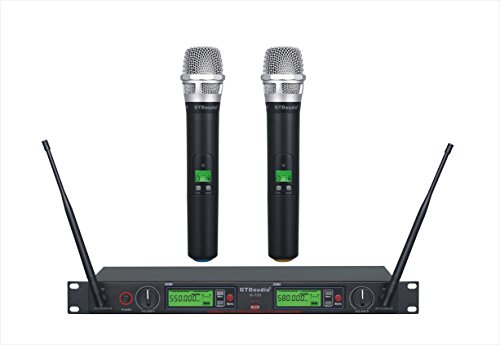
The GTDaudio system combines true diversity operation with automatic frequency scanning. The listed frequency setup provides 2 × 400 frequencies, with up to 20 sets stated as usable at the same time. Scanning is designed to find and set a channel with less interference in the area.
Best for: Buyers comparing systems for venues or production setups where frequency coordination and the possibility of operating multiple sets matter. Its true diversity design is described as supporting increased range and reliability while reducing dropouts.
Why it stands out: The frequency count and stated multi-set use make this option relevant to buyers planning beyond a single microphone system. Automatic scanning can also simplify channel selection compared with choosing a frequency manually.
Keep in mind: The supplied product information does not specify a frequency band, operating range, microphone format, or receiver controls. Confirm those details against your intended equipment and venue needs before choosing it.
Phenyx Pro PTU-2U-1H1B Hybrid System

The PTU-2U-1H1B is a dual-channel UHF system that pairs a handheld microphone with a bodypack transmitter. It operates in the 530–580 MHz band and offers 1,000 selectable frequency groups, quick IR synchronization, auto-scan, squelch control, and frequency lock. The listed line-of-sight range is 300–328 feet.
Best for: Presenters, performers, or event teams who need different microphone styles. The handheld suits a speaker who wants to hold the mic, while the bodypack can be used with a compatible lavalier or headset mic; the product listing identifies a 3-pin mini XLR jack.
Why it stands out: This is the most flexible pick in this group for combining handheld and bodypack use. The product description also lists heavy-duty metal construction and design features intended to filter pops and unwanted ambient noise.
Keep in mind: The supplied details do not specify which lavalier or headset microphones are included. Check the package contents and connector requirements if you need a particular bodypack microphone.
Buying Guide: How to Choose a True Diversity Wireless Microphone
A true diversity system uses two receiving paths to help maintain the wireless signal as conditions change. It can reduce dropouts, but it does not guarantee uninterrupted audio in every room. Walls, people, electronic equipment, antenna placement, and nearby wireless systems can affect reception. Compare the features that shape your setup rather than relying on the term “true diversity” alone.
How many microphone channels do you need?
Choose a single-channel receiver if one microphone will be used at a time. A dual-channel system is a better match for two microphones operating through one receiver. Check that the system includes the transmitter formats you want: two handheld microphones are not interchangeable with a handheld-and-bodypack configuration for every use.
What frequency tools are useful in a busy venue?
Auto-scan can help locate a channel with less interference, while selectable frequencies give users more options when a channel is occupied. Frequency lock can help keep the chosen setting from changing. For a venue with several wireless systems, look for clear frequency information and a practical way to coordinate channels. Do not assume that a large frequency count alone guarantees compatibility with every other device.
Should you choose handheld or bodypack microphones?
Handheld microphones are straightforward for speeches, singing, and interviews where the user can hold a mic. A bodypack setup can support hands-free use with a compatible lavalier or headset microphone. Confirm whether the bodypack mic is included, what connector it requires, and whether the system provides the format you need before ordering.
How should you compare range claims?
Some product listings state a line-of-sight range, which describes an open path between transmitter and receiver. Indoor walls, audience members, antenna position, and interference can reduce practical range. Treat a stated distance as a reference rather than a guaranteed result in a particular building. For a fixed installation, antenna placement and the receiver’s available controls may matter as much as the published range.
Which receiver features matter for setup?
Auto-scan, IR synchronization, squelch control, and frequency lock serve different purposes. Scanning helps select a channel; synchronization transfers a setting to the transmitter; squelch can help control unwanted noise when a signal is weak; and locking retains a selected configuration. If you need to mount equipment in a rack, check whether antenna extension or mounting accessories are included.
What should multi-system users verify?
Confirm the operating frequency bands and the manufacturer’s guidance for using multiple systems together. A product’s stated number of selectable frequencies is not the same as the number of compatible systems that can run simultaneously in every location. Scan and coordinate channels at the venue, and consider other wireless equipment that may share the space.
Frequently Asked Questions
What does true diversity mean in a wireless microphone system?
True diversity uses two receiver antennas and circuitry to help maintain reception by selecting or combining the stronger signal path. It is designed to improve reliability and reduce dropouts, but it cannot eliminate all interference or signal loss.
Is a dual-channel system the same as true diversity?
No. Dual-channel describes how many microphone channels the receiver can handle. True diversity describes its reception design. A system can have two channels and true diversity, but the terms refer to different features.
Is auto-scan necessary?
Auto-scan is helpful when wireless activity varies or when users want assistance finding an available frequency. It is not essential for every simple setup, but it can make frequency selection more convenient in venues with other wireless equipment.
Can a wireless microphone work through walls?
Some wireless signals can pass through walls, but obstacles can weaken reception and reduce usable range. The result depends on the building, transmitter and receiver placement, and nearby interference. A listed line-of-sight range should not be treated as an indoor guarantee.
Which system is best for a presenter who needs hands-free audio?
A system with a bodypack transmitter is the relevant option in this group. The Phenyx Pro PTU-2U-1H1B combines a handheld microphone with a bodypack option; verify whether the needed lavalier or headset microphone is included and compatible before purchase.