
A 4-channel RCA mixer combines audio from multiple line-level sources into a stereo output, making it useful when an amplifier or sound system has fewer inputs than the devices you want to connect. The LiNKFOR CX400 is a straightforward choice for separate channel controls, while the PROZOR is best for buyers seeking a passive mixer described for TV, PC, home studio, and DJ use. The other options include a second CX400 listing, a compact R41, and a device whose 2-in/4-out configuration may suit distribution better than mixing four sources.
| Product | Best suited for | Key detail |
|---|---|---|
| LiNKFOR CX400 | Basic multi-source stereo mixing | RCA input and output; separate volume controls |
| PROZOR 4-Channel Mixer | Home audio and DJ setups | Independent controls; passive design |
| LiNKFOR CX400 alternate listing | Buyers comparing CX400 listings | Same named model and core stated features |
| 2-In/4-Out RCA Box | Setups needing output distribution | Check signal direction before choosing |
| R41 Mini Passive Mixer | Compact stereo line-level use | Listed as a four-channel passive mixer |
LiNKFOR CX400 4-Channel Stereo Mixer

The LiNKFOR CX400 is a mini passive stereo mixer with RCA input and output, a metal shell, and separate volume controls. Those listed features make it a practical match for a setup where several stereo sources need to feed one downstream audio connection and each channel needs its own level adjustment.
Best for: Buyers who want a compact, straightforward four-channel RCA mixer for combining audio sources. Separate controls are useful when one source is louder than another and levels need to be balanced at the mixer.
Why it was selected: The product name directly identifies four-channel stereo mixing, RCA connections, passive operation, and individual volume controls. These are central features to compare when shopping for a 4-channel RCA mixer.
Limitation: The listing describes a passive device, so do not assume it provides powered amplification. Confirm that your connected equipment can provide the signal level your system requires.
PROZOR 4-Channel RCA Audio Mixer
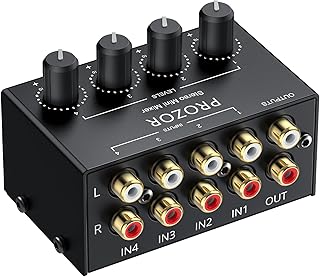
The PROZOR mixer is listed for combining audio from TVs, PCs, CD players, and instruments. It has RCA inputs, independent volume controls for each channel, metal housing, and a passive design that does not require an external power supply, according to the product information.
Best for: Home audio users, home studio setups, or DJ use who need independent adjustment of four input channels. It is a better fit than a basic mixer listing when the stated use cases and channel-by-channel controls are important selection criteria.
Why it was selected: Its listed details clearly describe four-channel RCA mixing and the control method. The passive configuration may also suit buyers seeking a device that does not need a separate power supply.
Limitation: The product is passive. Buyers who need powered gain or amplification should check their equipment requirements rather than treating this mixer as an amplifier.
LiNKFOR CX400 Alternate Listing

This listing names the LiNKFOR CX400 as a four-channel stereo mixer. The product title describes a metal shell, RCA input and output, a mini passive design, and separate volume controls. Those details make it relevant to shoppers comparing compact mixers for combining multiple RCA audio sources.
Best for: Buyers who specifically want to compare CX400 listings before choosing one. The stated model name and feature set provide a direct reference point against the other four-channel options in this guide.
Why it was selected: Its listed configuration closely matches the search for a 4-channel RCA mixer: stereo audio, RCA connections, passive operation, and individual channel volume controls.
Limitation: The provided product information does not establish whether this listing differs from the other CX400 listing in included accessories or packaging. Compare the listing details before ordering.
2-In/4-Out RCA Audio Box

This product is described as a 2-in/4-out RCA left-and-right audio splitter or line-level distributor, with independent volume control. Its stated direction is different from a conventional four-input mixer: it describes two inputs and four outputs, not four sources combined into one output.
Best for: Buyers whose main need is to distribute stereo audio to multiple outputs, subject to confirming the device’s routing and intended use in the listing. It may be worth comparing if you are looking for an RCA routing box rather than a standard four-source mixer.
Why it was selected: It is an RCA audio control product with independent volume control and is relevant to shoppers comparing compact line-level equipment. Its input/output count is an important distinction.
Limitation: Avoid choosing it as a four-channel input mixer unless the product details confirm it can combine four input sources. The title specifies two inputs and four outputs.
R41 4-Channel Passive RCA Mixer

The R41 is named as a four-channel RCA audio mixer for stereo line-level signals. Its product title also describes it as a mini passive mixer and refers to stereo line-level control. These stated details make it a candidate for shoppers seeking a compact device for line-level audio routing or mixing.
Best for: Buyers looking for a mini passive four-channel RCA mixer and comparing options beyond the CX400 and PROZOR models. The title identifies the channel count and stereo line-level category.
Why it was selected: It directly matches the requested mixer type in its product name: four-channel, RCA, stereo, line-level, and passive.
Limitation: The supplied product information does not specify additional controls, exact input/output layout, or supported connection details beyond the title. Verify those points in the listing if they affect your setup.
Buying Guide: How To Choose A 4-Channel RCA Mixer
Do you need four inputs or four outputs?
Start by checking the direction of the signal. A four-input mixer is intended to combine multiple sources into an output. A splitter or distributor sends one or more inputs to several outputs instead. Product names can include “mixer,” “splitter,” or “distributor,” so compare the stated input and output counts rather than relying on the category label alone.
If your goal is to connect four sources, look for a product that explicitly identifies four input channels and an output connection. The 2-in/4-out box in this group is described primarily as a distribution product, so its configuration is not the same as a typical four-input mixer.
Are your sources and destination RCA-compatible?
Check the connections on every device in the audio path. The products in this comparison are described in terms of RCA, but the supplied information does not establish every model’s exact port layout. Confirm the number and type of input and output jacks in the product listing before purchase.
Also confirm that the connected devices are suitable for line-level audio. A passive RCA mixer is not a substitute for a microphone preamp or a power amplifier unless the product documentation explicitly says otherwise.
Do you need separate controls for each channel?
Independent channel controls let you adjust the relative level of each connected source at the mixer. This is helpful when a TV, computer, CD player, or other source produces a different listening level. The LiNKFOR CX400 and PROZOR listings specifically mention separate or independent volume controls.
Check whether the controls match the way you plan to use the mixer. If you need to make frequent changes, accessible channel controls may matter more than a minimal footprint. If your sources are usually balanced, a simpler control layout may be sufficient.
Is passive operation right for your setup?
A passive mixer does not require an external power supply, as stated for the PROZOR and LiNKFOR CX400 listings. That can simplify placement where a power outlet is inconvenient. However, passive operation does not mean the unit amplifies the audio signal. Verify that the source and destination devices work appropriately with the mixer’s signal path.
Choose a powered device only if you need features that require power and the product documentation confirms those features. Do not assume a passive mixer will boost quiet sources or drive speakers directly.
How much space and protection do you need?
Terms such as “mini” and “metal shell” can help narrow choices when desk space or enclosure material matters. The CX400 title specifies a metal shell and mini format; the PROZOR title specifies metal housing. The R41 title describes a mini unit. The available product details do not provide dimensions, so measure your intended space and check the listing if exact size is important.
For a permanent installation, consider where cables will enter and exit, whether the controls will remain accessible, and whether the unit can sit securely near the connected equipment. These practical checks can help avoid a setup that is difficult to operate.
What should you verify before ordering?
- Confirm that the unit combines the number of inputs you need rather than distributing audio to multiple outputs.
- Check the exact RCA input and output layout in the product listing.
- Verify whether each channel has its own volume control if independent balancing matters.
- Confirm whether the unit is passive or powered and whether that suits your signal chain.
- Review the listing for dimensions, included cables, and other details not specified in the product information above.
- Make sure the mixer’s intended line-level use matches the equipment you plan to connect.
Frequently Asked Questions
What does a 4-channel RCA mixer do?
A 4-channel RCA mixer combines audio from multiple input sources into a shared output. It is used when several RCA audio sources need to feed one downstream device, provided the mixer’s channel layout matches the setup.
Can a passive RCA mixer amplify a signal?
Do not assume that it can. Passive operation means the mixer does not require an external power supply, but the product must explicitly specify amplification if that is a required feature.
Is a 2-in/4-out RCA device the same as a 4-channel mixer?
No. A 2-in/4-out device is described as having two inputs and four outputs, which suggests signal distribution rather than combining four input sources. Check the routing details before buying.
Why choose a mixer with independent volume controls?
Independent controls let you adjust the level of each channel separately. This helps balance sources that play at different levels without changing the volume of every input at once.
Can I connect a TV and a computer to one RCA mixer?
That depends on the outputs available on the TV and computer and the mixer’s input connections. Confirm that each source provides a compatible audio connection and that the mixer has the required number of inputs.
What should I check if the audio sounds too quiet?
Confirm that the source, mixer, and destination are connected to the correct inputs and outputs, and check their level controls. A passive mixer may not provide gain, so verify the signal requirements of the connected equipment.