
The best wireless headphones behind the neck depend on whether you want earbuds that rest outside your ears, open-ear audio, or a traditional in-ear fit. RTUSIA’s lightweight wraparound headphones suit people who dislike earbuds, while Cevinily’s bone-conduction design is made for open-ear workouts. Sony’s neckband-style WI-C100 is a better fit for listeners who prefer in-ear sound and longer stated battery life. The five options below compare fit, features, and practical limitations.
| Product | Best For | Standout Feature |
|---|---|---|
| RTUSIA Wraparound Headphones, Black | Compact everyday exercise | 12-hour battery life listed |
| RTUSIA Wraparound Headphones, Blue | Listeners who dislike earbuds | Controls for calls and music |
| Ortizan Open-Ear Headphones | Running and cycling | IPX6 rating listed |
| Sony WI-C100 | In-ear listening and longer playback | Up to 25 hours of battery life |
| Cevinily Bone Conduction Headphones | Open-ear sports use | Bluetooth 5.4 and IPX5 listed |
RTUSIA Wraparound Headphones, Black
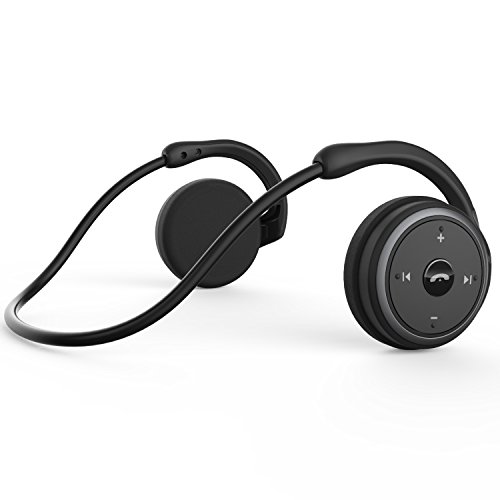
These RTUSIA headphones use an over-ear, wraparound design that sits outside the ear canal. The product description identifies them as lightweight, compact, foldable, and suitable for activities such as running, treadmill workouts, and gym sessions. The listed battery life is up to 12 hours.
Best for: People who find in-ear earbuds uncomfortable and want a compact headset for exercise or daily listening. The design is described as comfortable with glasses and suitable for wearing under a hat or while resting against a pillow.
Four controls on the right earpiece handle calls, volume, and track navigation. Their raised dots can help locate buttons by touch, although the description notes that users may need time to learn their positions.
Limitation: The headphones rest outside the ear canal, so choose another style if you specifically want an in-ear seal. The supplied product details do not state a water-resistance rating.
RTUSIA Wraparound Headphones, Blue
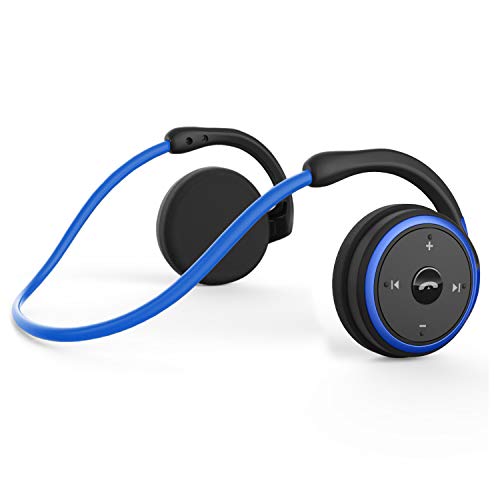
The blue version shares the listed design and features of the black RTUSIA model: a lightweight wraparound fit, foldable construction, a built-in microphone, and up to 12 hours of battery life. It places the speakers over the ears rather than inside the ear canals.
Best for: Buyers who want the RTUSIA fit and control layout but prefer the blue color. It is a practical option for running, gym use, or carrying in a pocket or purse, according to the product description.
The right earpiece has four buttons for answering calls, adjusting volume, and moving through tracks. The product description also says the headset supports hands-free stereo calling and can be worn comfortably with glasses.
Limitation: This is a color alternative, not a feature upgrade over the black version. The listed details do not specify water resistance, so do not assume it is suitable for heavy rain or water exposure.
Ortizan Open-Ear Bluetooth Headphones

Ortizan’s open-ear headphones use air-conduction audio rather than earbuds inserted into the ear canal. The product description lists a 19-gram weight, liquid-silicone construction, 14.2 mm dynamic drivers, Bluetooth 5.3, and an IPX6 waterproof rating. It describes the fit as cradling the ears.
Best for: Runners and cyclists who want an open-ear style and a stated water-resistance rating for active use. The design leaves the ear canals unoccupied, which may appeal to listeners who find conventional earbuds uncomfortable.
Ortizan says its directional sound system is designed to send audio toward the ears. The product description also identifies digital sound enhancement and a design intended to reduce high-frequency distortion.
Limitation: Open-ear headphones do not provide the same in-ear fit as sealed earbuds. The supplied details do not state battery life, so compare that specification before choosing this model for long outings.
Sony WI-C100 Wireless Neckband Headphones

The Sony WI-C100 is a wireless in-ear model with a built-in microphone and a neckband-style form. Sony lists battery life of up to 25 hours and DSEE, a feature described as restoring high-frequency sounds lost during compression.
Best for: Listeners who want an in-ear fit, a microphone for calls, and a longer stated playback time than the 12-hour RTUSIA models. It is a better choice for people who prefer earbuds to speakers that rest outside the ears.
The product listing emphasizes the importance of choosing earbud tips that fit the wearer’s ear canals. A snug fit is connected in the listing to sound quality and call performance, so tip fit is an important part of setup.
Limitation: The earbuds sit in the ear canals, unlike open-ear and over-ear wraparound options. Avoid this style if in-ear tips cause discomfort or if you specifically want to keep your ear canals unobstructed.
Cevinily Bone Conduction Headphones

Cevinily describes these headphones as a behind-the-neck, open-ear bone-conduction model. The listed features include Bluetooth 5.4, a flexible titanium frame, a built-in microphone, IPX5 water resistance, and up to 12 hours of battery life. Audio is transmitted through the cheekbones, leaving the ears open.
Best for: Runners, cyclists, and hikers who want an open-ear fit and a flexible frame designed to stay in place during movement. The stated IPX5 rating and sweat- and moisture-resistant construction make this model relevant for exercise and light rain.
The product description highlights hands-free calling and stable wireless connection as intended features. Its open-ear design may suit people who want to remain more aware of surrounding sounds while listening.
Limitation: Open-ear bone-conduction audio does not create the same fit or listening experience as in-ear headphones. The listing does not provide details about charging time or a more specific fit range.
Buying Guide: How To Choose Behind-The-Neck Headphones
“Behind-the-neck” can describe several different designs. Some models use a band or frame behind the head, while neckband earbuds connect in-ear speakers with a cable or flexible band. Open-ear air-conduction and bone-conduction designs also keep the ear canals unobstructed. Compare the actual wearing style, not just the product title.
Do You Want Open-Ear Or In-Ear Listening?
Choose an open-ear model if you do not want tips inserted into your ear canals. RTUSIA’s wraparound headset rests over the ears, while Ortizan uses an air-conduction design and Cevinily describes bone conduction. Sony’s WI-C100 is the in-ear option in this selection.
Open-ear designs may be useful when you want to hear more of your surroundings, but they do not seal the ear canal. In-ear models sit inside the ears and may better suit people who prefer that fit. The right choice depends on comfort, listening preferences, and where you use the headphones.
Which Fit Is Better For Running Or Cycling?
For workouts, look for a design described as secure during movement and check for a stated water-resistance rating if sweat or rain is a concern. Ortizan lists an IPX6 rating, while Cevinily lists IPX5. These are the ratings provided in the product details; do not treat them as a guarantee for every type of water exposure.
RTUSIA describes its headphones as staying in place during treadmill use and being lightweight for running. Sony’s supplied details focus on in-ear fit and battery life rather than sports-specific features. Consider the activity and fit you need before prioritizing a particular design.
How Much Battery Life Do You Need?
Battery life matters for commutes, long workouts, and travel. The RTUSIA models list up to 12 hours, Cevinily lists 12 hours, and Sony lists up to 25 hours. Ortizan’s supplied product details do not state a battery-life figure, so check the current product information if runtime is a deciding factor.
Manufacturer-stated battery life is a comparison point, not a promise of identical runtime in every situation. Listening volume, call use, and other conditions can affect how long a charge lasts.
What Controls And Call Features Should You Check?
If you plan to take calls or change tracks while moving, check the control location and the functions listed. RTUSIA specifies four right-side buttons for calls, volume, and track navigation. Sony and Cevinily list built-in microphones, while Ortizan’s description highlights clear calls.
Button placement can affect how easy it is to operate a headset without looking. If you want simple physical controls, compare the product’s control layout with your routine rather than assuming every model offers the same buttons.
How Should You Compare Water-Resistance Claims?
Only two products in this selection list an IP rating: Ortizan states IPX6, and Cevinily states IPX5. RTUSIA and Sony do not include a water-resistance rating in the supplied details. If you plan to use headphones outdoors or during sweaty workouts, verify the manufacturer’s current guidance for the specific model.
What If You Wear Glasses Or Find Earbuds Uncomfortable?
RTUSIA specifically describes its wraparound headphones as comfortable with glasses and as an option for people who dislike earbuds. Ortizan and Cevinily also avoid placing conventional tips inside the ear canal, but their supplied descriptions do not make a specific glasses-fit claim. If you wear glasses, choose a frame that does not interfere with the arms of your eyewear.
For in-ear models such as Sony, tip size and fit matter. The product listing notes that poorly fitting tips may affect sound and call performance. If you already know that in-ear tips are uncomfortable, compare open-ear styles first.
Frequently Asked Questions
What Are Wireless Headphones Behind The Neck?
They are wireless headphones designed with a band, frame, or connecting structure that rests around or behind the head or neck. The speakers may sit in the ears, over the ears, or near the ears, depending on the model.
Are Open-Ear Headphones The Same As Bone-Conduction Headphones?
No. Open-ear describes a fit that does not insert earbuds into the ear canals. Bone-conduction models transmit audio through the cheekbones, while air-conduction open-ear models direct sound toward the ears.
Which Product Listed Here Has The Longest Stated Battery Life?
Sony’s WI-C100 has the longest stated battery life in the supplied details, at up to 25 hours. RTUSIA and Cevinily list up to 12 hours. The supplied Ortizan details do not specify battery life.
Which Options List Water Resistance?
Ortizan lists IPX6 water resistance, and Cevinily lists IPX5. The supplied details for RTUSIA and Sony do not state an IP rating. Check the product’s current instructions before exposing any headphones to water.
Which Headphones Are Best If I Dislike Earbuds?
RTUSIA is the clearest fit for someone who dislikes earbuds because its speakers rest over the ears rather than inside the ear canals. Ortizan and Cevinily also use open-ear designs, with air conduction and bone conduction respectively.