
The best USB sound cards with XLR inputs are audio interfaces designed to connect XLR microphones to a computer. The M-Audio M-Track Duo is best for buyers who want two combo inputs and flexible monitoring, while the XTUGA Q-12 is a simpler option with one XLR input, 48V phantom power, and a 3.5mm microphone input. The other picks below are USB audio alternatives, but their listed features do not confirm an XLR input, so check their connection requirements before buying.
| Product | Best for | XLR input listed? |
|---|---|---|
| M-Audio M-Track Duo | Two-microphone or instrument recording | Yes, two combo inputs |
| XTUGA Q-12 | Basic XLR recording with phantom power | Yes |
| Cubilux CB5 | Multiple 3.5mm audio connections | No |
| Cubilux 7.1 USB Sound Card | Headphone and surround playback | No |
| SABRENT AU-MMSA | Simple 3.5mm microphone input | No |
M-Audio M-Track Duo USB Audio Interface
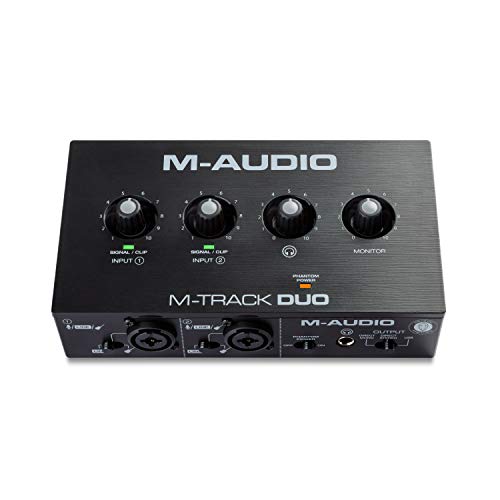
Best for: Creators who need two microphone or instrument inputs and want options for monitoring. This interface has two combo XLR, line, and instrument inputs, making it the clearest fit here for recording more than one source. Its listed features also include phantom power for compatible microphones.
The M-Track Duo records at 48kHz and provides a 1/4-inch headphone output, stereo 1/4-inch outputs, and a USB/Direct switch for zero-latency monitoring. These controls make it a practical choice for podcasting, vocals, guitar, or other line-level sources. It is a USB sound card in the broader sense, but its combo inputs and monitoring features are more suited to recording than a basic headphone adapter.
Why it was selected: It lists two combo XLR inputs and supports several common recording sources. Choose this if you want a more flexible interface for a small recording setup. Limitation: The supplied product details specify 48kHz resolution; they do not establish higher sample-rate recording.
XTUGA Q-12 USB Audio Interface

Best for: Buyers looking for a basic computer-connected interface with an XLR input and a separate 3.5mm microphone connection. The Q-12 lists 16-bit/48kHz resolution and switchable 48V phantom power, which is relevant if the microphone being used requires phantom power.
The manufacturer describes the device as plug-and-play and powered from the computer over USB, so no separate power adapter is listed as necessary. Its dual input setup gives it more flexibility than a simple USB adapter that only accepts a 3.5mm mic. The product information also describes low-latency transmission for tracking and recording.
Why it was selected: It specifically lists XLR input, phantom power, and a 3.5mm microphone jack, covering the core needs of a compact recording setup. Choose this if you need those connections without the two combo inputs of the M-Audio. Limitation: Its stated recording resolution is 16-bit/48kHz, and the supplied details do not list a second XLR input.
Cubilux CB5 USB Audio Interface

Best for: Users who need several 3.5mm audio connections for microphones, line input, headphones, or speakers. The CB5 turns a computer USB port into two stereo microphone jacks, a line-in jack, a line-out jack, and a headphone jack. It also lists Windows and Mac OS support.
The device supports recording up to 96kHz/24-bit, and its independent device names are intended to support multi-track recording. This makes it a potential fit for setups built around compatible 3.5mm sources, rather than a conventional XLR microphone. Confirm the connector type of your microphone before choosing it.
Why it was selected: It offers multiple input and output connections and higher listed resolution than the two basic XLR choices. Limitation: The listed features do not specify an XLR input or 48V phantom power, so it is not a direct substitute for an XLR microphone interface. The line-out and audio output jack cannot be used simultaneously.
Cubilux 7.1 USB Surround Sound Card

Best for: Buyers prioritizing headphone listening, surround playback, and a line-in or stereo microphone connection. This aluminum-bodied USB sound card lists 5.1 and 7.1 surround output, stereo headphone output, line-in, and microphone input. It may suit a computer audio setup where playback and listening matter more than XLR recording.
For headphone playback, the product lists sampling rates from 44.1kHz/16-bit up to 384kHz/24-bit. Its 7.1 surround audio is listed with sample rates up to 48kHz. The aluminum alloy case is described as helping isolate electronic interference.
Why it was selected: It is a useful comparison for shoppers whose search for an external sound card includes playback and a basic mic input. Limitation: The listed microphone input is not identified as XLR, and the supplied features do not mention phantom power. Avoid it if you need a confirmed XLR microphone connection.
SABRENT AU-MMSA USB Stereo Sound Card

Best for: People who need a simple USB connection for a 3.5mm microphone and stereo headphones. The adapter has separate 3.5mm microphone-in and headphone-out jacks, is USB bus-powered, and is described as plug-and-play without drivers or external power.
This is a compact option for basic computer audio input and output, not a recording interface with professional microphone connections. Its listed compatibility includes Windows, Mac, and Linux systems that support class-compliant USB audio. The manufacturer explicitly describes it as a stereo, two-channel adapter.
Why it was selected: It helps distinguish a basic USB sound adapter from an XLR-capable interface. It may be suitable if your microphone already has a compatible 3.5mm plug and you only need straightforward audio input. Limitation: It does not list XLR input, phantom power, or surround sound, and it does not support a 4-pole headset on a single combo plug.
Buying Guide: How to Choose a USB Sound Card With XLR Input
Does the device have a real XLR input?
Look for “XLR input” or “combo XLR/line/instrument input” in the product specifications. A USB adapter with a microphone jack is not automatically an XLR interface. A 3.5mm microphone input uses a different connector, and a headphone output is not an input. If your microphone has an XLR plug, choose a product that explicitly lists an XLR connection or verify what adapters and additional equipment are required.
In this selection, the M-Audio M-Track Duo lists two combo XLR inputs, while the XTUGA Q-12 lists an XLR input. The Cubilux and SABRENT products have other kinds of inputs, but their supplied feature descriptions do not confirm XLR support. This distinction matters because a connector that physically fits is not the only requirement for a functioning recording setup.
Do you need phantom power?
Check the microphone’s own requirements. Some condenser microphones require 48V phantom power; other microphones may not. The XTUGA Q-12 lists switchable 48V phantom power, and the M-Audio listing includes phantom power. If your microphone requires phantom power, confirm that the selected input provides it and that the power can be enabled as needed.
Do not assume a 3.5mm mic jack provides the same connection or power as an XLR input. The Cubilux CB5’s listed 3.5mm microphone jacks, for example, are not described as XLR inputs or as supplying 48V phantom power. Match the interface to the microphone’s connector and power requirements before purchase.
How many inputs should you choose?
One XLR input may be enough for a solo speaker or vocalist. Two inputs can be more useful for recording two microphones, or a microphone and another source at the same time, depending on the interface’s supported input configuration. The M-Audio lists two combo inputs; the XTUGA product description lists XLR and 3.5mm inputs. Compare the number and type of inputs rather than relying only on a general “USB sound card” label.
Also check whether the inputs are intended for microphones, instruments, or line-level sources. Combo inputs may support multiple signal types, while a dedicated microphone input may have a narrower purpose. The listed features should identify the connection type clearly enough to match your recording equipment.
What recording quality and monitoring features matter?
Sample rate and bit depth can help compare interfaces, but they are only part of choosing a device. The XTUGA lists 16-bit/48kHz recording, the M-Audio lists 48kHz resolution, and the Cubilux CB5 lists up to 96kHz/24-bit. Compare the specifications relevant to your recording software and workflow rather than assuming a higher number alone guarantees a better result.
Monitoring features matter when you need to hear a microphone while recording. The M-Audio lists a USB/Direct switch for zero-latency monitoring. The Cubilux CB5 and other products list headphone or audio outputs, but output availability by itself does not establish zero-latency monitoring. Check for an explicitly described direct-monitoring feature if timing is important.
Will it work with your computer and recording setup?
Confirm the USB connection and operating-system support in the product listing. The Cubilux CB5 lists Windows and Mac OS support; the SABRENT adapter lists Windows, Mac, and Linux systems that support class-compliant USB audio. The other supplied product descriptions identify computer or USB use, but do not provide a complete operating-system compatibility list.
Finally, consider whether the product is intended for recording or mainly for playback. An external surround sound card can be useful for headphone listening or home theater audio, but that does not make it an XLR recording interface. For voice recording, prioritize a confirmed XLR input, required microphone power, and suitable monitoring connections.
Frequently Asked Questions
Can I connect an XLR microphone to any USB sound card?
No. Choose a USB audio interface that explicitly lists an XLR input, or confirm that a suitable adapter and required preamp are part of your setup. A 3.5mm microphone input does not count as an XLR input.
Which product here has two XLR inputs?
The M-Audio M-Track Duo lists two combo XLR, line, and instrument inputs. The XTUGA Q-12 lists an XLR input and a separate 3.5mm microphone input, but its supplied details do not list two XLR inputs.
What does 48V phantom power do?
Phantom power supplies power to microphones that require it, including some condenser microphones. Check your microphone’s specifications before enabling or relying on phantom power.
Is a USB sound card the same as an audio interface?
The terms can overlap, but products vary. A basic USB sound card may add headphone and 3.5mm microphone jacks, while an audio interface may provide XLR inputs, phantom power, and recording-focused monitoring. Compare the actual features and connections.
Can the Cubilux CB5 connect an XLR microphone directly?
The listed CB5 features include stereo 3.5mm microphone jacks, line-in, line-out, and headphone connections, but do not specify an XLR input. Do not treat it as a direct XLR interface unless the seller confirms support for your microphone and connection setup.
Do I need two XLR inputs for podcasting?
One input may be enough for a solo host. Two inputs can be helpful when recording two microphones at once. Choose based on how many separate sources you need to record, and confirm that the device supports the required input types.