
The best microphone for recording drums depends on whether you need one close mic or a complete kit. The Shure SM57 is a strong choice for snare and other close-miking; the Depusheng and XTUGA sets are better suited to covering several drums. The WM57 is a basic instrument mic option, while the FIFINE K688CT is primarily a voice-recording kit rather than a dedicated drum microphone. Compare the product details below with your mixer, recording interface, and desired number of drum channels before choosing.
| Product | Best For | Key Consideration |
|---|---|---|
| Shure SM57 | Snare and close-miking | Single microphone |
| Depusheng 7-Piece Set | Multi-mic drum recording | Confirm included pieces |
| XTUGA MI7 Kit | Kick and drum setups | Dynamic microphones |
| WM57 Dynamic Mic | Basic instrument recording | Cable not included |
| FIFINE AmpliTank K688CT | Voice and occasional recording | Not a dedicated drum kit |
Shure SM57 for Snare and Close-Miking

Best for: Drummers and engineers who need one established dynamic microphone for snare, percussion, guitar cabinets, or other instruments. The SM57 is the most focused single-mic pick in this selection for a conventional close-miking role.
Its contoured frequency response and presence boost are designed to bring out attack, detail, and clarity. That can help a snare cut through a mix. The cardioid pickup pattern focuses on the source in front of the mic and helps reduce background noise and bleed, a useful trait when cymbals, other drums, or room sounds are nearby.
The SM57 is described for both stage and studio use, so it can suit home recording as well as live setups. It is not a full drum kit solution: one microphone captures one position at a time, and the supplied product details do not include a cable or stand.
- Choose this if you want a single instrument mic for snare or close-miking.
- Better for focused capture than covering an entire drum set with one purchase.
- Limitation: Plan for additional microphones and setup equipment if you want separate drum channels.
Depusheng Set for Multi-Mic Drum Recording
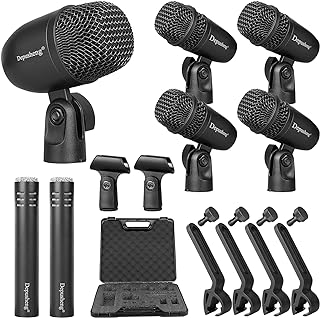
Best for: Home studios and music producers looking for a bundle of microphones for recording several parts of a drum kit. The listing describes dynamic and condenser percussion microphones, making this a broader setup than a single-mic instrument option.
The product features describe metal housing, reinforced mesh heads, cardioid pickup patterns, and a pneumatic shock-mount design. Cardioid pickup is intended to focus on the main sound source and reduce background noise. The shock-mount feature may help limit mechanical vibration reaching a microphone, depending on placement and setup. The listing also mentions XLR jacks and stand threads in 3/8-inch or 5/8-inch sizes.
There is an important listing detail to verify: the product name calls it a seven-piece set, while the supplied feature text describes a five-piece set and identifies three dynamic microphones and two condenser microphones. Check the current package contents before buying or planning a multi-channel recording.
- Choose this if you want a bundled selection rather than buying microphones one at a time.
- Better for capturing multiple drums than a single-microphone purchase.
- Limitation: Confirm the actual number and type of included pieces; the supplied details are inconsistent.
XTUGA MI7 Kit for Kick and Drum Setups

Best for: Buyers seeking a multi-microphone dynamic kit with a product description that specifically calls out kick drums and bass instruments. Its stated tailored frequency response is intended to capture low-end thump and attack while maintaining clarity at high sound pressure levels.
The MI7 features a supercardioid pickup pattern, which is described as helping reject off-axis sound such as cymbal bleed, stage chatter, and monitor spill. That may be helpful when recording or reinforcing a drum kit in a crowded room. The built-in locking stand adapter and integrated XLR connector are designed to simplify mounting, and the microphones fit standard 3/8-inch and 5/8-inch threaded stands, according to the listing.
This kit is a better fit for someone who wants a drum-oriented dynamic setup than a general-purpose voice microphone. Its supplied details do not specify the exact role or frequency response of every microphone in the set, so compare the current package information with the number of drums you plan to mic.
- Choose this if kick response and off-axis rejection are priorities.
- Better for a dedicated drum setup than a voice-first microphone kit.
- Limitation: The supplied features do not map each microphone to a specific drum.
WM57 Dynamic Mic for Instruments and Percussion
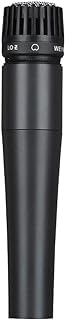
Best for: Buyers who want a basic dynamic microphone described for instruments, drums, percussion, and vocals. Its unidirectional pickup pattern and metal construction make it a straightforward candidate for testing close-mic placements on a drum or percussion source.
The listed features are concise: the WM57 is a unidirectional dynamic microphone with a metal construction and a stated focus on clear sound. It may suit a simple recording setup where the buyer needs an instrument microphone and does not require detailed specifications or a multichannel drum bundle. Because the listing does not provide a detailed frequency response or a specific drum assignment, it is difficult to compare its tonal behavior with the Shure SM57 or the drum kits on this list.
The product name explicitly says that a cable is not included. Check whether your recording interface or mixer accepts the microphone’s connection and allow for the additional accessories needed to position it.
- Choose this if you want a basic dynamic mic advertised for drums and percussion.
- Better for a single-source or supplemental recording role than a full drum setup.
- Limitation: The cable is not included, and the supplied details do not specify frequency response.
FIFINE K688CT for Voice and Occasional Use

Best for: Buyers who primarily record voice for podcasting, streaming, gaming, or voice-over and also want a microphone that could be tried on other sources. This is not the most directly targeted choice for recording a drum kit, but its dynamic capsule and cardioid pattern make it relevant as a flexible secondary option.
The K688CT offers USB and XLR connections, a mute button, headphone jack, gain knob, and boom arm according to the supplied product information. The cardioid pattern is described as reducing ambient noise, and the listing recommends speaking two to six inches from the mic for better input volume. It also states a 130 dB sound-pressure level for the XLR dynamic microphone.
Those details focus on voice capture and a desk-mounted recording setup, not drum-specific placement or a multi-microphone kit. The boom arm is designed for podcasting and streaming, so it should not be assumed to provide the positioning options needed around a full drum set.
- Choose this if voice recording is the main job and you want USB/XLR flexibility.
- Better for voice-first use than a dedicated drum microphone package.
- Limitation: It is not described as a drum kit, and the included boom arm is voice-oriented.
Buying Guide: How to Choose Drum Recording Microphones
Do you need one microphone or a complete kit?
A single microphone can capture one close source, such as a snare, but it will not give you separate control over the kick, toms, and overhead sound. A kit is more practical when you want several isolated channels for mixing. The Shure SM57 and WM57 are single-microphone choices in this comparison; the Depusheng and XTUGA products are presented as multi-piece drum sets.
Before choosing a kit, count the sources you want to record and check the actual microphone count. Also consider whether you want close mics on individual drums, overhead microphones for cymbals and the overall kit, or a combination. More microphones can offer more control, but they also require more stands, cables, input channels, and setup time.
Which pickup pattern is useful around a drum kit?
Cardioid and supercardioid patterns are directional designs described in several of these listings. They are intended to emphasize sound from the front and reject some sound from other directions. That can help reduce bleed, but it does not remove every nearby drum or cymbal from a recording. Microphone angle and distance remain important.
The SM57 and Depusheng features mention cardioid pickup, while the XTUGA listing specifies supercardioid rejection. Do not assume that one pattern is automatically best for every drum. The room, nearby instruments, monitor placement, and desired balance all affect the result.
Should you choose dynamic or condenser microphones?
The SM57, WM57, FIFINE, and XTUGA products are described as dynamic microphones. The Depusheng set is described as containing both dynamic and condenser microphones. Dynamic mics are common choices for close-miking loud sources, but the product information alone cannot predict the sound you will get in your room. A condenser option can add another type of microphone to a kit, but check its exact intended role and included accessories before buying.
For a first setup, choose based on the recording jobs you actually need to cover. If you want one mic for snare and instruments, a single dynamic may be more practical. If you want multiple perspectives or drum channels, a bundle may reduce the need to source each microphone separately.
What connections and accessories should you check?
Verify that your recording interface or mixer has the right inputs for the microphones you choose. The SM57, Depusheng, and XTUGA details refer to XLR connections; the FIFINE supports USB and XLR. The WM57 listing says its cable is not included. The supplied details do not confirm every cable or stand included with the other products, so inspect the current package description.
Plan for microphone stands or mounts, cables, and enough recording inputs for simultaneous tracks. The Depusheng features mention 3/8-inch or 5/8-inch stand threads, and the XTUGA listing describes compatibility with those thread sizes. Check stand requirements for any other microphone rather than assuming all mounting hardware is interchangeable.
How should you compare drum-mic kits?
Compare the number of microphones, microphone types, pickup patterns, connection details, mounting approach, and stated drum applications. A product that specifically mentions kick response may be appealing when low-end capture is a priority, while a set with several mic types may offer more varied options. Check for inconsistencies in package descriptions and avoid planning a recording around accessories or microphone counts that the listing does not clearly confirm.
Room conditions matter as well. A reflective room may produce more audible room sound, while a close-miking approach can emphasize individual drums. The product features can guide the shortlist, but placement, tuning, performance, and the recording space also influence the final sound.
Frequently Asked Questions
What is a good single microphone for recording a snare drum?
The Shure SM57 is the most clearly targeted single-microphone option here for snare close-miking. Its listed cardioid pattern is intended to focus on the source and reduce background pickup.
Can one microphone record an entire drum kit?
One microphone can capture the kit as a single sound source, but it will not provide separate control over individual drums. A multi-microphone setup gives more options for adjusting drum levels during mixing.
Which product is designed as a drum microphone set?
The Depusheng and XTUGA products are listed as drum microphone sets. The Depusheng description has conflicting piece counts, so confirm the package contents before purchase.
Does the WM57 include a microphone cable?
No. The WM57 product name states that a cable is not included, so plan to obtain a suitable cable separately.
Is the FIFINE K688CT a dedicated drum microphone kit?
No. The supplied description presents it as a podcast, streaming, gaming, and voice-over microphone kit with USB and XLR connections. It may serve as a flexible secondary mic, but it is not described as a dedicated drum set.
How many microphones do I need to record drums?
The number depends on whether you want a single overall capture or separate tracks for parts of the kit. Start by listing the drums and cymbals you want to control independently, then confirm that your microphone set, stands, cables, and recording inputs can support that plan.