
The best guitar harmonizer pedal depends on whether you need generated harmony, octave changes, pitch shifting, or vocal harmonies alongside guitar. The BOSS PS-6 is the clearest all-around guitar-focused choice based on its four pitch and harmony effects; the LEKATO Mini offers several modes and adjustable parameters, while the Mooer Drop is aimed at pitch and octave changes. The FLAMMA vocal pedals are designed for voice rather than as dedicated guitar harmonizers, so they suit different needs.
| Product | Best suited for | Key distinction |
|---|---|---|
| BOSS PS-6 Harmonist | Players seeking several guitar pitch and harmony effects | Four distinct effects in one stompbox |
| Mooer Drop Pitch Harmonizer | Players focused on pitch and octave effects | Drop and octave pitch-pedal positioning |
| LEKATO Mini Pitch Shifter | Players wanting selectable modes and adjustment options | Harmony, Pitch Shift, and Detune modes |
| FLAMMA FV04 Vocal Harmony | Singers and guitarists seeking vocal harmonies | Vocal harmony modes and pitches |
| FLAMMA FV01 Vocal Effects Processor | Singers seeking pitch correction and vocal effects | Voice-focused processing rather than guitar harmony |
BOSS PS-6 Harmonist Guitar Pedal

Best for: Guitarists who want a dedicated pedal with several pitch and harmony effect types. The supplied product description says the PS-6 packs four distinct pitch-shifting and harmony effects into one stompbox, making it a useful starting point for players who want more than a single pitch function.
Why it was selected: It is explicitly described as a guitar harmonist pedal and combines multiple effect types in one unit. That makes it a more direct match for the guitar-harmonizer search than the vocal-focused options in this list.
Choose this if you want one guitar pedal that covers several pitch-related effects. The provided product information does not specify the four effect names, control layout, pitch range, or whether it offers particular harmony intervals, so confirm those details before choosing it for a specific arrangement.
Limitation: The supplied description does not identify the four effects individually. Avoid assuming it includes a particular mode without checking the current product details.
Mooer Drop Pitch Harmonizer
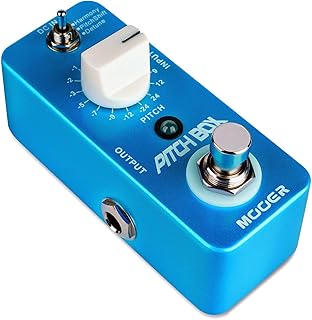
Best for: Guitarists comparing pedals for drop-pitch or octave-oriented effects. The product name identifies it as a pitch harmonizer and octave pitch box, suggesting a more focused role than a pedal advertised with several distinct harmony effects.
Why it was selected: Its product name directly connects pitch shifting, octave effects, and guitar harmonizing. It is therefore relevant for players whose main goal is changing the pitch of a guitar signal rather than processing vocals.
Choose this if pitch and octave changes are the central effects you want to explore. Compare its available shift settings and controls with your musical needs before buying; the supplied listing information does not provide a specific range, number of modes, or control details.
Limitation: The product data provided here does not describe its exact functions or adjustment range. Do not assume it offers the same four-effect selection described for the BOSS PS-6.
LEKATO Mini Pitch Shifter Pedal

Best for: Players who want harmony, pitch-shift, and detune options in a compact pedal format. The listed modes are Harmony, Pitch Shift, and Detune, giving shoppers a clear comparison point when choosing among different kinds of pitch effects.
The product information describes polyphonic pitch shifting and a pitch range of plus or minus two octaves. It also lists 16 optional parameters. In Harmony mode, the description says tones can shift up or down by as much as two octaves; Pitch Shift is described as a 100% wet output for quick tuning adjustments; Detune is intended to add subtle tonal variation.
Why it was selected: Its listed modes and adjustment range make it one of the most clearly specified guitar-pitch options in this group. Choose it if you want several named effects and adjustable parameters rather than a pedal described only by its general pitch or octave purpose.
Limitation: The listing’s reference to 16 parameters does not explain each setting in the supplied information. Review the product details if you need a particular control or exact harmony configuration.
FLAMMA FV04 Vocal Harmony Pedal
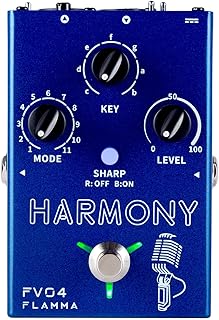
Best for: Singers or singer-guitarists who want vocal harmony processing. This is a voice-oriented pedal, not a dedicated guitar harmonizer, but its product description specifically lists 12 pitches and 11 different harmony modes.
Why it was selected: Guitarists who perform and sing may be comparing instrument and vocal harmonizers together. The FV04 addresses the vocal side of that use case, and its listed modes and pitches offer concrete details for shoppers assessing a vocal harmony pedal.
Choose this if your priority is adding harmony to a microphone signal while singing. The product name also mentions reverb and use for singing, recording, and guitarists who sing, but the supplied information does not describe its full routing or setup.
Limitation: It is marketed as a vocal harmony pedal. Avoid choosing it as a substitute for a guitar-input pitch-shifting pedal if your primary goal is harmonizing guitar notes.
FLAMMA FV01 Vocal Effects Processor

Best for: Singers looking for a vocal-focused processor with pitch correction. The product name also lists delay, reverb, a microphone amplifier, and use for live singing, streaming, recording, and acoustic guitar playing.
Why it was selected: It may appear in searches by singer-guitarists looking for pitch-related effects and a combined vocal setup. Its listed features make it relevant to that broader performance context, although it is not presented as a guitar harmonizer.
Choose this if you need a voice-oriented processor and pitch correction is more important than generated guitar harmonies. The listing mentions delay and reverb as additional effects, but does not provide specific settings or explain how each function is controlled.
Limitation: Pitch correction for vocals is not the same function as harmonizing a guitar signal. For guitar pitch shifting or guitar harmony, compare dedicated options such as the BOSS, Mooer, or LEKATO pedals instead.
Buying Guide: How To Choose A Guitar Harmonizer Pedal
Do you need harmony, pitch shifting, or octave effects?
These terms describe related but different goals. A harmonizer adds a note or notes alongside the original signal to create a fuller interval sound. A pitch shifter changes the pitch of the signal, while an octave effect moves it by an octave or more. Detune adds slight pitch variation. Check that the pedal names the effect you actually want rather than relying on the broad word “harmonizer.”
For several pitch and harmony effect types in one guitar stompbox, the BOSS PS-6 is described as having four distinct effects. For a product with stated Harmony, Pitch Shift, and Detune modes and a stated range, the LEKATO Mini provides more specific information in its supplied description. The Mooer product name emphasizes drop and octave pitch effects.
Are you processing a guitar or a voice?
Signal source matters. The BOSS, Mooer, and LEKATO products are identified as guitar effects or guitar pedals. The FLAMMA FV04 is a vocal harmony pedal, while the FV01 is a vocal effects processor with pitch correction. A vocal harmony device is not automatically a substitute for a guitar harmonizer, even if both products use terms such as “pitch” or “harmony.”
If you sing while playing guitar, decide whether you want harmonies on your voice, your guitar, or both. A vocal pedal may address the singing part of a performance, while a guitar pitch pedal addresses the instrument signal. Check the full manufacturer or retailer details to confirm connections and setup for your intended use.
How much adjustment do you need?
Some buyers prefer a simple effect selection, while others want control over pitch range or multiple parameters. The LEKATO listing specifies a range of plus or minus two octaves and 16 optional parameters. The supplied details for the other guitar pedals do not provide comparable control specifications, so compare their full listings if exact settings are important.
Also consider whether you need a particular harmony interval, pitch direction, or tuning adjustment. The product information provided for the BOSS PS-6 and Mooer Drop does not state those details. Confirm the supported settings before purchase rather than inferring them from the product name.
Should you prioritize a compact pedal?
The LEKATO product is identified as a mini pedal, which may appeal to players comparing compact formats. However, the supplied product details do not give dimensions, so check the listing if pedalboard space is a deciding factor. A pedal’s size should be weighed alongside its modes and controls, not treated as evidence of its sound or performance.
What should you check before buying?
- Confirm that the pedal is intended for guitar or voice, whichever signal you want to process.
- Match the listed modes to your goal: harmony, pitch shift, octave effects, detune, or vocal pitch correction.
- Check the stated pitch range and available controls if you need specific intervals or tuning changes.
- Review connection and setup details in the full listing; the product data summarized here does not provide complete routing specifications.
- Compare the product’s stated functions rather than assuming that similarly named pedals work the same way.
Frequently Asked Questions
What does a guitar harmonizer pedal do?
A guitar harmonizer creates harmony-related pitch effects for a guitar signal. Depending on the pedal, it may offer harmony modes, pitch shifting, octave changes, or other pitch effects. Check the listed functions because features differ across models.
Is a pitch shifter the same as a harmonizer?
No. A pitch shifter changes the pitch of a signal, while a harmonizer generally adds harmony notes alongside it. Some pedals combine both types of effects, so read the mode descriptions before choosing.
Which pedal in this list has the most clearly stated pitch range?
The LEKATO Mini listing specifies a pitch range of plus or minus two octaves and lists 16 optional parameters. The supplied details for the other guitar pedals do not state a comparable range.
Can the FLAMMA FV04 harmonize a guitar?
The FV04 is described as a vocal harmony pedal with 12 pitches and 11 harmony modes. The supplied product information does not identify it as a dedicated guitar harmonizer, so choose it primarily for vocal harmony.
What is the difference between the two FLAMMA pedals?
The FV04 is described as a vocal harmony pedal with multiple harmony modes and pitches. The FV01 is described as a vocal effects processor with pitch correction, delay, and reverb. Neither is presented in the supplied details as a dedicated guitar harmonizer.