
The best XLR-to-XLR balanced cable depends on the distance between your audio devices, how many cables you need, and how you will use them. The Cable Matters 6-foot two-pack suits general studio and live setups, while Monoprice’s 10-foot cable offers more reach for a single connection. For compact rigs, the 3-foot Cable Matters and VANDESAIL two-packs are better suited to short runs. The Rean-Neutrik-connector cable is another short two-pack option. Check connector gender and cable length before ordering.
| Product | Best For | Length And Pack |
|---|---|---|
| Cable Matters Premium XLR | General-purpose setups | 6 feet, two-pack |
| Monoprice Premier Series | Longer single runs | 10 feet, one cable |
| VANDESAIL XLR Cable | Short runs with braided jackets | 3 feet, two-pack |
| Rean-Neutrik Connector XLR Cable | Compact setups seeking named connectors | 3.3 feet, two-pack |
| Cable Matters 3-Foot XLR | Short, tidy connections | 3 feet, two-pack |
Cable Matters Premium XLR Cable, 6-Foot Two-Pack

This Cable Matters set includes two 6-foot XLR microphone cables with 3-pin connectors. The listed features specify 21 AWG oxygen-free copper conductors, a balanced design, and a soft PVC jacket. The two-cable bundle can serve a pair of microphones or provide a spare for a different audio setup.
Best for: Home studios, small recording rooms, or live rigs that need two medium-length cables. Six feet provides more placement flexibility than a short patch cable without requiring the longer reach of a 10-foot option.
Why it was selected: It combines a two-pack, a common working length, and stated conductor and jacket details. Choose this if you want two cables for professional microphones or recording equipment.
Limitation: Six feet may be too short when equipment is farther apart. The soft PVC jacket is not described as braided.
Monoprice Premier Series XLR Cable, 10-Foot

This 10-foot Monoprice Premier Series cable has an XLR male connector and an XLR female connector. Its product details describe balanced audio lines intended to reduce electromagnetic and radio-frequency noise. The cable also has a separate braided shield, which the listing says provides additional resistance to interference.
Best for: Buyers who need more reach for one microphone or other XLR audio connection. It is better suited to a longer run than the 3-foot and 3.3-foot options in this group.
Why it was selected: The stated length, male-to-female connectors, and shielding description make it a relevant choice when cable routing and interference resistance matter. Choose it if one 10-foot cable fits your setup.
Limitation: This listing is for one cable rather than a two-pack. Its longer length can leave extra cable to manage in a compact setup.
VANDESAIL XLR Cable, 3-Foot Two-Pack

VANDESAIL’s set contains two 3-foot microphone cables. The listing specifies 24 AWG oxygen-free copper conductors, foil and copper-braid shielding, and a nylon-braided outer housing. It also describes heavy-duty metal connectors with molded strain relief and grip treads, plus tin-plated pins.
Best for: A compact desk, rack, or stage setup where connected equipment sits close together. The short length helps limit excess cable, and the two-pack covers two connections or provides a spare.
Why it was selected: It offers a detailed set of construction features, including double shielding and a braided jacket. Choose this if those listed design details and short cable length match your priorities.
Limitation: Three feet is not suitable for equipment that needs to be positioned farther apart. The listed conductor gauge is 24 AWG, rather than the 21 AWG specified for the Cable Matters cables.
Rean-Neutrik Connector XLR Cable, 3.3-Foot Two-Pack
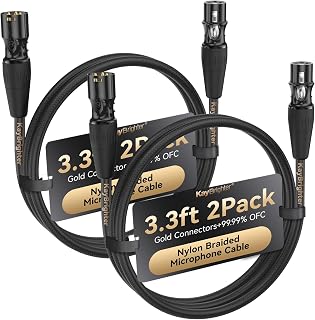
This 3.3-foot, two-pack is described as a male-to-female balanced microphone cable for equipment such as a speaker or mixer. Its product name lists Rean-Neutrik gold connectors, 99.99% oxygen-free copper, and a durable nylon-braided exterior.
Best for: Buyers seeking short cables and the connector and conductor specifications named in the product title. Its 3.3-foot length is a middle ground between a 3-foot patch cable and a longer 6-foot option.
Why it was selected: It adds another short two-cable choice with specific connector and conductor details in the supplied listing. Choose it if those named components are important to your selection.
Limitation: The supplied product information does not provide further construction details beyond the title. Confirm the exact cable length and connector configuration on the product page before ordering.
Cable Matters Premium XLR Cable, 3-Foot Two-Pack

This Cable Matters bundle includes two 3-foot XLR microphone cables with 3-pin connectors. The listing specifies 21 AWG oxygen-free copper conductors, a balanced design, and a soft PVC jacket. Its core construction details match the 6-foot Cable Matters option, but the shorter length suits closer equipment placement.
Best for: Buyers who need two short cables for a mixer, microphone, or other nearby audio equipment. It is better for keeping a small setup organized than a longer cable that may leave excess slack.
Why it was selected: It provides a compact alternative from the same product range as the 6-foot option, with stated conductor material and a two-pack format.
Limitation: Three feet limits placement flexibility. Choose a longer cable if the devices are separated or the cable must follow a longer route.
Buying Guide: How To Choose An XLR-To-XLR Balanced Cable
What does balanced XLR mean?
A balanced cable carries an audio signal over a pair of signal conductors and uses a shield as part of its design. Balanced connections are commonly used with microphones and professional audio equipment. The Monoprice listing specifically describes impedance-balanced lines and a separate braided shield intended to help resist electromagnetic and radio-frequency interference.
A cable alone does not make an entire audio path balanced. The connected equipment must also use balanced XLR connections for the connection to operate as a balanced signal path. Confirm the connector type on both devices, especially if one device uses a different audio connection.
Which cable length should you choose?
Measure the real route between devices, not just the straight-line distance. Include the path around a desk, stand, mixer, or rack, and leave enough slack to connect and reposition equipment without pulling on the plugs.
- Three feet: Best for nearby devices and compact setups. The Cable Matters and VANDESAIL two-packs are listed at this length.
- 3.3 feet: A short alternative with slightly more reach, offered in the Rean-Neutrik product title.
- Six feet: A practical middle length for setups that need some flexibility. Cable Matters offers this size as a two-pack.
- Ten feet: Better when a single connection needs more reach. The Monoprice cable is listed at this length.
A cable that is too short can put strain on connectors. Excess length can become clutter and may require careful routing. Select the shortest length that comfortably reaches the connection point.
Do you need one cable or a two-pack?
Count the connections you need before choosing a bundle. One microphone-to-mixer connection generally requires one cable, while two microphones or two separate XLR signal paths may require two. A two-pack also gives you a spare, but only if both cables are useful for your setup.
The Monoprice product is listed as one 10-foot cable. The other four products are listed as two-packs. Compare the number of cables as well as the length; a bundle with two short cables is not equivalent to one longer cable when equipment is spread apart.
Why check connector gender?
The listed products use an XLR male-to-female configuration. This is a common microphone-cable arrangement, but it may not match every device or application. Inspect the connector on each piece of equipment and verify that one end of the cable fits each connection. The phrase “XLR to XLR” by itself does not always spell out the connector genders.
How should you compare shielding and jacket materials?
Shielding and jacket descriptions can help distinguish cables, but they are not the only selection criteria. VANDESAIL lists foil and copper-braid shielding and a nylon-braided outer housing. Monoprice lists a separate braided shield. Cable Matters specifies a soft PVC jacket and 21 AWG oxygen-free copper conductors. Compare the stated features with your priorities rather than assuming an unlisted feature is included.
For a frequently moved cable, connector strain relief and a flexible jacket may be relevant details to check. The VANDESAIL listing describes molded strain relief and a braided housing. For a stationary studio connection, length and correct connector fit may matter more.
What should you verify before buying?
- Confirm that both devices have the XLR connections needed for the cable.
- Check that male and female connector ends match the equipment.
- Measure the required cable route and choose a suitable length.
- Verify whether the listing includes one cable or two.
- Compare stated conductor, shielding, jacket, and connector details.
- For the Rean-Neutrik listing, review the product page for details not included in the supplied description.
Frequently Asked Questions
Are XLR-to-XLR cables balanced?
Many XLR microphone cables are designed for balanced audio connections. Check the product specifications and make sure the connected devices also support balanced XLR connections.
What length XLR cable is best for a home studio?
The best length depends on the distance between the microphone and the audio interface or mixer. Measure the cable route and choose enough length to connect without pulling, while avoiding unnecessary slack.
Is a 3-foot XLR cable long enough?
A 3-foot cable can work when the connected devices are close together, such as in a compact setup. Choose a longer cable if the route around stands or furniture exceeds its reach.
Does a two-pack mean two separate cables?
Yes. The products described as two-packs are listed as including two cables. Check the product details to confirm the number and length of cables in the package.
Can an XLR cable reduce audio noise?
A balanced connection and cable shielding can help resist certain types of interference, as described in the Monoprice and VANDESAIL listings. Noise can also depend on the connected equipment, setup, and surrounding electrical conditions.
Do gold-plated connectors make a cable necessary for every setup?
No. Connector material is one product detail, but connector fit, cable length, and compatibility with the equipment are essential checks. The listed Rean-Neutrik cable title names gold connectors; the other selections should be compared by their own specifications.