
The best high-end stereo rack depends on how much equipment you need to store, how you want the system to look, and whether adjustable shelves or vibration-focused features matter most. The Salamander Designs Archetype is best for solid-walnut construction and adjustable shelving; the four-tier SPTZQURY rack suits a multi-component setup; and the two-tier lacquer rack is a compact option with shock-absorbing support legs. Compare the listed features below, then check the dimensions and configuration on the product page before choosing.
| Product | Best For | Notable Listed Feature |
|---|---|---|
| Salamander Designs Archetype 5.0 | Wood construction and flexible shelf positions | Solid walnut with five shelves |
| SPTZQURY 4-Tier HiFi Rack | Several audio components | Up to 88 pounds per shelf |
| SPTZQURY 3-Tier HiFi Rack | A smaller component collection | Open structure for airflow |
| 7-Tier Heavy Duty Audio Rack | Mixed AV and gaming equipment | Adjustable shelf spacing |
| Modular Piano-Lacquer Stereo Rack | Compact setups and a polished finish | Shock-absorbing support legs |
Salamander Designs Archetype 5.0 Modular Shelving

The Archetype 5.0 is a strong match for buyers who prioritize solid-wood construction and the ability to change shelf positions. Its listed materials are solid walnut hardwood, and the unit provides five shelves with infinite vertical adjustment. The product is also described as a potential foundation for an expanded Archetype system.
Best for: A listener who wants a wood-forward rack with multiple shelf levels and flexible vertical spacing. It stands apart from the metal-frame options in this selection because the listing specifically identifies solid walnut hardwood.
Why it was selected: The five-shelf layout and adjustable positions offer practical flexibility when component heights differ or a system changes over time.
Consideration: The supplied product details do not state shelf load limits, overall dimensions, or what additional parts an expanded system requires. Check those details before planning around unusually heavy or oversized equipment.
SPTZQURY 4-Tier HiFi Audio Rack

This four-tier rack is intended for buyers who need separate levels for several audio components. The listed construction combines high-density laminated-board shelves with stainless-steel pillars. The manufacturer states that each shelf supports up to 88 pounds, making the per-shelf capacity a useful comparison point for buyers with heavier equipment.
The open-air shelf structure and hollow rear are described as supporting air circulation around equipment. The listing also identifies metal connecting brackets and precision tapered feet as part of its structural and vibration-isolation design.
Best for: A multi-component system that needs four tiers, including equipment such as amplifiers, tube amps, or CD players. It offers more shelf levels than the three-tier model while retaining the same stated per-shelf capacity and open design.
Consideration: The listed 88-pound limit is per shelf, not a substitute for checking each component’s weight and the rack’s overall dimensions. Exact shelf spacing is not included in the supplied details.
SPTZQURY 3-Tier HiFi Audio Rack

The three-tier version has the same listed materials and design features as the four-tier model, but provides one fewer shelf. Each laminated-board shelf is stated to support up to 88 pounds, and stainless-steel pillars form the rack’s support structure. Its open shelves and hollow rear are designed to leave the equipment area unobstructed for airflow.
The product description also highlights metal connecting brackets and tapered feet. These features are presented as support for structural stability and reduced transmission of floor vibration.
Best for: Buyers with a smaller set of components who want an open, three-level rack rather than the four-tier alternative. It can suit a setup organized around a few major pieces, such as an amplifier and source components.
Why it was selected: It offers the same stated shelf capacity and ventilation-oriented structure as the four-tier option in a simpler three-shelf layout.
Consideration: Choose the four-tier version if you need another shelf. The supplied details do not provide overall measurements or shelf-to-shelf clearance, so confirm fit for tall equipment before ordering.
7-Tier Heavy Duty Audio Component Rack

This seven-tier stand is designed for buyers who want to organize audio, video, and gaming equipment in one vertical footprint. The listed use cases include amplifiers, speakers, record players, DVD and Blu-ray players, game consoles, cable boxes, and TV accessories. Its frame is described as metal steel, paired with E1 high-density wood boards.
The shelves have adjustable spacing, with the listing specifying 10-centimeter, or four-inch, adjustments. That feature can help when equipment heights vary, although the supplied details do not explain the adjustment mechanism.
Best for: A mixed entertainment setup with many smaller components or accessories and a need for multiple shelf levels. It is a better fit for broad AV storage than for buyers seeking a specifically walnut or piano-lacquer appearance.
Why it was selected: Its seven tiers and adjustable shelf spacing distinguish it from the three- and four-tier audio racks.
Consideration: The product details do not state a weight limit per shelf or overall dimensions. Verify capacity and available space before placing heavy amplifiers or large equipment on it.
Modular Piano-Lacquer Stereo Rack
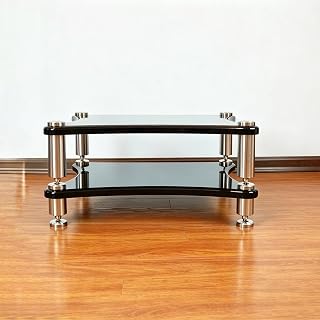
This stereo rack combines high-density wood panels with a piano-lacquer finish and stainless-steel support legs. The listing describes 50-millimeter solid support pillars with shock-absorbing spikes, intended to reduce ground vibration and provide a stable platform for audio equipment. It also describes a modular design that can be stacked as a four-tier structure.
Best for: Buyers who want a finished, furniture-like appearance and a modular rack concept. The listed use cases include power amplifiers, CD players, and decoders.
Why it was selected: Its lacquered panels and shock-absorbing support details provide a different style and feature emphasis from the open laminated-board racks.
Consideration: The supplied product name identifies “2 Tier A,” while the feature text refers to a stackable four-tier structure. Confirm the selected configuration and what is included before buying. The listing details do not provide shelf load limits.
Buying Guide: How To Choose A High-End Stereo Rack
How many shelves does your system need?
Count the components you plan to place on the rack, then allow for any equipment you expect to add. A three-tier rack is a direct choice for a shorter component stack, while a four-tier model provides another dedicated level. A seven-tier stand offers more places for mixed AV equipment and accessories, but its overall footprint and dimensions should be checked before purchase.
Count shelves by usable levels, not by the number of components listed in a product description. Some equipment can be stacked only if the manufacturer permits it and ventilation remains adequate. Leave room to reach controls and connectors, and consider whether cables need space behind or beside the rack.
Do shelf spacing and equipment height matter?
They matter whenever a component is taller than a typical source device. The Salamander Designs model lists infinite vertical adjustment, while the seven-tier stand specifies adjustable spacing in four-inch increments. The other supplied product details do not specify shelf clearance. Compare your tallest component’s height with the actual clearance shown in the current listing.
Also account for plugs, cables, and ventilation gaps. A shelf that fits the component’s body may still be inconvenient if rear connections press against a wall or upper shelves limit access. Confirm usable shelf depth and spacing rather than assuming dimensions from product images.
What construction and finish suit your room?
Choose materials based on the appearance you want and the equipment’s support needs. The Archetype is listed as solid walnut hardwood. The SPTZQURY racks use high-density laminated-board shelves and stainless-steel pillars. The seven-tier stand combines a steel frame with high-density wood boards, while the modular rack lists high-density panels with a piano-lacquer finish.
Descriptions such as “heavy duty” do not provide a complete comparison by themselves. Look for explicit load limits, shelf dimensions, and construction details. Among these five products, the SPTZQURY three- and four-tier models specifically state a maximum of 88 pounds per shelf.
Should you prioritize airflow or vibration features?
For components that produce heat, an open structure can make equipment access and air circulation easier. The two SPTZQURY listings specifically describe open-air shelves and a hollow rear. Confirm that the rack’s arrangement leaves the ventilation openings on your components unobstructed; a ventilated rack cannot compensate for blocked equipment vents.
Several listings describe vibration-related features, including tapered feet on the SPTZQURY racks and shock-absorbing spikes on the piano-lacquer model. Treat these as stated design features, not a guarantee of a specific sound improvement. A stable, level position and suitable component placement remain practical selection factors.
How should you compare load capacity?
Check the weight of each component and compare it with the stated limit for the shelf where it will sit. The SPTZQURY racks list 88 pounds per shelf. The supplied details for the other models do not specify a load limit, so do not infer one from materials, tier count, or the words “heavy duty.” Contact the seller or consult the current product listing if capacity is unclear.
Consider weight distribution as well as individual component weight. Place heavier equipment on a shelf that the product instructions identify as appropriate, and avoid exceeding any shelf or overall limit. If no limit is provided, confirm suitability before using the rack for heavy amplifiers.
What details should you verify before ordering?
Check the exact configuration, overall height, width and depth, usable shelf dimensions, shelf spacing, and load limits. Verify whether the selected listing is for the tier count shown in its title. This is especially important for the modular piano-lacquer rack because its supplied title identifies a two-tier option while its feature text discusses a stackable four-tier structure.
Review assembly requirements and the available product information for room placement. A rack may need clearance from walls for cable routing, access, or airflow. If you are placing it on carpet or an uneven floor, consider whether its feet can sit level and stable in that location.
Frequently Asked Questions
Which stereo rack in this selection has the most shelves?
The 7-Tier Heavy Duty Audio Component Rack has the most listed shelf levels. Its shelf spacing is described as adjustable in four-inch increments. Check the rack’s dimensions and load capacity before choosing it for larger or heavier equipment.
Which rack has a stated shelf weight limit?
The SPTZQURY three-tier and four-tier racks each list support of up to 88 pounds per shelf. The supplied details for the other products do not state a shelf weight limit.
Which option is listed as solid walnut?
The Salamander Designs Archetype 5.0 is listed as solid walnut hardwood. It has five shelves and infinite vertical adjustment, according to the supplied product details.
Which stereo racks are described as open for airflow?
Both SPTZQURY HiFi racks are described as having open-air shelves and a hollow rear. Keep the equipment’s own ventilation openings clear, and confirm the rack’s dimensions suit your components.
What should I check before buying a modular stereo rack?
Verify the selected tier configuration, shelf dimensions, shelf spacing, and load limit. For the piano-lacquer rack listed here, confirm whether the selected option is the two-tier version or includes the stackable four-tier arrangement described in its features.