
For adjusting speaker level with a rotary control, the Parts Express 100W 8-ohm L-pad is the most broadly specified option here; the 50W 8-ohm model suits lower-power applications, while the 16-ohm version is for systems designed around that impedance. The OSD Audio control is an in-wall alternative, not a standalone L-pad. The acoustic isolation pads serve a different purpose and are included only as an option for reducing speaker vibration at a desk.
| Product | Best suited for | Key specification or distinction |
|---|---|---|
| Parts Express 50W Mono L-Pad | Lower-power, 8-ohm speaker applications | 50W, mono, 3/8-inch shaft |
| Parts Express 100W Mono L-Pad, 8 Ohm | Higher-rated 8-ohm applications | 100W, mono, 3/8-inch shaft |
| Parts Express 100W Mono L-Pad, 16 Ohm | 16-ohm speaker applications | 100W, mono, 3/8-inch shaft |
| OSD Audio SVC100 | In-wall speaker volume adjustment | 100W in-wall control with impedance matching |
| Acoustic Isolation Pads, 2 Pack | Desk or studio-monitor vibration management | Foam pads intended for 5-inch speakers |
Parts Express 50W 8-Ohm Mono L-Pad
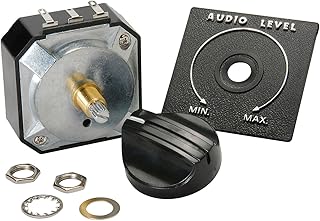
This Parts Express L-pad is a speaker attenuator rated at 50W. Its listed specifications are mono operation, an 8-ohm rating, and a 3/8-inch shaft. It is intended for users who need a physical rotary control to adjust the level of a compatible speaker or speaker circuit.
Best for: A lower-power application using an 8-ohm setup that needs a single-channel control. It was selected because it is a direct L-pad rather than a general in-wall volume control or an acoustic isolation accessory.
Choose this if its power and impedance ratings match the system and the 3/8-inch shaft fits the planned mounting arrangement. Limitation: The 50W rating is lower than the 100W L-pad options in this list. Do not select it for a system that requires a higher-rated attenuator.
Parts Express 100W 8-Ohm Mono L-Pad

This Parts Express model is a mono L-pad with a listed 100W rating, 8-ohm impedance, and 3/8-inch shaft. Compared with the 50W 8-ohm model above, its stated power rating is higher, while both are specified for mono use and the same shaft size.
Best for: Buyers seeking a 100W-rated L-pad for an 8-ohm application. It is the most straightforward choice in this group when the system calls for an 8-ohm mono attenuator and the 100W rating fits the design.
Choose this if you need a speaker-level rotary attenuator and have confirmed the circuit’s impedance and power requirements. Limitation: This is a mono part, so one unit is not a two-channel stereo control. A separate control may be needed for a second channel, depending on the installation.
Parts Express 100W 16-Ohm Mono L-Pad

This Parts Express attenuator is rated at 100W and 16 ohms. It is a mono model with a 3/8-inch shaft. Its main difference from the 100W 8-ohm version is the listed impedance, making impedance matching the first consideration when comparing the two.
Best for: A speaker circuit designed for a 16-ohm L-pad. It was selected because it provides a higher-impedance alternative to the 8-ohm models while retaining the listed 100W rating and mono format.
Choose this if the speaker or circuit documentation calls for a 16-ohm attenuator. Limitation: It is not the right substitute for an 8-ohm L-pad simply because both products have a 100W rating. Confirm impedance before purchase and installation.
OSD Audio SVC100 In-Wall Volume Control

The OSD Audio SVC100 is described as a 100W in-wall volume control with impedance matching for home speakers. It has a rotary knob and a white finish. Unlike the Parts Express products, it is presented as an in-wall control rather than a bare mono L-pad with a specified shaft.
Best for: A buyer planning an in-wall speaker volume-control installation and looking for a product that lists impedance matching. It was selected as a related alternative for users whose goal is room-level adjustment rather than adding a component inside a speaker cabinet.
Choose this if an in-wall rotary control is the intended installation type. Limitation: The supplied product information does not specify its impedance range, wiring method, or included mounting parts. Confirm those details against the product listing and the planned system before buying.
Acoustic Isolation Pads for 5-Inch Speakers

This two-pack consists of high-density acoustic foam pads described for 5-inch speakers. The product name identifies them as studio-monitor isolation pads intended to help prevent vibrations. They are not electrical attenuators and do not provide a rotary level control.
Best for: Someone looking to place 5-inch speakers on a surface and address vibration, rather than reduce speaker output through an L-pad. It is included as a clearly different accessory because “speaker pads” can refer to either isolation pads or electrical attenuation components.
Choose this if the goal is speaker isolation and the speaker size matches the product description. Limitation: These pads do not replace an L-pad or volume control. The name also mentions suitability for 5–6-inch speakers while the option is labeled for 5-inch speakers, so verify the selected size and product details.
Buying Guide: How to Choose an L-Pad for Speakers
What does an L-pad do?
An L-pad is a speaker-level attenuator used to reduce the signal reaching a speaker or speaker driver. It typically uses a rotary control. It is different from an acoustic foam pad, which sits under or around a speaker and does not change the electrical signal.
When selecting one, match the attenuator to the speaker circuit rather than choosing by appearance alone. The products here specify either 8 ohms or 16 ohms. Using a part with the wrong impedance can affect how the circuit operates, so check the speaker or crossover documentation when available.
Should you choose an 8-ohm or 16-ohm model?
Choose the impedance specified for the speaker circuit. The 8-ohm Parts Express models are the 50W and 100W versions. The 16-ohm option is rated at 100W. The 100W rating does not make the 16-ohm model a universal replacement for an 8-ohm part.
If the speaker system includes a crossover or multiple drivers, check which component the L-pad will control and what impedance that circuit requires. If the intended impedance is unclear, consult the speaker or crossover documentation before wiring a control.
How much power rating do you need?
Compare the attenuator’s stated power rating with the requirements of the application. The 50W model is the lowest-rated L-pad in this selection. The two 100W Parts Express models have higher listed ratings, but they differ in impedance. A higher rating alone does not guarantee compatibility.
Do not assume that an amplifier’s headline output number directly tells you which attenuator to buy. The relevant requirements depend on the speaker circuit and how the control is installed. When uncertain, have a qualified audio technician verify the design.
Is mono enough, or do you need stereo control?
The three Parts Express L-pads listed here are mono. A mono control adjusts one channel or circuit. For independent left- and right-channel adjustment, a single mono unit may not be sufficient; the installation may require separate controls or another stereo-control solution.
Decide whether you want to change the level of one speaker, a pair together, or each channel independently. The OSD Audio product is described as an in-wall volume control, but the supplied details do not specify its channel configuration. Verify that information before using it for a stereo setup.
When is an in-wall control a better fit?
An in-wall volume control is suited to installations where the user wants an accessible wall-mounted rotary control for home speakers. The OSD Audio SVC100 is listed as a 100W in-wall control with impedance matching. This product category differs from a bare L-pad, so compare its installation requirements with the project before choosing.
Check the control’s supported impedance, wiring instructions, and physical installation details in the current product information. The supplied listing details do not establish those specifics. Do not assume that an in-wall volume control and a component-mounted L-pad can be exchanged without considering the circuit.
What should you check before installing one?
- Impedance: Match the listed 8-ohm or 16-ohm rating to the speaker circuit.
- Power rating: Compare the product’s stated wattage with the application’s requirements.
- Channel count: Confirm whether one mono control is sufficient or separate controls are needed.
- Mounting: The Parts Express models list a 3/8-inch shaft. Check that the panel or enclosure can accommodate it.
- Control purpose: Distinguish electrical attenuation from vibration isolation. Foam pads do not reduce a speaker’s electrical output.
- Installation details: Follow the product’s wiring information and the speaker or crossover documentation.
Frequently Asked Questions
Can I use an 8-ohm L-pad with a 16-ohm speaker?
Do not assume the two are interchangeable. Choose an L-pad that matches the impedance required by the speaker circuit, and verify the system documentation if the correct value is unclear.
What is the difference between a 50W and 100W L-pad?
The listed power rating differs: one is rated at 50W and the other at 100W. Both Parts Express models in this comparison are 8-ohm, mono controls with 3/8-inch shafts. Select based on the application’s power requirements, not wattage alone.
Can one mono L-pad control two stereo speakers?
A mono L-pad is specified for one channel or circuit, not independent control of two stereo channels. A stereo installation may need separate controls or a product specifically designed for the intended channel arrangement.
Are acoustic isolation pads the same as speaker L-pads?
No. An L-pad is an electrical attenuator that adjusts speaker level. Acoustic isolation pads are foam accessories placed with speakers to address vibration; they do not act as volume controls.
Is an in-wall volume control the same as a bare L-pad?
No. The OSD Audio SVC100 is listed as an in-wall volume control with impedance matching, while the Parts Express items are mono L-pad attenuators. Compare installation format, impedance, power rating, and wiring requirements before choosing.