
The best silicone flexible roll-up piano depends on whether you need a full 88-key range, a compact keyboard for children, or simple beginner features. The MARVTOWN 88-key model is best for buyers who want the widest listed range and MIDI connectivity; the MARVTOWN 61-key models offer a middle ground for portability and practice. For young learners, the 49-key MARVTOWN Rainbow and MUKIKIM models focus on color and introductory play. The Lujex 61-key keyboard is another straightforward option with recording and multiple tones.
| Product | Best for | Key details |
|---|---|---|
| MARVTOWN 88-Key | Buyers seeking the most keys and MIDI | 88 keys, 128 tones, 108 demo songs |
| MARVTOWN 49-Key Rainbow | Children and compact travel | 49 keys, 8 tones, 6 demo songs |
| MARVTOWN 61-Key | Portable practice with rechargeable power | 61 keys, USB-C charging, up to 6 hours listed use |
| MUKIKIM Rainbow Piano | Color-guided learning | 49 keys, color songbook, record and playback |
| Lujex 61-Key | Basic beginner practice | 61 keys, 16 tones, recording function |
MARVTOWN 88-Key Roll-Up Piano

Best for: Beginners or travelers who want an 88-key roll-up instrument with a broad selection of built-in sounds. It is the only listed option here with 88 keys and MIDI connectivity.
The MARVTOWN includes 128 tones, 108 demonstration songs, a built-in HI-FI speaker, and a headphone jack. Its listed controls include volume adjustment, recording, playback, and sustain without a separate sustain pedal. MIDI connectivity may appeal to buyers who want to connect the keyboard to compatible music equipment or software; check the connection requirements for the equipment you plan to use.
The rechargeable battery is described as charging in about 2.5 hours and providing more than four hours of use. The keyboard can also be powered with a 5V 1A–2A adapter or a power bank, according to the product details. Choose this if key count and sound options matter more than having the smallest possible learning keyboard.
Limitation: Its full 88-key layout may be more keyboard than a young child or casual traveler needs. The product information does not specify the dimensions or weight when rolled.
MARVTOWN 49-Key Rainbow Piano

Best for: Children and beginners who want a compact, colorful keyboard for casual learning or travel. Its 49 keys make it a smaller alternative to the 61- and 88-key products in this comparison.
This flexible silicone keyboard offers eight tones and six demonstration songs. The listed features describe soft silicone keys, a rechargeable design, and a headphone jack. Its roll-up format is intended to fit into a backpack or tote, making it a practical choice when storage space and portability are priorities.
Choose this model if a child is exploring music and a large range of keys is not essential. The smaller key count can make the instrument easier to carry and less imposing for a first-time learner. The included demonstration songs and tone choices provide basic ways to explore sounds.
Limitation: With 49 keys and eight tones, it offers fewer listed keys and sounds than the larger MARVTOWN models. The product details do not state battery runtime or charging time.
MARVTOWN 61-Key Portable Keyboard
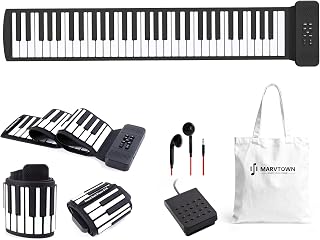
Best for: Buyers who want more keys than a 49-key beginner model but still prioritize a roll-up design and rechargeable power. The keyboard has 61 keys, 128 tones, and 14 demonstration songs.
The product details describe a silicone keyboard with a 0.4-inch thickness and 2.0-centimeter key width. It has a built-in speaker, earphone support, and a USB-C charging port. Its rechargeable battery is listed as taking two hours to charge and providing up to six hours of continuous use. A 5V 1A–2A adapter or power bank is also listed as a power option.
The stated rolled dimensions are 20 by 16 by 8 centimeters, which gives buyers a specific size to consider when packing or storing the keyboard. It is described as waterproof and easy to clean with a damp cloth. Choose this model if a portable 61-key layout and the stated battery information are priorities.
Limitation: A 61-key flexible keyboard is not the same purchase as a traditional rigid piano keyboard. Buyers should also confirm that its key layout and sound features meet their intended practice needs.
MUKIKIM Rock and Roll It Rainbow Piano

Best for: Children and beginners who may benefit from a color-based introduction to songs. Its standout listed feature is a Play-by-Color songbook designed to help learners follow the colors to play songs.
The MUKIKIM has 49 color-coded standard keys and a flexible silicone pad that can be rolled for storage or transport. The listed features include multiple keyboard tones, demonstration songs, recording and playback, echo or sustain, and a built-in speaker with volume control. An audio output is included for headphone or speaker use.
Choose this model if visual guidance is more important than a large key range. The songbook gives beginners a structured way to try complete songs, while the recording and playback features support basic practice. Its 49-key format is more compact than the 61- and 88-key options in this guide.
Limitation: This keyboard has fewer keys than the larger options, and the product details do not specify battery runtime or charging method. Buyers looking for specific power information should check the current product listing.
Lujex 61-Key Roll-Up Piano

Best for: New learners who want a 61-key roll-up keyboard with a simple set of practice features. It includes 16 instrument tones, six demonstration songs, and a recording function.
The Lujex is described as an eco-friendly silicone keyboard that rolls up for compact storage. Its product details state that it supports two keys at once, which is intended for simple melodies and early learning. It can be placed on a tabletop, and the listed headphone jack allows quieter practice when headphones are used.
Choose this model if you want a portable 61-key layout and basic tools for experimenting with sounds and recording practice. Compared with the MARVTOWN 61-key option, its listed feature set emphasizes 16 tones and recording rather than a stated USB-C port, battery runtime, or large number of demo songs.
Limitation: The product information does not provide battery details, dimensions, or a stated number of keys that can be played simultaneously beyond its two-key support. Buyers who need those specifics should verify them before purchase.
Buying Guide: How to Choose a Silicone Roll-Up Piano
How many keys do you need?
Key count is one of the clearest differences among these keyboards. A 49-key model is a compact choice for introductory play and travel. A 61-key keyboard provides a larger range while retaining a portable roll-up format. An 88-key model offers the most keys in this selection, which can suit buyers who want a broader layout in a flexible instrument.
Do not choose by key count alone. Consider who will use the keyboard, how much space is available, and whether the learner is exploring music casually or following a particular lesson plan. If a teacher or course requires a specific keyboard layout, compare that requirement with the product details before buying.
Is a roll-up piano intended for travel or regular practice?
Flexible keyboards are designed to roll or fold for storage and transport, unlike rigid keyboards. This can make them useful for trips, temporary setups, or homes where a full-size instrument is difficult to store. The MARVTOWN 61-key product provides stated rolled dimensions, while the other listings describe portability without giving the same measurements.
For regular practice, think about where the keyboard will sit and how consistently it can lie flat. A flexible instrument may be convenient to pack away, but it should not be assumed to feel or perform like a conventional rigid piano. Buyers who need a particular playing feel should examine product specifications carefully.
Which sound and learning features matter?
Built-in tones and demonstration songs can make a beginner keyboard more engaging. The MARVTOWN 88-key model lists 128 tones and 108 demonstration songs; the 61-key MARVTOWN lists 128 tones and 14 demo songs. The Lujex includes 16 tones and six demo songs, while the 49-key MARVTOWN lists eight tones and six demo songs.
For visual learning, the MUKIKIM’s color-coded keys and Play-by-Color songbook are its clearest distinguishing features. For basic practice tools, compare whether the keyboard includes recording, playback, volume control, or sustain features. More features are not automatically better if the player only needs a simple first instrument.
Do you need headphones, a speaker, or MIDI?
A built-in speaker makes it possible to hear the keyboard without connecting separate audio equipment. A headphone jack or headphone support can be useful for quieter practice, but buyers should confirm whether headphones are included; the supplied product details do not state that they are. The MARVTOWN 88-key model specifically lists MIDI connectivity, which may be useful when connecting to compatible equipment. Check connection requirements for the devices and software you plan to use.
How should you compare power and charging?
Battery details vary. The MARVTOWN 88-key model lists about 2.5 hours of charging for more than four hours of use. The MARVTOWN 61-key model lists two hours of charging for up to six hours of use and identifies USB-C charging. The MARVTOWN 49-key listing says rechargeable but gives no runtime or charging time. The MUKIKIM and Lujex details supplied here do not specify battery performance.
If you plan to use the piano away from an outlet, prioritize products with explicit battery and charging information. Check whether the required adapter, cable, or power bank is included rather than assuming it comes in the box.
What should you check before ordering?
- Confirm the number of keys and whether that range suits the player’s lessons or goals.
- Review the stated dimensions if the keyboard must fit a backpack, drawer, or travel bag.
- Check the listing for charging method, battery runtime, and required power accessories.
- Compare headphone, speaker, recording, sustain, and MIDI features against your actual needs.
- Look for cleaning and care instructions, especially for a flexible silicone surface.
- Verify the current product details for any feature that is not specified in the supplied description.
Frequently Asked Questions
What is a silicone roll-up piano?
It is a flexible electronic keyboard designed to roll or fold for storage and transport. The products in this guide list features such as built-in tones, demonstration songs, speakers, headphone support, or rechargeable power, but features vary by model.
Which model has the most keys?
The MARVTOWN roll-up piano has 88 keys, the highest key count among the five products compared here. The other options have either 49 or 61 keys.
Which roll-up piano is best for a child learning songs?
The MUKIKIM is a strong option for color-guided introductory learning because it includes color-coded keys and a Play-by-Color songbook. The MARVTOWN 49-key Rainbow is another compact choice with eight tones and six demonstration songs.
Can these keyboards be used with headphones?
Several listings specify a headphone jack, headphone support, or audio output. Check the individual product listing for the exact connection type and whether headphones are included.
Does every model include MIDI?
No. MIDI connectivity is specifically listed for the MARVTOWN 88-key model in the supplied product details. Do not assume that the other keyboards support MIDI.