
The best crossover kit depends on whether your speaker system needs two-way or three-way frequency division, and whether the stated power and impedance match your setup. The Audiopipe CRX-203 and DS18 PRO-CFX are two-way options for tweeter-and-midrange applications; the HiQltyla 200W and 350W models and the adjustable 400W kit are three-way choices. Compare the listed specifications before buying, especially crossover points and power ratings.
| Product | Best For | Listed Design |
|---|---|---|
| HiQltyla 200W 3-Way | Basic three-way home or car audio installations | Three-way, 200W peak |
| Audiopipe CRX-203 | Two-way tweeter and midrange setups | Two-way, 300W peak |
| HiQltyla WEAH-3509A | Three-way systems needing adjustment options | Three-way, 350W peak |
| 400W Adjustable 3-Way | Three-way configurations with adjustable points | Three-way, 400W |
| DS18 PRO-CFX | Car audio two-way setups | Two-way, 300W RMS listed |
HiQltyla 200W 3-Way Speaker Crossover
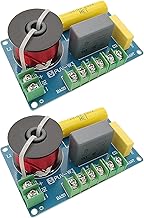
This passive crossover is a three-way option for a speaker system that divides audio into bass, midrange, and treble paths. Its listed peak power handling is 200 watts, and the stated impedance range is 4–8 ohms. The specified frequency range is 45Hz–25kHz, with division points at 860Hz and 6,000Hz.
Best for: Buyers assembling a three-way home or car audio speaker setup who want screw terminals instead of soldered connections. The product listing names a bass inductor, an MPX capacitor, and a 100V 10uF high-current capacitor.
Limitation: The 200W figure is peak power, not RMS. Check the connected speaker and amplifier requirements rather than comparing this number directly with RMS ratings.
Audiopipe CRX-203 2-Way Crossover

The Audiopipe CRX-203 is a two-way passive crossover supplied as a two-pack. The listing specifies 150 watts RMS and 300 watts peak, gold-plated screw terminals, and a tweeter frequency range of 3.39–20kHz. These details make it important to compare both the power rating type and the intended tweeter range with your components.
Best for: Buyers looking for a straightforward two-way crossover for a tweeter-and-midrange arrangement, particularly when screw terminals are preferred for installation.
Limitation: The supplied specifications identify the tweeter frequency range but do not provide a full set of crossover points or an impedance range. Confirm those details for your particular speaker system before purchase.
HiQltyla WEAH-3509A 350W 3-Way Crossover

The WEAH-3509A is a passive three-way crossover with a listed peak rating of 350 watts and a stated 4–8 ohm impedance range. Its frequency range is 40Hz–22kHz. The listed bass-to-midrange division options are 780Hz, 850Hz, and 900Hz; the midrange-to-tweeter options are 5,500Hz and 5,800Hz.
The parts list includes multiple inductors and capacitors, resistors, a tweeter protector, and switches for adjusting the midrange and tweeter. Screw terminals are specified for installation without welding.
Best for: Buyers who need a three-way design and want listed adjustment choices at the division points.
Limitation: Its 350W rating is peak power. Check that the crossover settings suit the drivers; the selectable points do not by themselves establish compatibility with every woofer, midrange, or tweeter.
400W Adjustable 3-Way Speaker Crossover

This two-piece crossover kit is described as a three-way design for 4–8 ohm systems, with a stated 400W power rating. The listing highlights adjustable crossover points between 2,550Hz and 2,600Hz, three high-temperature-resistant inductors, and audio-specific capacitors.
Best for: Buyers seeking a three-way kit with an adjustable point in the stated 2,550–2,600Hz range. The two-piece quantity may also suit a stereo setup, but verify the number of units needed for your system.
Limitation: The supplied feature description does not explain the separate low-, mid-, and high-frequency crossover points in detail. Ask for or check the full wiring and frequency specifications before matching it to drivers.
DS18 PRO-CFX 2-Way Car Audio Crossover

The DS18 PRO-CFX is a two-way passive crossover intended for tweeters and midrange speakers. The product description states that it can handle up to 300 watts RMS and that one amplifier channel can serve two speakers through the crossover. It is sold as a two-pack.
Best for: Car audio buyers putting together a two-way system who want a passive component that separates frequencies for two speakers and can use one amplifier channel as described in the listing.
Limitation: The provided features do not state the crossover frequency or impedance range. Confirm these specifications and the correct wiring arrangement before connecting it to your speakers and amplifier.
Buying Guide: How to Choose a Speaker Crossover Kit
Do you need a two-way or three-way crossover?
A two-way crossover divides the audio signal into two frequency paths. In these listings, the two-way choices are the Audiopipe CRX-203 and DS18 PRO-CFX, both described for tweeter and midrange applications. A three-way crossover divides the signal among three paths, commonly used for bass, midrange, and treble drivers. The three-way models in this selection are the HiQltyla 200W, HiQltyla WEAH-3509A, and 400W adjustable crossover.
Choose the number of ways based on the speaker drivers and system design, not simply on the number of speakers. A crossover must route frequencies appropriately for the components it serves. If you are replacing an existing unit, use its wiring and frequency specifications as a reference.
How should you compare crossover frequency points?
Frequency points indicate where the crossover divides the signal between drivers. Compare those figures with the requirements for your woofer, midrange, and tweeter. The HiQltyla 200W model lists 860Hz and 6,000Hz, while the WEAH-3509A gives several selectable bass-to-midrange and midrange-to-tweeter points. The 400W kit lists an adjustable range of 2,550–2,600Hz, but its supplied feature description gives less detail about other division points.
Do not assume that a crossover is suitable just because its stated frequency range appears broad. The driver’s operating range and the crossover’s actual division points are separate considerations. When the product information does not provide complete frequency details, verify them before ordering.
What do RMS and peak power ratings mean for comparison?
Read the power rating type carefully. The HiQltyla 200W model is listed at 200 watts peak, and the WEAH-3509A at 350 watts peak. Audiopipe lists both 150 watts RMS and 300 watts peak. DS18 describes the PRO-CFX as handling up to 300 watts RMS. The 400W model is listed at 400 watts, but the provided description does not identify that figure as RMS or peak.
These figures are not directly interchangeable. Compare ratings stated on the same basis, and confirm the amplifier’s output and the speaker system’s requirements. A larger number alone does not establish that a crossover is the right match.
Does impedance matter when choosing a crossover?
Yes. Impedance is a key compatibility detail. The HiQltyla 200W, HiQltyla WEAH-3509A, and 400W adjustable model list a 4–8 ohm range. The supplied feature details for the Audiopipe and DS18 products do not specify impedance. Check the rating of the speakers and crossover together; do not assume a product supports an impedance that is not stated.
Which installation details should you check?
Screw terminals can make wire connections more convenient because the listed HiQltyla products specify them and do not require welding. Audiopipe also lists screw terminals, with gold plating. Before installation, identify the input and output terminals and follow the product’s wiring instructions. A passive crossover connects between the amplifier and the speakers it serves, but the exact connections depend on the particular model and system.
Also check how many crossovers are included. The HiQltyla 200W, Audiopipe CRX-203, 400W adjustable kit, and DS18 PRO-CFX are described as two-packs. The HiQltyla WEAH-3509A listing does not specify a pack quantity in the provided information.
When is an adjustable crossover useful?
An adjustable crossover can provide options for matching a system to different driver requirements. The WEAH-3509A lists switchable division choices and midrange and tweeter adjustment switches. The 400W kit describes adjustable points between 2,550Hz and 2,600Hz. Check which points can actually be adjusted and how the adjustment works before treating the feature as a fit for your system.
A fixed-point model can be a simpler choice when its stated divisions already match the speaker design. For example, the HiQltyla 200W model lists two division points without describing them as adjustable.
Frequently Asked Questions
What does a speaker crossover kit do?
A crossover routes different frequency ranges to the intended speaker drivers. A two-way design divides audio into two paths, while a three-way design divides it into three. The product’s frequency points determine where those divisions occur.
Can I use a car audio crossover in a home speaker system?
Do not assume a car audio crossover is suitable for a home system, or vice versa. Compare the crossover’s stated impedance, power rating, frequency points, and wiring requirements with the connected speakers and amplifier.
Is peak power the same as RMS power?
No. Peak and RMS are different rating types. Compare products using the same type of power rating, and confirm the product documentation when the rating type is not clearly identified.
How many crossovers do I need for stereo speakers?
The number depends on the system design and the kit’s pack quantity. A two-pack may provide one crossover per side in some setups, but verify the product’s contents and your speaker layout before ordering.
Should I choose an adjustable crossover?
Choose an adjustable model if its selectable points correspond to the requirements of your drivers. If you do not need adjustment, a model with clearly specified fixed points may be easier to compare and select.