
The best acoustic guitar amp cable for most players is a shielded 1/4-inch instrument cable with a length that suits the distance between the guitar and amplifier. The Fender Professional is a practical choice for players who want a 10-foot cable with stated anti-kink construction; the JSAUX is a 10-foot option with a right-angle plug; and the GLS Audio is better for setups that need 20 feet of reach. The two-pack is useful when you want a spare cable or need two cords.
| Product | Best suited for | Notable listed detail |
|---|---|---|
| JSAUX 10 ft Guitar Cable | A right-angle plug option | Right-angle to straight; TS tips |
| Fender Professional 10 ft | Players prioritizing anti-kink design | Spiral shielding and nickel-plated connectors |
| New Bee 10 ft | Home or stage setups needing a standard-length cord | 6.35 mm jack; shielded design |
| AA Audio Accessory 2-Pack | Players who want two 10-foot cables | Dual shielding and braided construction |
| GLS Audio 20 ft | Setups requiring extra reach | Straight-to-right-angle 1/4-inch TS plugs |
JSAUX 10-Foot Guitar Cable

The JSAUX cable is a 10-foot instrument cord listed for electric guitar, mandolin, and bass. Its product name specifies 1/4-inch TS tips and a right-angle-to-straight connector layout. Those details make it a relevant option for acoustic-electric players using an instrument output and a compatible amplifier input.
Best for: Players who want a right-angle plug at one end. A right-angle connector can be convenient when the guitar’s output jack orientation makes a straight plug awkward, while the straight end can connect to an amp or other instrument equipment.
Why it was selected: It offers a clearly specified 10-foot length and TS connector type, two useful details when matching an instrument cable to a typical amp setup. Its listed instrument range also includes mandolin and bass, making it a general-purpose instrument-cable choice.
Limitation: The supplied product information does not specify shielding construction, conductor gauge, or connector material. Compare those details if noise control or a particular build specification is a priority.
Fender Professional 10-Foot Cable
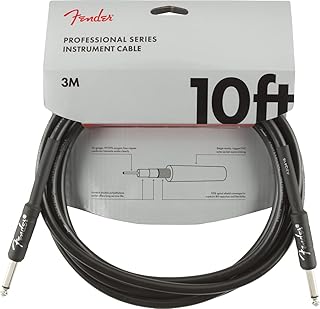
The Fender Professional is a 10-foot instrument cable designed to resist twisting, kinking, and physical memory. Fender lists resilient 95% oxygen-free spiral shielding intended to provide flexibility and help reduce handling noise. The cable also has an 8 mm PVC jacket, a 22-gauge conductor, and nickel-plated connectors.
Best for: Acoustic-electric players who want a standard-length cable with stated construction details and an anti-kink design. It is a strong comparison point for home practice, rehearsal, or a setup where the cable may be coiled and uncoiled regularly.
Why it was selected: The listed features explain what the cable uses for shielding, jacket, conductor, and connectors. Those specifics help buyers compare it with products whose listings provide fewer construction details.
Limitation: Ten feet may not provide enough slack if the amplifier is far from the player or positioned across a larger performance area. Measure the route and allow extra length for movement before choosing.
New Bee 10-Foot Instrument Cable

The New Bee is a 10-foot instrument cable described for guitar, bass, keyboard, amplifier, and mixer use. Its listing identifies a 6.35 mm jack and a shielded design, and positions it for stage and home-studio use. A 6.35 mm connector is the same nominal size as a 1/4-inch plug, a common format for instrument connections.
Best for: Buyers looking for a straightforward 10-foot cable for a home practice space or a general instrument setup. The stated uses make it relevant to people who may connect more than one type of instrument or audio device.
Why it was selected: It combines a familiar instrument-cable length with a clearly stated jack size and shielding. Those specifications help buyers check basic fit and intended use before purchase.
Limitation: The supplied details do not identify plug angles, conductor gauge, jacket material, or a specific shielding construction. Choose another listing if those features are essential to your setup.
AA Audio Accessory 10-Foot Two-Pack

This listing includes two 10-foot instrument cables. The product description specifies dual-layer shielding, a 20 AWG 99.99% oxygen-free copper conductor, a Kevlar-reinforced design, a braided nylon exterior, and 1/4-inch plugs. It also describes heat-shrink protection and says the cables have undergone bend tests.
Best for: Players who want a spare cable, a second cable for another instrument, or two cords for a shared practice space. The two-pack format can reduce the need to make a separate purchase when an extra cable is useful.
Why it was selected: Its listed features provide detailed construction information, including shielding, conductor, and reinforcement. The 10-foot length suits setups where the player and amplifier are relatively close.
Limitation: The listed length is 10 feet per cable, so this set does not address a setup that needs a single longer run. Check that the straight-plug format and cable length fit your instrument and amplifier placement.
GLS Audio 20-Foot Braided Cable

The GLS Audio instrument cable is 20 feet long and has a brown-and-yellow braided tweed jacket. The product name specifies straight-to-right-angle 1/4-inch TS plugs and oxygen-free copper. The longer length offers more reach than the 10-foot options in this selection.
Best for: Players whose amplifier is positioned farther away, or who need more room to move during practice or performance. Choose this cable when reach matters more than keeping the cable run short.
Why it was selected: It is the longest option in this comparison and identifies both connector orientation and plug type. Its braided jacket also gives buyers a different exterior style from the listed PVC and nylon designs.
Limitation: A 20-foot cable can leave more unused cable in a compact room. The supplied details do not state a conductor gauge or shielding construction, so buyers focused on those specifications should compare the listing carefully.
Buying Guide: How To Choose An Acoustic Guitar Amp Cable
For an acoustic-electric guitar with a standard 1/4-inch instrument output, look for an instrument cable with a plug that matches the guitar and amplifier. These five products are listed as instrument or guitar cables, and several explicitly name 1/4-inch or 6.35 mm connections. Confirm the connector details on the product listing and your equipment before buying. A cable is not a substitute for a different connection type or an adapter when your equipment requires one.
How long should an amp cable be?
Choose the shortest length that comfortably reaches from the guitar to the amplifier while allowing for normal movement. A 10-foot cable is a practical starting point for a nearby amp, while a 20-foot option gives more reach for a wider setup. Avoid stretching a cable tightly across a room. Extra slack can help prevent accidental unplugging, but a much longer cable can leave more cord to manage.
Do you need a straight or right-angle plug?
A straight plug extends directly from the jack. A right-angle plug turns near the connector and may suit a guitar jack where a straight plug would stick out awkwardly. Check the location and orientation of your guitar’s output jack before choosing. The JSAUX and GLS Audio listings specify one right-angle end; the JSAUX has a right-angle-to-straight layout, while GLS Audio lists straight-to-right-angle.
What does shielding do?
Shielding is a conductive layer in a cable intended to help protect the signal from electrical interference. Cable construction and the environment can affect noise, so shielding is one specification to compare rather than a guarantee of silent operation. The Fender listing describes 95% oxygen-free spiral shielding, and the AA Audio Accessory listing describes dual-layer shielding. The New Bee listing identifies a shielded design but does not provide the same construction detail.
Should you choose a braided or PVC jacket?
The jacket is the cable’s outer covering. A braided jacket may appeal to buyers who want a woven exterior, while a PVC jacket is specified for the Fender cable. Jacket material alone does not establish how well a cable will perform in every situation. Consider how the cable will be stored, moved, and routed, and avoid placing it where it can be sharply pinched or pulled.
When is a two-pack useful?
A two-pack makes sense if you want a spare, keep one cable in a practice space and another in a case, or connect multiple instruments at different times. The AA Audio Accessory listing provides two 10-foot cables. If you only need one cable, compare its connector layout and construction with single-cable options rather than choosing a set solely because it includes more cords.
Which cable details should you verify?
Before ordering, check the cable length, plug size, connector angle, and intended use. If construction matters, look for stated details such as shielding type, conductor gauge, jacket, and connector material. Some product listings in this comparison provide more specifications than others. Do not assume an unlisted feature is included; use the manufacturer’s current listing to confirm any requirement that affects your setup.
Frequently Asked Questions
Can I use an instrument cable with an acoustic-electric guitar?
Yes, if the guitar has an instrument output that matches the cable’s plug and the amplifier has a compatible input. Check the guitar and amp connections before purchasing. The products here are described as guitar or instrument cables, but connection compatibility depends on your specific equipment.
Is a 1/4-inch cable the same as a 6.35 mm cable?
They refer to the same nominal connector size in this context. The New Bee listing uses 6.35 mm, while several other product names specify 1/4-inch. Check whether the connector is TS and whether the plug shape fits your equipment.
Is a longer guitar cable always better?
No. A longer cable provides more reach, but it can create excess slack in a small setup. Choose enough length to connect comfortably without pulling the cable tight. The 10-foot options suit closer placements, while the GLS Audio cable is 20 feet long.
What is a right-angle instrument cable best for?
A right-angle plug can be useful when the guitar’s output jack is positioned so a straight plug would protrude inconveniently. Check the jack location and the cable’s connector orientation. The JSAUX and GLS Audio options list a right-angle connector at one end.
Does shielding guarantee that a cable will have no noise?
No. Shielding is intended to reduce interference, but it does not guarantee a noise-free setup. The cable, equipment, nearby electrical sources, and connection condition can all matter. Compare the shielding details provided by the manufacturer and troubleshoot the full signal chain if noise occurs.
What is the best choice for a spare cable?
The AA Audio Accessory two-pack is the clearest choice when you specifically want two cables. Each is listed as 10 feet long and the description includes dual-layer shielding and a braided exterior. Check that its connector layout and length suit the instruments you plan to use.