
The best portable radio station equipment depends on whether you need emergency broadcasts, two-way communication, or power for a small field setup. The Midland ER310PRO is best for weather alerts and emergency charging, while the Retevis RT95 suits licensed ham-radio users seeking a mobile or home base-station setup. For a compact everyday receiver, consider the XHDATA D220; for a longer-running field setup, pair a radio with the yewpiny power station.
| Product | Best For | Standout Feature |
|---|---|---|
| Midland ER310PRO | Emergency weather listening | NOAA radio, Bluetooth, and multiple power sources |
| yewpiny EM300 Power Station | Powering compatible field equipment | 259Wh capacity and multiple output ports |
| WVL Emergency Weather Radio | Lightweight emergency kits | Hand crank, solar charging, and compact form |
| XHDATA D220 | Portable AM/FM and shortwave listening | Small size and simple controls |
| Retevis RT95 | Mobile or home ham-radio communication | Vehicle-ready transceiver with rotatable screen |
Midland ER310PRO Emergency Weather Radio
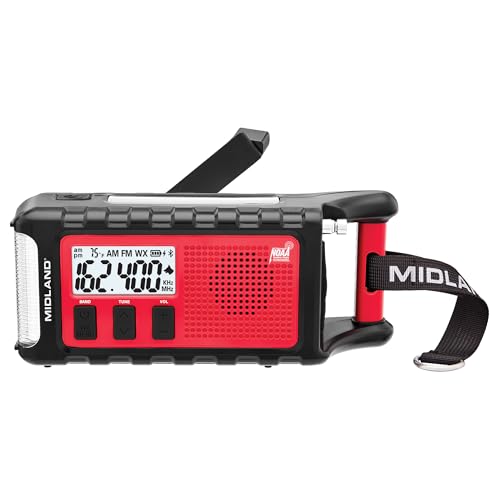
The Midland ER310PRO combines AM/FM and NOAA weather radio functions with emergency power and lighting features. It is best for households, campers, and preparedness kits that need a receiver with more than one way to recharge. Its listed features include an internal lithium-ion battery, solar charging, and a hand crank, which can be useful when regular power is unavailable.
The radio also offers Bluetooth streaming for everyday listening and a 10,000 mAh power bank for charging external devices. The product listing describes up to 200 hours of battery during radio use. That figure is a manufacturer-provided specification, not a guarantee for every use pattern.
- Best for: People who want weather information, radio listening, and emergency phone charging in one device.
- Why it stands out: It combines several power options with NOAA weather reception and Bluetooth.
- Limitation: It is an emergency radio, not a two-way communications transceiver.
Choose this model if alerts and backup power matter more than transmitting to another radio. Check the included controls and supported radio bands against your local listening needs before purchase.
yewpiny EM300 Portable Power Station
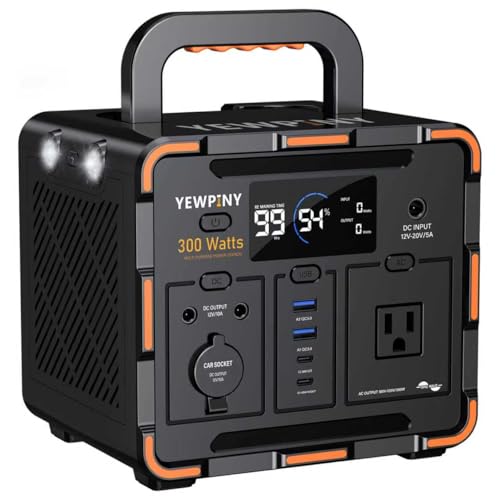
The yewpiny EM300 is a portable power source rather than a radio. It can support a portable radio setup when the connected equipment’s input requirements match its available outputs. The listing gives a 259Wh capacity, 300W AC output, USB-A and USB-C ports, DC outputs, and a car socket. It is best for a field station that needs to power several compatible devices, not for someone who only needs a pocket receiver.
The unit uses a LiFePO4 battery and can be charged from a wall outlet, a car, or a compatible solar panel. The listing says a 100W solar panel is sold separately. Its stated charging options may help users plan for camping, travel, or backup use, but actual runtime depends on the power draw of connected equipment.
- Best for: A portable setup with multiple compatible devices or equipment requiring more capacity than a small radio battery.
- Why it stands out: It offers several output types and charging methods in one power station.
- Limitation: It does not receive or transmit radio signals, and the solar panel is not included according to the listing.
Before connecting a radio or accessory, compare its voltage, connector, and wattage requirements with the power station’s specifications. Do not assume that every device can use every port.
WVL Compact Solar Hand-Crank Weather Radio
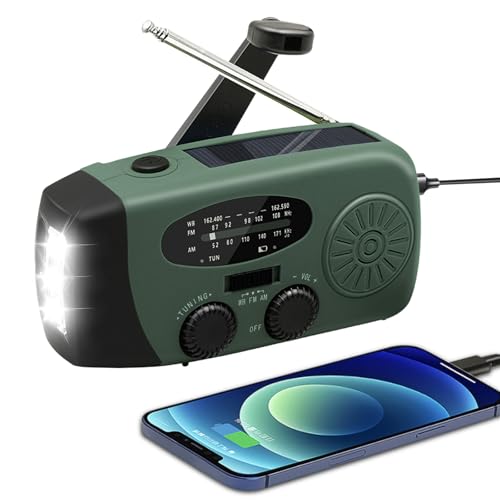
The WVL emergency weather radio is a compact option for a go-bag, vehicle kit, or campsite. It receives AM, FM, and NOAA weather broadcasts and has three listed power sources: a built-in rechargeable battery, solar charging, and a hand crank. Its 130-by-50-by-60-millimeter dimensions and listed 231-gram weight make it a better fit for buyers prioritizing portability over a larger control panel or external power capacity.
Additional features include a 2,000 mAh phone-charging function, a 1.5W LED flashlight, a reading lamp, and an SOS siren. These features give the radio several roles in an emergency kit. The phone-charging capacity is modest compared with a dedicated power bank, so it is better treated as backup power than as a replacement for regular charging equipment.
- Best for: Buyers who want a small weather radio with lighting and several recharge options.
- Why it stands out: The hand crank and solar panel provide alternatives to plugging into a wall outlet.
- Limitation: Its 2,000 mAh phone charger offers less stated capacity than a larger dedicated power bank.
Choose the WVL when compact emergency listening is the priority. For extended communication or a multi-device field station, consider a separate power source and a suitable two-way radio.
XHDATA D220 Pocket AM FM SW Radio

The XHDATA D220 is a straightforward receiver for listening to AM, FM, and shortwave broadcasts. It is best for users who value a small, light radio and simple operation over emergency charging features or two-way communication. The listed size is 125 by 74 by 30 millimeters, and the weight is 125 grams without batteries.
Its controls are described as a tuning knob, a band switch, and a volume/power switch. The radio runs on two AA batteries, which can be convenient for people who prefer replaceable batteries, but buyers should plan to provide them. The listing also gives frequency ranges for its FM, AM, and shortwave bands and says a DSP chip is used to improve reception.
- Best for: Travelers, listeners, and households looking for a compact receiver with AM, FM, and shortwave bands.
- Why it stands out: Its small size and limited control set make it easy to carry and operate.
- Limitation: It is a receive-only radio and does not include the emergency features listed for the Midland or WVL models.
Choose this radio for broadcast listening, not for sending messages to another station. Reception varies with location, antenna conditions, and the signal being received.
Retevis RT95 Mobile Ham Radio

The Retevis RT95 is the most communication-focused option in this selection. It is a dual-band mobile ham radio designed for installation in vehicles such as trucks, Jeeps, and RVs, and the listing also describes home or office base-station use. It is best for users building a two-way radio setup who understand the equipment and operating requirements for the bands they plan to use.
Listed features include a high-gain antenna, microphone gain adjustment, dual speakers, and a 180-degree rotatable color screen. Brightness controls and illuminated buttons are intended to make the display and controls more adjustable in different lighting. The product is a transceiver, so it differs from the emergency and pocket radios above: it is designed for two-way communication rather than broadcast listening alone.
- Best for: Ham-radio users seeking a compact vehicle radio or a base-station-style setup.
- Why it stands out: It combines a mobile form with an adjustable display and external antenna listed in the product description.
- Limitation: This is not a simple weather receiver; users must confirm operating permissions, antenna needs, and setup requirements.
Choose the RT95 when communication with other stations is the goal. Confirm that the included equipment and installation approach suit your vehicle or intended base location.
Buying Guide: How To Choose Portable Radio Station Equipment
“Portable radio station equipment” can mean different things: a receiver for news and weather, a two-way radio setup, or a collection of radios and power accessories for field use. Start by identifying the task. A radio that receives broadcasts does not necessarily transmit, and a power station does not provide radio reception by itself.
Do You Need To Receive Broadcasts Or Transmit?
For local AM/FM listening and weather updates, choose a receiver with the bands you need. The Midland and WVL models include NOAA weather reception; the XHDATA D220 includes AM, FM, and shortwave reception. For communicating with other radio users, a transceiver such as the Retevis RT95 is a different category of equipment.
Before buying a transmitting radio, check the applicable U.S. operating rules and any licensing requirements for the intended service. Frequency access, permitted equipment, and operating procedures vary by radio service. Do not assume that a radio can legally transmit on every frequency it can receive.
Which Power Source Fits Your Setup?
Hand-crank and solar charging can provide alternatives when wall power is unavailable, but they serve different needs from a larger battery station. The Midland and WVL are self-contained emergency radios with multiple charging options. The EM300 is a separate power source for compatible equipment and has a listed 259Wh capacity.
Estimate runtime by checking the power draw of every device you plan to connect. Compare the radio’s voltage, connector, and wattage requirements with the power source’s specifications. Solar charging also depends on having a compatible panel and suitable sunlight; the EM300 listing says its 100W panel is sold separately.
How Important Are Size And Ease Of Use?
A pocket radio is easier to carry but may offer fewer features than a larger emergency radio or mobile transceiver. The XHDATA D220 is the lightest listed receiver by stated weight, while the WVL combines a compact format with a flashlight and charging functions. A mobile radio like the RT95 is intended for a more fixed vehicle or base setup.
Consider who will operate the equipment. Simple physical controls may be preferable for occasional listening, while a transceiver with additional settings may require more familiarity. Review the product’s listed controls and functions before buying for a household member or emergency kit.
What Accessories Should You Plan For?
Check whether the setup needs batteries, a solar panel, a compatible antenna, charging cables, or mounting equipment. The XHDATA D220 uses two AA batteries. The EM300 listing identifies its solar panel as sold separately. The RT95 listing includes a high-gain antenna, but buyers should still confirm the supplied components and installation requirements for their intended use.
For emergency preparedness, keep a charging plan and a way to receive alerts that does not depend on a mobile internet connection. Test radios and power accessories periodically, store them according to their instructions, and keep essential contact information available offline.
How Should You Compare Weather Radios And Power Stations?
A weather radio is the listening device; a power station is an energy source. The Midland and WVL are more suitable when the priority is portable broadcast reception with emergency-oriented features. The EM300 is better suited to powering compatible electronics, but it cannot replace a radio. A field setup may use both categories if the radio’s power requirements match the station’s outputs.
Frequently Asked Questions
What Is The Best Portable Radio For Emergency Weather Updates?
The Midland ER310PRO and WVL emergency radio are both listed with NOAA weather reception. The Midland adds Bluetooth and a 10,000 mAh power bank, while the WVL emphasizes compact size, a hand crank, solar charging, and lighting.
Can A Portable AM/FM Radio Transmit To Other Radios?
Not necessarily. The XHDATA D220 is described as a receiver for AM, FM, and shortwave broadcasts. A two-way transceiver, such as the Retevis RT95, is designed to transmit and receive, subject to applicable operating requirements.
Can The yewpiny EM300 Replace A Weather Radio?
No. The EM300 is a portable power station, not a radio receiver. It may power compatible equipment, but a separate radio is needed to receive broadcasts.
Which Listed Radio Is Easiest To Carry?
The XHDATA D220 is listed at 125 grams without batteries and is designed as a pocket radio. The WVL is also compact, with a listed weight of 231 grams.
Do I Need A License To Use A Ham Radio?
Licensing and operating rules depend on the radio service and how the equipment is used. Check current Federal Communications Commission requirements before transmitting, and do not assume that receiving a frequency grants permission to transmit on it.