
The best way to convert cassette tapes to MP3 is to use a cassette player with direct-to-card recording or a USB converter that saves audio to a flash drive or computer. The ClearClick is best for computer-free USB conversion and automatic track splitting; the KLIM K7 models suit portable, direct-to-SD recording; SEMIER offers SD-card or computer conversion; and Reshow is designed for USB-connected computer conversion.
| Product | Best For | Conversion Method |
|---|---|---|
| SEMIER Cassette Converter | Two recording workflows | SD card or USB and Audacity |
| KLIM K7, Black | Portable SD-card recording | SD card |
| KLIM K7 Cassette Player | Simple tape-to-MP3 use | SD card |
| ClearClick Cassette to USB | Computer-free transfers | USB flash drive |
| Reshow Cassette Player | Computer-connected conversion | USB cable |
SEMIER Cassette Player And MP3 Converter
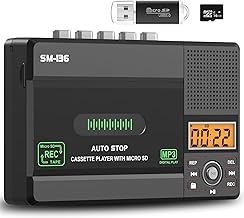
Best for: People who want a choice between saving conversions to an SD card and transferring audio through a computer. The SEMIER player supports both methods, making it more flexible than a device limited to one destination.
For card-based conversion, the product description says it can save cassette audio as MP3 files to the included 16GB SD card. For computer-based conversion, it connects by USB and uses Audacity, which is listed as included. Its LCD is intended to help with navigation and recording control.
- Also plays audio from an SD card.
- Includes a built-in microphone, speaker, and headphone jack.
- Compact design measures 6.3 by 3.9 by 1.2 inches and weighs 0.52 pounds, according to the listing.
Why it was selected: The two conversion routes are useful if you want to choose between standalone card recording and computer-assisted work. Limitation: It does not support Type IV or metal tapes, so check the tape type before buying.
KLIM K7 Portable Cassette-To-MP3 Player

Best for: Buyers who want a portable cassette player that records MP3 files to a memory card without setting up computer conversion software. The listing says the K7 includes a 16GB SD card and reader and stores converted files on the card.
The K7 also functions as an SD-card music player. Its built-in microphone can record audio directly to the SD card, while its onboard speaker provides a way to listen without headphones. A 3.5mm headphone jack and included earphones support private listening.
- Converts cassette audio to MP3 on the included SD card.
- Does not require an additional device or app download for the listed conversion workflow.
- Designed as a lightweight, portable player for travel or everyday use.
Why it was selected: It combines tape playback, card-based conversion, and portable listening in one device. Limitation: The listing explicitly says it cannot record onto cassette tapes; its recording features are for SD-card storage.
KLIM K7 Cassette Player With MP3 Converter

Best for: Buyers looking for a straightforward cassette-to-MP3 player with onboard listening features. The listing describes conversion to an included 16GB SD card, plus SD-card music playback, a built-in microphone, and a speaker.
This K7 model shares the core features described for the other KLIM K7 listing: it saves converted cassette audio as MP3 files on the memory card and includes an SD card reader. The product description says no additional device or app download is needed for its conversion process. A 3.5mm headphone jack is also specified.
Why it was selected: Direct-to-card conversion can be convenient if you want to avoid routing audio through a computer. The speaker and microphone give it uses beyond tape playback, including listening to audio from the SD card and recording to that card.
Limitation: The listing says the device does not record onto cassette tapes. The supplied feature information does not establish how this listing differs from the other K7 model, so compare the current package details before choosing between them.
ClearClick Cassette To USB Converter

Best for: People who want to transfer tapes directly to a USB flash drive without using a computer, software, or drivers. ClearClick lists instant setup and includes a 16GB USB drive for storing converted MP3 files.
Its main differentiator is automatic track splitting. The product description says the converter can separate tracks into individual MP3 files, which can reduce the need to divide a long recording manually. The stated workflow is to transfer cassette audio to the USB drive, rather than connect to a computer for recording.
- Converts audio cassettes to digital MP3 files.
- Saves recordings to a USB flash drive.
- Includes a 16GB USB drive and automatic track splitting.
Why it was selected: It is the clearest match for buyers who value a standalone USB workflow and want track separation. Limitation: The listed storage device is a USB drive, not an SD card; choose another option if SD-card storage is important.
Reshow Cassette Player And USB Converter

Best for: People who prefer to connect a portable cassette player to a laptop or desktop computer for conversion. Reshow describes a USB-cable workflow for converting tapes to MP3, so it is a fit for users who want to manage the transfer through a computer rather than save directly to a card or flash drive.
The player is described as lightweight and compact, and it can also be used for standard cassette playback with headphones. Its 3.5mm AUX connection can connect to compatible audio inputs, including earbuds, headphones, or a car stereo, according to the listing.
Why it was selected: The computer-based workflow and everyday playback functions make it a flexible option for people who also want a portable tape player. Limitation: Unlike the ClearClick, the listed features do not describe direct recording to an included USB flash drive or automatic track splitting.
Buying Guide: How To Choose A Cassette-To-MP3 Converter
Do you want to convert without a computer?
Choose a device that records directly to removable storage if you want to avoid a computer during the transfer. The ClearClick is listed as saving MP3 files to a USB flash drive without a computer, software, or drivers. The KLIM K7 models record conversions to an SD card. SEMIER offers SD-card conversion as well as a USB-and-Audacity option.
A standalone workflow may be simpler for a basic transfer, but check how you will move the finished files to the device where you plan to listen. A USB flash drive and an SD card are different storage formats. Make sure your computer, phone, or other intended destination can read the chosen format, or plan to use an appropriate reader.
Should you choose a USB drive, SD card, or computer workflow?
A USB-drive converter is a practical choice if you want files saved to a flash drive. An SD-card player may suit you better if you want conversion and playback on the same card. A computer-connected converter may be preferable if you want to work with recording software or manage files on a computer as you transfer them.
SEMIER supports two listed methods: saving to an SD card or connecting over USB and using Audacity. Reshow is described as converting through a USB cable. The ClearClick saves to USB storage, while the KLIM models save to SD cards. Compare the actual destination, not just the word “USB” in a product title: a USB cable connection and a USB flash-drive recording workflow are not necessarily the same thing.
Do you need automatic track splitting?
If a tape contains separate songs or sections, automatic track splitting may make file organization easier. ClearClick specifically lists a feature that automatically splits tracks into individual MP3 files. The supplied descriptions for the other products do not specify automatic splitting, so do not assume they provide it.
Track splitting is a convenience, not a guarantee that every split will match your preferred song boundaries. If exact editing matters, consider whether you are comfortable reviewing and adjusting files after conversion. A computer-based workflow may be more suitable for someone who expects to manage recordings in software, while a direct-to-storage device may prioritize a simpler transfer.
What should you check about your cassette tapes?
Check the tape type before purchasing. SEMIER states that its player does not support Type IV or metal tapes. The supplied information for the other products does not give enough detail to confirm their support for every cassette type, so consult the product listing or seller if your collection includes specialty tapes.
Also consider the condition of the tapes and the playback equipment. A converter can only capture audio that the cassette player can read. For important recordings, it can be sensible to test the workflow on a less valuable tape first and listen to the resulting file before converting an entire collection.
Which listening and recording features matter?
Choose based on how you expect to use the device between transfers. The KLIM K7 listings include a speaker, microphone, headphone jack, and SD-card playback. SEMIER lists a speaker, microphone, headphone jack, LCD, and SD-card playback. Reshow emphasizes standard headphone playback and a 3.5mm AUX connection. These features can matter if you also want to listen to tapes or use the player for other audio tasks.
Do not treat a built-in microphone as a way to digitize a cassette. The product descriptions distinguish microphone recording from tape conversion. For cassette transfers, follow the specific recording method described for the device, such as saving to an SD card, USB drive, or computer.
How important is portability?
If you plan to move the player between rooms or take it with you, compare the listed size, weight, and included listening accessories. SEMIER provides specific dimensions and weight in its description. The KLIM K7 listing calls the player lightweight and portable and includes earphones. Reshow is described as compact and lightweight. The ClearClick description focuses on the standalone transfer process rather than portable listening features.
Do not assume that a product’s portable design means it includes every accessory you need. Check the current package details for items such as a USB cable, card reader, storage card, earphones, or power source before starting a conversion project.
Frequently Asked Questions
How do I convert cassette tapes to MP3?
Use a cassette-to-MP3 converter and follow its specified recording method. Depending on the model, the MP3 files may save to an SD card, a USB flash drive, or a computer connected by USB. Check the instructions before transferring a full tape.
Can I convert tapes without a computer?
Yes. The ClearClick is described as converting tapes directly to a USB flash drive without a computer, software, or drivers. The KLIM K7 and SEMIER listings also describe recording conversions to an SD card.
Which option includes automatic track splitting?
ClearClick specifically lists automatic track splitting into individual MP3 files. The supplied product details for the other four options do not specify that feature.
Do cassette converters save files as MP3?
All five products are described as supporting cassette-to-MP3 conversion. Their storage workflows differ: the listed options include SD-card recording, USB flash-drive recording, and computer-connected conversion.
Can every converter play every cassette type?
Do not assume that every model supports every tape type. SEMIER specifically says it does not support Type IV or metal tapes. Check the individual product information if you have tapes outside the standard type identified in its listing.
Can I record new audio onto a cassette with these products?
Not based on all the listed features. The KLIM K7 description explicitly says it does not support recording onto cassette tapes; it records audio to an SD card. Check each model’s current product details if cassette recording is a requirement.