
The best live sound power amp depends on your speakers, mixer connections, and the number of channels you need. The Gemini XGA-3000 is best for a two-channel PA setup that needs multiple input types and bridge mode; the Sound Town UPDM-Q3 suits four-channel installations; and the Rockville RPA5 is a more modest two-channel option with a built-in crossover. The Pyle PTA1000BT adds Bluetooth and USB playback, while the Fosi BT20A MAX is better suited to compact stereo and home audio than a typical rack-based PA rig.
| Product | Best For | Key Distinction |
|---|---|---|
| Gemini XGA-3000 | Two-channel live rigs | XLR, 1/4-inch, RCA, and bridge outputs |
| Rockville RPA5 | Entry-level rack setups | Built-in crossover and stereo/bridged modes |
| Pyle PTA1000BT | Playback flexibility | Bluetooth, USB, and PA connections |
| Sound Town UPDM-Q3 | Multi-zone or multi-speaker setups | Four channels in a 1U Class-D design |
| Fosi Audio BT20A MAX | Compact stereo listening | Bluetooth 6.0 and 300W-per-channel listed output |
Gemini XGA-3000 Two-Channel Power Amplifier

The Gemini XGA-3000 is best for DJs and live sound operators who need a rack-style, two-channel amplifier with several ways to connect a mixer or source. Its listed features include XLR, 1/4-inch, and RCA inputs, plus Speakon outputs for Channel A, Channel B, and bridge operation. Five-way binding posts provide another speaker connection option.
The manufacturer listing describes 3000 watts of continuous power and specifies 4- and 8-ohm operation. It also gives a 10Hz–50kHz frequency response, a signal-to-noise ratio greater than 95dB, and total harmonic distortion under 0.1%. Protection circuits and a 2U rack format are included in the product description.
- Best for: A two-channel gigging setup that benefits from flexible source and speaker connections.
- Why it stands out: Bridge connections, multiple input formats, and rack mounting make it adaptable to varied PA configurations.
- Consider: Confirm the amplifier’s rated output at the exact impedance and operating mode you plan to use. Power figures can vary by channel count and configuration.
Rockville RPA5 Rack-Mount Power Amplifier

The Rockville RPA5 is best for buyers seeking a two-channel rack-mount amplifier with a listed 400W RMS and 1000W peak rating. It offers stereo and bridged modes, which gives the operator a choice between running two channels or using a bridge configuration. Its built-in crossover is a practical feature for systems that need frequency routing.
Listed connections include XLR, 1/4-inch, and RCA inputs, along with Speakon and banana-style outputs. The range of input types can help when connecting different audio sources or mixer outputs, while its 2U rack format suits equipment racks used for DJ and PA gear.
- Best for: Smaller or less demanding two-channel PA systems where a stated RMS rating and crossover are useful comparison points.
- Why it was selected: The product description supplies clear power figures, operating modes, rack format, and common connection types.
- Consider: The listing distinguishes 400W RMS from 1000W peak. Compare RMS output—not only peak output—with your speakers’ requirements.
Pyle PTA1000BT Bluetooth Power Amplifier
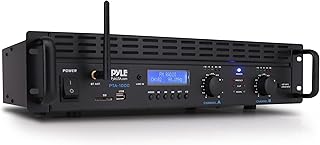
The Pyle PTA1000BT is best for live or event setups where wireless playback is useful alongside conventional mixer connections. Its listed features include Bluetooth streaming, USB-A input with an MP3 player, two 1/4-inch TRS inputs, and two XLR inputs. The product description specifies 1000 watts per channel in stereo or 2000 watts maximum in bridged mode.
For speaker connections, the amplifier has three Speakon outputs labeled for A, B, and bridged operation, as well as two pairs of binding posts. The description also states that it supports speakers with 4–8-ohm impedance and includes a cooling fan and LED level meters.
- Best for: Users who want a PA amplifier that can accept mixer signals and play music from Bluetooth or USB.
- Why it was selected: It combines common live-audio connections with built-in playback options.
- Consider: Bluetooth and USB features are playback conveniences; check that your primary live signal path and speaker wiring suit the amplifier before relying on them.
Sound Town UPDM-Q3 Four-Channel Amplifier

The Sound Town UPDM-Q3 is best for installations and PA applications that need four amplifier channels in a compact rack format. Its product name lists a 1U, four-channel Class-D design and 4 × 1150W output at 4 ohms. A built-in low-pass filter is also identified for PA, DJ, and conference installations.
Four channels can be useful when a system needs to power multiple speaker groups independently, rather than relying on a conventional two-channel amplifier. The compact 1U format may also appeal to rack builders working within limited equipment space. The listed power rating is specifically stated at 4 ohms, so it should not be assumed to apply to other loads or operating conditions.
- Best for: Buyers who need four channels for a multi-speaker or installation-oriented setup.
- Why it was selected: The channel count, rack height, Class-D design, and 4-ohm output figure make its intended role easy to compare.
- Consider: The supplied product information does not specify its input and output connectors. Confirm those details before planning a rack or cable layout.
Fosi Audio BT20A MAX Stereo Amplifier

The Fosi Audio BT20A MAX is best for compact stereo and home-audio listening, rather than buyers who specifically need a conventional live-sound rack amplifier. Its listed output is 300W per channel, and the description highlights PFFB technology, dual independent power supplies, and a built-in cooling fan.
It supports Bluetooth 6.0 and lists LDAC, aptX Lossless, aptX HD, aptX Adaptive, aptX, SBC, and AAC codec support. The product description also gives a maximum PCM sampling rate of 24-bit/96kHz. These wireless and stereo-focused details make it a useful comparison for buyers considering an amplifier for playback outside a typical stage setup.
- Best for: Stereo listeners who prioritize wireless audio and a compact amplifier format.
- Why it was selected: It offers an alternative for buyers whose search for a power amp includes home or small-room stereo use.
- Consider: The supplied features do not list the live-PA connector set or rack format. Verify those requirements if you intend to use it for gigs.
Buying Guide: How To Choose A Live Sound Power Amp
A live sound power amplifier takes an audio signal from a mixer or other source and supplies the power needed to drive passive speakers. To choose one, compare the amplifier’s output rating with the speaker’s impedance and power requirements, then check channel count, connectors, rack space, and intended use. A large wattage number alone does not establish whether an amp is a suitable match.
How much amplifier power do your speakers need?
Start with the speaker manufacturer’s recommended amplifier power and impedance. Then compare those requirements with the amp’s output rating at the same impedance and channel configuration. The Gemini listing describes 3000 watts, the Rockville listing separates 400W RMS from 1000W peak, and the Sound Town listing specifies 4 × 1150W at 4 ohms. Those figures are not directly comparable unless the measurement conditions match.
Look for ratings identified as RMS or continuous, and note whether a figure applies per channel, across all channels, or in bridged mode. Peak and maximum ratings can describe a different measurement condition from continuous power. If a listing does not make the conditions clear, consult the detailed manufacturer specifications before buying.
Do you need two channels or four?
A two-channel amplifier is a common choice for a basic left-and-right PA system. It can also support separate speaker groups when the rest of the system is planned accordingly. The Gemini, Rockville, and Pyle models in this selection are two-channel products. The Sound Town is a four-channel option, which may suit installations or systems that need separate amplification for more speaker groups.
More channels do not automatically mean more total power. Check the output per channel and the load supported on each channel. Also confirm whether the amplifier permits bridged operation and what that mode requires. Bridging changes how channels are used, so it is important to follow the product’s speaker-connection instructions.
Which connections should you check?
Match the amp’s inputs to the outputs on your mixer or playback equipment. XLR and 1/4-inch inputs are common in live-audio signal paths, while RCA can help with compatible consumer sources. Speaker outputs also matter: the products listed here refer to Speakon, binding posts, banana-style terminals, or combinations of these. Check cable ends and the amplifier’s documented wiring before connecting speakers.
For multi-device playback, the Pyle’s listed Bluetooth and USB features may be convenient. They do not replace the need to confirm the main mixer-to-amplifier connection. For a fixed installation, connector details, cable runs, and amplifier placement should be settled before selecting a model.
Is a built-in crossover or filter important?
A crossover or filter can help route certain frequency ranges within a sound system, but its usefulness depends on the system design. The Rockville RPA5 lists a built-in crossover, while the Sound Town UPDM-Q3 lists a low-pass filter. Check the available filter controls and their intended function in the full specifications. Do not assume that every filter offers the same settings or replaces all external processing.
What should you consider for rack installation?
Check rack height, depth, weight, ventilation, and available electrical capacity. The Gemini and Rockville are described as 2U rack-mount models, while the Sound Town listing identifies a 1U design. The Gemini’s listed weight is 17.6 pounds. Allow appropriate space for airflow, particularly when an amplifier uses active cooling, and follow the manufacturer’s installation guidance.
For portable gigs, weight and transport can affect setup time. For a permanent rack, channel count and connection access may matter more. The product names and supplied descriptions do not provide every dimension or connector detail, so verify those points against the current product specifications when they affect your installation.
Should you choose a live amp with Bluetooth?
Bluetooth can provide a quick way to play background music or other audio from a compatible device. The Pyle PTA1000BT lists Bluetooth and USB playback, while the Fosi BT20A MAX focuses on Bluetooth stereo playback. For a live performance, keep the primary signal route appropriate to the mixer and event, and consider whether wireless playback meets the reliability and control needs of the venue.
Frequently Asked Questions
What does a live sound power amplifier do?
A live sound power amplifier boosts an audio signal from a mixer or source so it can drive passive speakers. The amp must be matched to the speakers’ impedance and power requirements.
Is a higher wattage power amp always better?
No. The output rating must match the speaker and the intended system configuration. Compare continuous or RMS ratings at the correct impedance, and distinguish per-channel output from bridged or peak figures.
Can a two-channel amplifier run in bridged mode?
Some two-channel amplifiers support bridged operation. The Gemini, Rockville, and Pyle listings identify bridge modes or bridge connections. Check the manufacturer’s instructions for supported impedance and speaker wiring before using that mode.
Is Bluetooth necessary for a live sound amp?
No. Bluetooth is an optional playback feature, not a requirement for live sound amplification. It can be useful for music playback, while a wired mixer connection is often central to a PA signal path.
How many channels should a PA power amp have?
Choose the channel count based on how many independently amplified speaker feeds your system needs. Two channels suit many basic stereo setups; four channels can serve more speaker groups when the system and amp ratings support the arrangement.
What should I check before connecting passive speakers?
Confirm speaker impedance, amplifier output at that impedance, channel or bridge mode, connector type, and the recommended wiring. Follow the product instructions and avoid assuming a power rating applies to every configuration.