
If you need a 4-ohm speaker for a project, first confirm whether you want a complete speaker cabinet or an individual driver: the products below are speaker drivers, mostly designed for car audio, not finished cabinets. The Pioneer TS-F1634R is best for a 6.5-inch coaxial car-speaker replacement, while the DS18 PRO-X6.4BM is better for a high-power midrange application. The 4-inch models suit compact installations. Check each speaker’s impedance, dimensions, and intended use before fitting it into a cabinet.
| Product | Best suited for | Key details |
|---|---|---|
| 4-Inch Aluminum Cone Woofer | Compact driver projects | 4 inches; 4 ohms; 600W stated in name |
| DS18 PRO-X6.4BM | High-power midrange car audio | 6.5 inches; 4 ohms; 250W RMS stated |
| Pioneer TS-F1035R | Small coaxial car-speaker replacement | 4 inches; 4 ohms; 20W nominal |
| Pioneer TS-F1634R | 6.5-inch coaxial car-speaker replacement | 4 ohms; 25W nominal |
| ORION Cobalt CB42 | Compact 2-way car audio | 4 inches; 40W RMS per product description |
4-Inch Aluminum Cone Woofer

This listing identifies a 4-inch speaker with an aluminum cone and 4-ohm impedance. Its name also states 600W, but the supplied product information does not explain whether that figure is peak, maximum, or continuous power. Treat the rating cautiously and confirm the detailed specifications before matching it with an amplifier.
Best for: A buyer who needs a compact, explicitly 4-ohm driver and is considering an aluminum-cone woofer. It is the clearest match in this group for someone prioritizing the stated 4-ohm impedance in a small format.
Limitation: The listing information provided does not include RMS power, frequency response, mounting dimensions, or enclosure requirements. Do not assume it is a finished cabinet speaker or that the 600W figure is a continuous rating.
DS18 PRO-X6.4BM Midrange Speaker

The DS18 PRO-X6.4BM is a 6.5-inch midrange loudspeaker rated at 250W RMS and 500W maximum, with a stated 4-ohm impedance. It features a red aluminum bullet and is described for car or truck stereo systems. Its stated power handling and midrange role distinguish it from the lower nominal-power coaxial options.
Best for: Buyers building a higher-output car-audio midrange system who need a 4-ohm speaker and can use a single driver. It was selected because the listing explicitly provides both impedance and RMS power.
Limitation: This is a midrange speaker, not a complete full-range cabinet. The listing describes one speaker, so plan accordingly if a matched pair or a complete cabinet is required.
Pioneer TS-F1035R 4-Inch Coaxial Speaker

The Pioneer TS-F1035R is a 4-inch, 2-way coaxial car speaker with 4-ohm impedance. Its listed power handling is 150W maximum and 20W nominal. A coaxial design combines a woofer and tweeter in one speaker, making it a different type of choice from a dedicated midrange driver.
Best for: A buyer seeking a compact 4-ohm speaker for a car-audio replacement or installation where a 4-inch format is appropriate. Choose this if an integrated woofer-and-tweeter arrangement is preferred over a separate midrange driver.
Limitation: Its 20W nominal rating is the relevant figure to compare for ordinary power matching; the 150W maximum figure should not be treated as its continuous power rating. It is a car speaker, not a finished speaker cab.
Pioneer TS-F1634R 6.5-Inch Coaxial Speaker

This Pioneer F-Series model is a 6.5-inch, 2-way coaxial speaker with 4-ohm impedance. The listed power ratings are 200W maximum and 25W nominal. Its stated sensitivity is 88 dB, which is higher than the 86 dB rating listed for the smaller Pioneer TS-F1035R; sensitivity is one factor to consider when comparing output with a given input.
Best for: Buyers who need a 6.5-inch 4-ohm coaxial car speaker and want an integrated woofer-and-tweeter design. It offers a larger driver size and higher stated nominal power than the 4-inch Pioneer option.
Limitation: Confirm that the installation opening and mounting arrangement suit a 6.5-inch speaker. The product is intended as a car speaker, and its listed maximum power is not the same as nominal power.
ORION Cobalt CB42 4-Inch Coaxial Pair
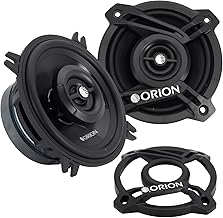
The ORION Cobalt CB42 is a 4-inch, 2-way coaxial car speaker system described as a pair. The supplied product details state 160W peak power and 40W RMS. They also specify a polypropylene cone and butyl rubber surround. The information provided does not state the speaker impedance.
Best for: Buyers who want a compact coaxial pair and value the listed RMS rating and specified cone and surround materials. It was included as a nearby size-and-use comparison, not as a confirmed 4-ohm match.
Limitation: The supplied specifications do not identify impedance. Do not choose this speaker for a 4-ohm amplifier or cabinet requirement until you verify the impedance from the product’s detailed specifications.
Buying Guide: How to Choose a 4-Ohm Speaker
Do you need a cabinet or just a speaker driver?
A speaker cab is an enclosure with one or more speakers installed. The products in this list are individual car-audio speakers or drivers; none is identified in the supplied information as a finished cabinet. If you need a complete cab, look for a product listing that explicitly describes an enclosure, its speaker configuration, and its impedance. If you are building a cabinet, confirm that the driver is suitable for that use before purchase.
Impedance alone does not establish cabinet suitability. A driver’s physical dimensions, mounting depth, frequency range, power handling, and enclosure requirements all affect whether it will work for a particular design. Those specifications are not provided for every item here, so check the full manufacturer information rather than relying on the product name alone.
Why does 4-ohm impedance matter?
Impedance is an electrical load that must be matched to the amplifier’s supported range. A 4-ohm speaker should be used only when the amplifier can safely drive a 4-ohm load in the intended configuration. When connecting multiple speakers, the total load can change depending on whether they are wired in series or parallel. Check the amplifier documentation and calculate the combined impedance before wiring.
Not every listed product is confirmed as 4 ohms in the supplied details. The first four products provide a stated 4-ohm specification, while the ORION CB42 information supplied here does not. Verify the missing value before purchase if 4 ohms is a requirement.
How should you compare power ratings?
Compare the speaker’s RMS or nominal rating with the amplifier’s output rating at the same impedance. Maximum or peak figures describe a different measure and should not be compared directly with continuous RMS output. For example, the Pioneer models list both maximum and nominal power, while the DS18 listing provides RMS and maximum figures. The 4-inch aluminum woofer’s name states 600W, but no RMS figure is supplied here.
Do not select a speaker based on a large wattage number alone. The driver’s role, impedance, sensitivity, enclosure, and amplifier settings also matter. If specifications are incomplete or use unclear terminology, confirm them before connecting equipment.
Should you choose coaxial or midrange speakers?
A 2-way coaxial speaker combines a woofer and tweeter in one unit. That design is represented by the Pioneer and ORION products and can suit installations seeking a compact, integrated car speaker. A dedicated midrange speaker, such as the DS18, is intended for midrange duties and may need other drivers or system components to cover frequencies outside its role.
Choose a coaxial model if you need an integrated speaker design. Choose a midrange driver when it fits a planned multi-driver system. Neither category automatically makes a product suitable for a guitar, PA, or other speaker cabinet; verify the intended application and technical specifications.
What physical measurements should you check?
Match the speaker diameter to the available opening, but do not rely on nominal size alone. Confirm cutout diameter, mounting depth, frame dimensions, and clearance for terminals. These details are not included for every product in this selection. For cabinet construction, also check the driver’s recommended enclosure information and ensure the cabinet design is appropriate for that specific model.
For car installations, verify the mounting location and the vehicle’s existing speaker size. For a custom cabinet, check the enclosure plan and driver specifications before cutting material. A nominal 4-inch or 6.5-inch label does not guarantee that the speaker will fit a particular opening.
Frequently Asked Questions
Is a 4-ohm speaker the same as a 4-ohm speaker cabinet?
No. A 4-ohm rating describes electrical impedance. A speaker cabinet is an enclosure containing one or more drivers. A cabinet’s total impedance depends on its internal speaker arrangement and wiring.
Can I connect any 4-ohm speaker to my amplifier?
Only if the amplifier supports a 4-ohm load for the connection being used. Check the amplifier’s specifications, especially when connecting multiple speakers or channels.
Is the 600W figure on the aluminum woofer its RMS rating?
The supplied product name states 600W but does not identify that value as RMS or continuous power. Confirm the detailed rating before matching it with an amplifier.
Which listed product is explicitly confirmed as 4 ohms?
The 4-inch aluminum cone woofer, DS18 PRO-X6.4BM, Pioneer TS-F1035R, and Pioneer TS-F1634R have 4-ohm impedance stated in the supplied product information. The supplied ORION CB42 details do not state impedance.
Are these speakers ready to install in a speaker cab?
They are presented as individual speaker drivers or car-audio speakers, not complete cabinets. Confirm each model’s intended use, enclosure requirements, measurements, and full specifications before using one in a custom cab.