
The best LED music equalizer display depends on whether you want a true audio spectrum visualizer, a sound-reactive light bar, or decorative flashing lights. The 36-style USB-C display is suited to buyers seeking multiple visual options, while the 3.5mm-input model offers a direct audio connection. The XTREME bar is a flexible mounting choice; the Nobsound VFD unit is better for buyers prioritizing analyzer-style information over LED lighting. One listed panel is explicitly a flashing light, not a frequency analyzer.
| Product | Best For | Key Distinction |
|---|---|---|
| LED Music Spectrum Display | Visual variety | 36 styles and USB power |
| Music Rhythm Spectrum Display | Direct audio input | 3.5mm input and clock features |
| XTREME LED Equalizer Light Bar | Flexible placement | Horizontal or vertical mounting |
| Nobsound AK2515 | Analyzer-style display | VFD screen and audio inputs |
| LED Sound-Controlled Panel | Decorative lighting | Flashing panel, not a spectrum analyzer |
LED Music Spectrum Display

This USB-powered LED music spectrum display is best for buyers who want numerous visual choices in a home entertainment setup. Its listed features include 36 display styles, 16 colors, four frequency ranges, nine spectrum options, and five clock modes. The display can show a music spectrum when music is present and a clock when music is not playing, according to the product description.
The unit uses 5V USB power and is listed as drawing 3W. It can be powered by a phone charger or computer USB port. The description also refers to a sound sensor, so this may suit someone who prefers a sound-responsive setup without relying solely on a stated wired audio input.
- Best for: Buyers who value a broad selection of colors and display patterns.
- Why it stands out: It combines spectrum visuals with clock display modes.
- Limitation: The listed power connection is for operation; the description says it does not support charging.
Music Rhythm Spectrum Display
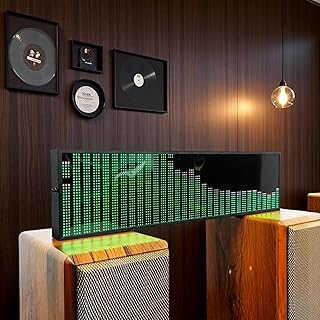
This model is best for desktop listeners who want a music visualizer with a listed 3.5mm audio input. The product description says it can respond to sound through its sound-activated lighting or sync through the included audio cable. That direct-input option may be preferable when a buyer wants to connect an audio source by cable rather than depend only on room sound pickup.
Its listed visual options include 36 display styles, 16 colors, nine spectrum modes, six floating-dot effects, and four frequency bands. When music stops, it is described as switching to a digital clock with network time sync and weather forecast display.
- Best for: Buyers who want a desktop visualizer with a 3.5mm connection and varied effects.
- Why it was selected: It combines direct audio input, multiple visual settings, and clock functionality.
- Limitation: The supplied information does not specify the exact supported audio devices or clock setup requirements.
XTREME LED Equalizer Light Bar

The XTREME light bar is best for buyers who want a sound-reactive accent light that can be positioned horizontally or vertically. It includes a base for vertical placement, and the product description says it is rechargeable and includes a USB charging cable. Music mode makes the lights react to sound, making the bar a visual accessory rather than a traditional measurement-focused analyzer.
Users can adjust settings with built-in buttons or a downloadable app. Listed options include 18 color modes, eight equalizer patterns, four brightness levels, and five speed settings. This range is useful when matching the lighting to a desk, entertainment area, or other setup.
- Best for: Buyers who need flexible orientation and adjustable lighting effects.
- Why it was selected: Its horizontal or vertical mounting options distinguish it from the display-style products.
- Limitation: The description does not list an audio cable input; its music mode is described as sound-reactive.
Nobsound AK2515 VFD Analyzer

The Nobsound AK2515 is best for audio enthusiasts who prioritize analyzer-style information over an LED light-bar appearance. It uses a 25-by-15-resolution VFD display and covers a stated frequency range of 20Hz to 20kHz. The product description lists both 3.5mm AUX and microphone inputs, giving buyers two stated ways to provide audio to the unit.
Its advanced automatic gain control and spectrum algorithm are intended to adjust the display for a range of input signals. Users can choose among -10, -5, -3, -1, and 0dB gain settings, as well as real output and two smooth output modes. It also includes a clock display.
- Best for: Buyers seeking frequency visualization and adjustable input response.
- Why it was selected: It offers a specified frequency range, display resolution, and gain settings.
- Limitation: This is a VFD display, not an LED equalizer light bar, so avoid it if LED lighting is essential.
LED Sound-Controlled Music Panel

This LED panel is best for buyers who want decorative, sound-responsive ambient lighting rather than a frequency-by-frequency music visualizer. Its product description says it is suitable for ambient lighting, decoration, and audio modification. It also explicitly states that it is a flashing LED panel and does not function as a spectrum analyzer.
That distinction matters when comparing it with products that list frequency ranges or spectrum modes. A flashing response can add visual rhythm to a room, but the listed information does not establish that the panel separates music into frequency bands or presents analyzer data.
- Best for: Buyers seeking a simple decorative lighting effect.
- Why it was selected: It is relevant to sound-reactive LED display searches, with an important limitation clearly disclosed.
- Limitation: Avoid it if you specifically need a true music spectrum analyzer or frequency display.
Buying Guide: How to Choose a Music Equalizer Display
Do you want a true spectrum analyzer or a sound-reactive light?
These product types can look similar in a product listing, but their stated functions differ. A spectrum analyzer presents visual information associated with frequency bands or spectrum modes. The Nobsound AK2515 lists a 20Hz–20kHz range and adjustable gain, while the two multi-mode LED displays list frequency ranges or spectrum modes. By contrast, the decorative LED panel is explicitly described as a flashing light rather than a spectrum analyzer.
If visual atmosphere is the priority, a sound-reactive light bar or panel may be sufficient. If you want the display to represent music across bands, check the product description for spectrum or frequency features. Do not assume that every light labeled “equalizer” measures or separates audio frequencies.
Should the display use a microphone, sound sensor, or cable?
A microphone or sound sensor can make setup convenient because the light responds to sound in its environment. However, the product information here does not establish how much room noise each sensor may pick up. A wired audio connection can provide a direct connection path: the Music Rhythm Spectrum Display lists a 3.5mm input, and the Nobsound lists 3.5mm AUX and microphone inputs.
Before choosing, check the output available from the device you plan to use and compare it with the display’s stated inputs. The supplied descriptions do not confirm compatibility with every phone, computer, speaker, or audio system, so verify connection details before buying.
How many colors and patterns do you need?
More modes can make it easier to tailor a display to a room or change its appearance. The USB-powered LED display lists 36 styles and 16 colors. The Music Rhythm model also lists 36 styles and 16 colors, along with spectrum and floating-dot effects. The XTREME bar lists 18 color modes and eight equalizer patterns, with brightness and speed adjustments.
Compare the specific controls rather than relying only on a large mode count. Consider whether you want color selection, brightness adjustment, speed control, or different spectrum patterns. The Nobsound unit emphasizes gain and output modes instead of a large RGB-style effects list.
How will you power and position the display?
Power and placement can affect whether a display fits your desk or entertainment area. The LED Music Spectrum Display is described as using 5V USB power. The XTREME bar is described as rechargeable, includes a USB charging cable, and can be placed horizontally or vertically using its base. The supplied information does not specify the power requirements for every other product, so check the individual listing for details.
Measure the intended space and decide whether a bar, panel, or analyzer-style unit suits it. If orientation is important, the XTREME product is the one in this selection with explicitly stated horizontal and vertical mounting options.
Do you want a clock or other extra display functions?
Some products combine music visuals with information displays. The LED Music Spectrum Display lists five clock modes and says it displays a clock when music is absent. The Music Rhythm Spectrum Display is described as switching to a digital clock with network time sync and a weather forecast when music stops. The Nobsound also includes a clock display.
Choose these extras only if they are useful for your setup. The product descriptions provide different levels of detail about time functions, and they do not establish that every feature works in the same way or requires the same setup.
Frequently Asked Questions
What is an LED music equalizer display?
It is a light-based display that reacts to music or presents spectrum-style visual effects. Depending on the product, it may show frequency bands, respond to sound, or provide decorative flashing lights. Check the stated features to determine which type it is.
Is every sound-reactive LED panel a spectrum analyzer?
No. The listed LED Sound-Controlled Music Spectrum Display is explicitly described as a flashing panel without frequency-analyzer functionality. Look for stated spectrum modes or frequency ranges if analyzer-style visualization is required.
Which option has a 3.5mm audio input?
The Music Rhythm Spectrum Display lists a 3.5mm audio input. The Nobsound AK2515 lists a 3.5mm AUX input as well as a microphone input. Check the product details to confirm that the connection suits your audio source.
Which display offers the most listed visual modes?
The LED Music Spectrum Display and Music Rhythm Spectrum Display each list 36 display styles and 16 colors. Their other features differ: one lists USB power and clock modes, while the other lists a 3.5mm input and additional effects.
Can these products work with any music source?
The supplied product information does not confirm compatibility with every music source. Compare the listed inputs and power requirements with your equipment, and verify connection details in the product listing before purchasing.