
The best vocal and instrument microphone depends on whether you need a focused live vocal sound, detailed studio capture, or one microphone for several sources. The Shure SM58 is best suited to live vocals, while the Shure SM57 is a strong choice for close-miking instruments. The Audio-Technica AT2020 targets home and project studios; the sE Electronics V7 and Pyle dynamic microphone offer additional options for singers, speech, and mixed stage or studio use.
| Microphone | Best suited for | Key reason to consider it |
|---|---|---|
| Shure SM58 | Live vocals | Cardioid pickup and vocal-focused response |
| Audio-Technica AT2020 | Home and project studios | Condenser design with high SPL handling and wide dynamic range |
| Shure SM57 | Instruments | Focused capture with an attack-enhancing response |
| sE Electronics V7 | Stage vocals and varied sources | Supercardioid pattern and rugged construction |
| Pyle Dynamic Cardioid | Entry-level stage or studio setups | Includes an XLR cable and requires no batteries |
Shure SM58 Pro XLR Dynamic Vocal Microphone

Best for: Singers who need a dedicated handheld microphone for live vocals, speech, or vocal recording. The SM58 is a dynamic XLR model with a finely tuned response and a subtle midrange lift intended to help vocals remain articulate in a mix.
Its cardioid pickup pattern focuses on sound from the front while helping reduce background noise and feedback. That makes it a practical choice for performers in venues where other sound sources are nearby. The listed uses include live performance, recording, podcasting, and broadcast work.
- Choose this if vocal clarity and focused pickup are your priorities.
- It is better suited to voice-first use than to buyers seeking a specifically instrument-focused microphone.
- The supplied product information does not identify included accessories, so check the listing if you need a cable or stand.
Audio-Technica AT2020 Cardioid Condenser Microphone

Best for: Home and project studio users looking for a side-address condenser microphone. The AT2020 is described as a standard in its category for price and performance, with high sound-pressure-level handling and a wide dynamic range for varied recording applications.
Those capabilities make it a relevant option when a studio microphone may need to capture both vocals and louder sources. Its cardioid designation also gives buyers a directional pickup pattern to consider when choosing a recording setup. It is selected here as the studio-oriented alternative to the dynamic handheld models in this list.
- Choose this if you are building a project or home studio and want a condenser model.
- It is better suited to studio applications than to buyers specifically seeking a rugged handheld stage microphone.
- The provided product details do not list included accessories or power requirements; confirm setup needs before purchasing.
Shure SM57 Pro XLR Dynamic Instrument Microphone

Best for: Musicians and recording engineers who want a focused microphone for instruments. The SM57’s contoured response and presence boost are designed to emphasize attack, detail, and clarity. Listed sources include guitar amplifiers, snare drums, brass, percussion, and acoustic instruments.
Its cardioid pattern helps isolate a nearby source and reduce background noise and bleed. That is useful when close-miking an instrument in a room or a setup with several active sound sources. The product is described for both studio and stage use, making it the clearest instrument-first choice in this group.
- Choose this if your main priority is capturing instruments with a defined attack.
- It can also be used for vocals, but its listed tuning and examples emphasize instruments rather than voice.
- The supplied information does not specify which accessories are included, so verify the package contents if needed.
sE Electronics V7 Dynamic Microphone

Best for: Performers who want a handheld microphone for singing or speech and may also record instruments. The V7 is an XLR dynamic microphone with a supercardioid pickup pattern. Its custom aluminum voice coil is described as producing crisp, natural vocal clarity without added harshness.
The listed applications include stage vocals, speech, broadcasting, podcasting, electric guitar, and drums. Its all-metal housing and beveled spring-steel grille are specified as features for demanding stage use. This range of stated uses makes it a flexible choice for buyers who do not want a strictly vocal-only or instrument-only option.
- Choose this if you want a road-oriented handheld mic for voice and some instrument applications.
- Its supercardioid pattern is a different pickup design from the cardioid options in this list; consider your setup and microphone placement.
- The product details provided do not state whether an XLR cable is included.
Pyle Dynamic Cardioid Microphone With XLR Cable
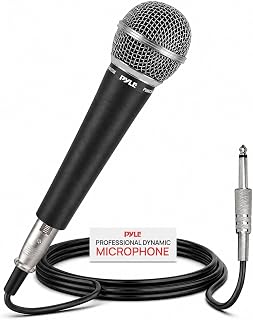
Best for: Buyers who want a basic dynamic microphone with an XLR cable included. The product listing specifies a unidirectional cardioid pattern, a built-in pop filter, a zinc-alloy body, and a 15-foot cable. Its stated frequency range is 50 Hz to 15 kHz, and its passive design requires no batteries.
The microphone is described for vocals and instruments in stage and studio settings. Its directional pattern is intended to isolate the source and reduce background noise and feedback. The listed technical specifications give shoppers concrete details to compare with the other microphones, though they do not establish that it will suit every recording environment.
- Choose this if the included cable and passive design match your setup needs.
- It is better suited to buyers seeking a straightforward, listed-accessory package than to those prioritizing a specific professional vocal or instrument tuning.
- The product details list its dimensions and weight; check these if handheld size or carrying weight matters to you.
Buying Guide: How To Choose A Vocal And Instrument Microphone
Do you need a microphone mainly for vocals or instruments?
Start with the sound source you record most often. For live singing, the Shure SM58 and sE Electronics V7 are the most directly voice-focused options in this selection. The SM58 emphasizes a tuned vocal response and cardioid pickup, while the V7 combines vocal clarity claims with a supercardioid pattern and robust construction.
For close-miking instruments, the Shure SM57 is the most explicitly instrument-oriented choice. Its listed uses include guitar amps, snare drums, brass, percussion, and acoustic instruments. If one microphone must cover vocals and instruments, compare the V7 and Pyle models by pattern, construction, and included cable rather than assuming every microphone performs identically on every source.
Should you choose a dynamic or condenser microphone?
Four products here are identified as dynamic microphones: the SM58, SM57, V7, and Pyle. The AT2020 is a condenser microphone intended for project and home studio applications. The product information highlights the AT2020’s high SPL handling and wide dynamic range, while the dynamic models are positioned for stage, studio, or handheld applications depending on the product.
Choose based on your recording environment, intended sound source, and equipment setup. The supplied details do not give complete setup requirements for every model. Check the manufacturer or current listing for requirements and package contents before buying.
What does the pickup pattern change?
A cardioid or unidirectional pattern is described for the SM58, AT2020, SM57, and Pyle microphone. The SM58, SM57, and Pyle listings specifically connect directional pickup with focusing on the source or reducing background noise. The V7 uses a supercardioid pattern instead. Pattern alone does not guarantee that a microphone will eliminate room sound; placement and the surrounding setup still matter.
Which features matter for live use?
For stage use, compare the microphone’s intended application, pickup pattern, construction, and whether a cable is included. The V7 listing highlights an all-metal housing and spring-steel grille. The Pyle listing specifies a rugged metal body and includes a 15-foot XLR cable. The SM58 is presented for live performance and uses cardioid pickup. Confirm what accessories are included for any model when those items affect your setup.
What should you check before ordering?
- Confirm that your audio equipment can connect to the microphone’s XLR output.
- Check whether a cable, stand, or other accessories are included; the supplied product details do not specify all package contents.
- Match the pickup pattern and intended use to your room, stage, and sound source.
- For studio recording, review the complete setup requirements, especially for the condenser model.
- Compare the stated features rather than relying on a general “vocal and instrument” label.
Frequently Asked Questions
Which microphone in this list is best for live vocals?
The Shure SM58 is the most directly vocal-focused option. Its listing describes a tuned vocal response, cardioid pickup, and use for live performance, recording, podcasting, and broadcast.
Which microphone is designed primarily for instruments?
The Shure SM57 is the clearest instrument-first choice. Its listed applications include guitar amps, snare drums, brass, percussion, and acoustic instruments.
Which option is intended for a home studio?
The Audio-Technica AT2020 is specifically described as ideal for project and home studio applications. It is a cardioid condenser microphone with high SPL handling and a wide dynamic range.
Which microphone includes an XLR cable?
The Pyle microphone listing specifies that a 15-foot XLR cable is included. The supplied details for the other products do not confirm cable inclusion.
Can one microphone handle both vocals and instruments?
Several products list more than one application. The sE Electronics V7 is specified for vocals and speech as well as electric guitar and drums. The Pyle listing also names vocals and instruments. Choose according to the sources and pickup pattern you use most.