
The best amp for both guitar and keyboard depends on which instrument matters most: a keyboard amp with multiple inputs is the more versatile shared option, while a guitar amp is designed around guitar-focused tone controls. The Donner DKA-20 is best suited to buyers who want two channels and microphone support. The Peavey KB 2 offers a higher stated wattage, and the Flatsons mini amp is a portable choice for guitar practice. The Coolmusic and 20W electric drum amps are alternatives with Bluetooth or other listed playback features.
| Product | Best For | Notable Listed Feature |
|---|---|---|
| Donner DKA-20 | Keyboard and multiple inputs | Two channels and aux input |
| Peavey KB 2 | Keyboard players seeking 50 watts | 50-watt, 1×10 configuration |
| Flatsons Mini Guitar Amp | Portable guitar practice | Rechargeable design and headphone jack |
| Coolmusic DM20 | Personal monitoring and playback | Bluetooth and USB interface |
| 20W Electric Drum Amp | Electronic drums and shared instruments | Dual speakers and three-band EQ |
Donner DKA-20 Keyboard Amplifier
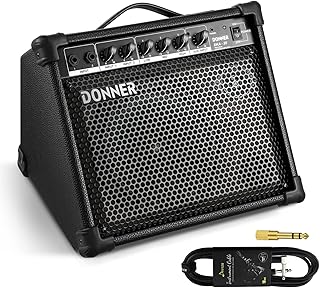
The Donner DKA-20 is a 20-watt keyboard amplifier listed for keyboards, piano, bass guitar, and electronic drums. Its two channels and auxiliary input make it a practical candidate for a home setup where more than one audio source may be used. The product name also specifies microphone input support, which can be useful for a simple practice arrangement involving an instrument and microphone.
Best for: Keyboard players who want a compact, multi-use amp with two channels and an aux input. It was selected because the listed uses extend beyond keyboard to bass guitar and electronic drums, making it more flexible than a guitar-only practice amp.
Limitation: Its stated output is 20 watts. Buyers who need more output should compare it with the 50-watt Peavey KB 2, while remembering that wattage alone does not establish real-world loudness or sound quality.
Peavey KB 2 50-Watt Keyboard Amp

The Peavey KB 2 is identified as a 50-watt keyboard amplifier with a 1×10 speaker configuration. Among the five choices here, it has the highest stated power rating. That makes it worth considering for keyboard players who want a dedicated keyboard amp and prefer a higher wattage figure than the 20-watt models in this list.
Best for: Keyboard players comparing dedicated amps by stated wattage and speaker configuration. It was selected as the highest-wattage keyboard-specific option among the provided products.
Limitation: The supplied product information does not describe its inputs, controls, weight, or playback connections. Check the product listing for those details before choosing it for a setup that requires a microphone input, auxiliary playback, or a particular number of channels.
Flatsons Rechargeable Mini Guitar Amp

This 10-watt Flatsons amp is designed for electric guitar practice and travel. Listed features include a rechargeable design, up to six hours of working time, clean and drive modes, gain and tone controls, a 3.5 mm headphone jack, and an aux input with a separate aux-volume control. Its stated frequency response is 100 Hz–20 kHz at ±3 dB.
Best for: Guitarists who need a portable practice amp with clean and driven tones, plus headphone listening for quiet sessions. It was selected because its listed controls and connections directly address guitar practice and travel use.
Limitation: The product is a 10-watt guitar amp, not a keyboard-focused amplifier. Choose it for guitar rather than as the main amp for a keyboard or a multi-instrument setup.
Coolmusic DM20 Personal Monitor Amp

The Coolmusic DM20 is listed as a 20-watt personal monitor amplifier and speaker for electronic drums and keyboards. Its named features include Bluetooth, a USB interface, and an included e-drum noise-reduction cable. These features distinguish it from simpler keyboard amps when wireless audio playback or the included cable is relevant to the buyer’s setup.
Best for: Electronic-drum or keyboard players seeking a personal monitor with Bluetooth and a USB interface. It was selected because its stated instrument uses and playback connections make it a multi-purpose option for practice.
Limitation: The supplied details do not specify a guitar input or guitar-oriented tone controls. Buyers planning to amplify electric guitar should confirm the input and intended use in the listing rather than assume it functions like a dedicated guitar amp.
20W Electric Drum Amp With Dual Speakers

This 20-watt electric drum amp is listed as compatible with electronic drums, keyboards, and guitar. Its stated features include dual speakers, Bluetooth, an aux input, a three-band EQ, and a cable. The EQ can be useful for adjusting bass, middle, and treble ranges, while Bluetooth and aux provide two listed ways to connect audio for playback.
Best for: Buyers who want one compact amp for electronic drums and other listed instruments, with Bluetooth and aux playback. It was selected because the product description explicitly names keyboard and guitar compatibility alongside electronic drums.
Limitation: Its 20-watt rating may not suit every venue or playing situation. The supplied information does not state coverage, maximum sound level, or whether all instrument connections are simultaneous, so verify those details if they are essential.
Buying Guide: How To Choose A Guitar And Keyboard Amp
Should you choose a keyboard amp or a guitar amp?
Start with the instrument you will amplify most often. A keyboard amp is the more natural starting point for keyboard-focused use, and several products here explicitly list keyboard support. A guitar amp is the more direct choice when guitar tone shaping and guitar practice features are priorities. The Flatsons model, for example, lists clean and drive modes, gain and tone controls, and a headphone jack.
A shared amp can reduce the number of devices in a practice setup, but “works with” does not automatically mean every instrument will sound or connect as intended. Check the input types and the manufacturer’s stated instrument compatibility. For a keyboard and guitar used together, also confirm whether the amp has enough separate channels or inputs for both sources.
How much power do you need?
Compare the stated wattage as one specification, not as a guarantee of loudness. The products in this selection range from the 10-watt Flatsons guitar amp to the 50-watt Peavey KB 2, with the other three products listed at 20 watts. The right choice depends on where you play, the instrument, and whether you need to be heard over other performers.
For private practice, portability and headphone support may matter more than a higher wattage number. For rehearsals or a larger space, look beyond wattage and check the complete product specifications for output level, speaker details, and intended use. Do not assume two amps with different wattage ratings will differ by the same proportion in perceived volume.
Which inputs and playback connections matter?
Write down what you plan to plug in before selecting an amp. A keyboard, electric guitar, microphone, phone, or drum module may require different connections. The Donner lists two channels, aux input, and microphone input support. The Flatsons lists a 3.5 mm headphone jack and aux input. The Coolmusic lists Bluetooth and a USB interface, while the 20W electric drum amp lists Bluetooth and aux.
- Choose multiple channels if you need to connect more than one source, and confirm which inputs are provided.
- Choose aux or Bluetooth playback if you want to play external audio through the amp; verify the exact connection method you prefer.
- Choose a headphone output if quiet practice is important, and confirm that the product description explicitly lists one.
- Check whether cables are included when the listing mentions them, and whether you need additional cables for your instruments.
Do tone controls matter for a shared amp?
Tone controls can help adjust a sound to suit an instrument or room, but their presence and type vary. The Flatsons product lists gain and tone controls for guitar, while the 20W electric drum amp lists a three-band EQ. The provided details do not specify comparable controls for every model. If fine adjustment is important, compare the exact control layout in the product listing before buying.
For a mixed keyboard-and-guitar setup, consider how each instrument will connect and whether you can adjust their levels independently. A two-channel design may be useful, but the product description should confirm the available controls for each channel. Avoid assuming that an amp provides independent channel EQ unless the specifications say so.
How important are portability and quiet practice?
For a practice amp that will move between rooms or travel, look for explicit portability details such as rechargeable operation and stated battery life. The Flatsons model is described as rechargeable and lists up to six hours of working time. The supplied details for the other products do not provide comparable battery information, so do not assume they operate without a power connection.
For quiet practice, prioritize a listed headphone output. The Flatsons specifically includes a 3.5 mm headphone jack. Bluetooth or aux playback can be useful for playing audio along with an instrument, but those features are not substitutes for a headphone output. Check both functions separately if you need them.
What should you verify before ordering?
- Confirm that the amp is intended for your main instrument and that its inputs match your cables.
- Check the number of channels if you plan to connect a microphone, keyboard, guitar, or playback device at the same time.
- Review the full specifications for dimensions, weight, power requirements, and included accessories when those details affect your setup.
- Confirm whether Bluetooth, USB, aux, and headphone connections are included and how each is described for the model.
- For a shared amp, check whether the listing explicitly names every instrument you intend to use.
Frequently Asked Questions
Can one amp be used for both guitar and keyboard?
Some products are listed for multiple instruments. The Donner DKA-20 is described for keyboard and bass guitar, and the 20W electric drum amp lists keyboard and guitar compatibility. Confirm the inputs and intended use for your exact instruments before purchasing.
Is a keyboard amp better than a guitar amp for a keyboard?
A keyboard amp is the more directly targeted choice because it is described for keyboard use. A guitar amp is designed with guitar-focused features, so check its stated compatibility before connecting a keyboard.
Which product has the highest stated wattage?
The Peavey KB 2 has the highest stated wattage in this selection at 50 watts. The other listed models are 10 or 20 watts.
Which option includes a headphone jack?
The Flatsons 10W mini guitar amp explicitly lists a 3.5 mm headphone jack. The supplied details for the other products do not confirm a headphone output.
Which amps list Bluetooth?
The Coolmusic DM20 and the 20W electric drum amp list Bluetooth. Check the product details to confirm how the connection is used and whether it meets your playback needs.
Can an aux input replace a guitar input?
No. An aux input is listed for external audio sources, while an instrument input is used to connect an instrument. Check the amp’s specified inputs and do not treat aux as a confirmed guitar input.