
The best tube amp with reverb depends on where and how loudly you play. The Fender ’65 Princeton Reverb is a strong fit for small stages and studio use, while the ’65 Deluxe Reverb offers 22 watts and a 12-inch speaker for players wanting more output. For lower-volume playing, consider the 5-watt ’68 Custom Vibro Champ Reverb. The picks below cover different power levels and playing situations; each product’s listed features identify its reverb type or controls.
| Amplifier | Best for | Key listed detail |
|---|---|---|
| Fender ’65 Princeton Reverb | Small stages and studio | 15 watts, long-spring reverb, tube vibrato |
| Fender ’65 Deluxe Reverb | Versatile stage and rehearsal use | 22 watts, all-tube reverb and vibrato |
| Fender ’68 Custom Vibro Champ Reverb | Lower-output tube-amp setups | 5 watts, reverb and vibrato controls |
| Fender Blues Deluxe Reissue | Players seeking higher output | 40 watts, spring reverb |
| Fender ’65 Twin Reverb | High-volume clean tones | 85 watts, all-tube reverb |
Fender ’65 Princeton Reverb
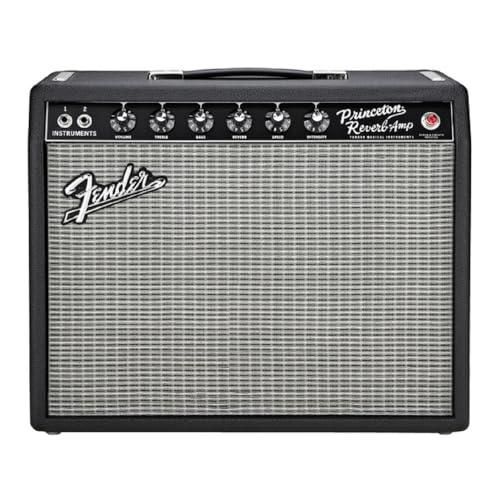
The Fender ’65 Princeton Reverb is best for players who need a tube combo for studio work, smaller venues, or other settings where 15 watts is appropriate. Its listed features include all-tube construction with tube rectification, a 10-inch Jensen C-10R speaker, long-spring reverb, and tube vibrato.
The spring reverb is the main reason to choose this model for a classic Fender-style sound with a compact speaker configuration. Its lower listed output than the Deluxe, Blues Deluxe, and Twin makes it a better match for players who do not need the highest clean volume in this selection. It was selected because the supplied details clearly identify both its tube design and built-in reverb.
Best for: Studio players and guitarists looking for a 15-watt all-tube amp with spring reverb and vibrato. Consider: Choose a higher-output model if your priority is greater volume or a larger speaker setup; the listed specification is one 10-inch speaker.
Fender ’65 Deluxe Reverb
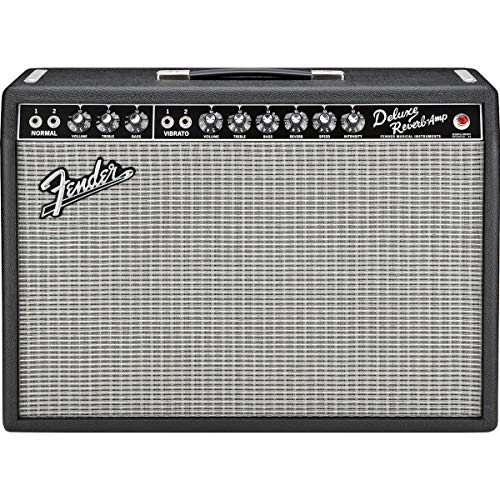
The Fender ’65 Deluxe Reverb is best for players seeking a 22-watt tube amp with a 12-inch speaker and built-in reverb. Its listed features include one 8-ohm Jensen C-12K speaker, all-tube Fender reverb, and vibrato. Fender describes the amp’s clean power as capable of compressing and overdriving when turned up.
Compared with the 15-watt Princeton, the Deluxe has a higher listed output and a larger speaker. That makes it a useful middle option for guitarists who want more output than a compact practice or studio amp but do not need the 85-watt Twin. It was selected for its combination of tube reverb, vibrato, and a widely useful power range in this group.
Best for: Players looking for an all-tube combo with a 12-inch speaker, reverb, and vibrato. Consider: The listed features do not specify a low-power setting, so choose another option if reducing output is a key requirement.
Fender ’68 Custom Vibro Champ Reverb

The Fender ’68 Custom Vibro Champ Reverb is best for players considering a lower-output tube amp. The provided specifications list 5 watts of output and identify the amp type as tube. Its controls include volume, treble, bass, reverb, speed, and intensity, giving players direct control over the reverb and vibrato-related effects.
Among these five picks, the Vibro Champ has the lowest listed wattage. That makes it a better fit for buyers prioritizing a smaller output rating than for those who need the higher power figures of the Blues Deluxe or Twin. It was selected because the product details explicitly list tube construction, reverb, and dedicated effect controls.
Best for: Players who want a 5-watt tube amp with built-in reverb and speed and intensity controls. Consider: Its 5-watt output is substantially lower than the other listed choices, so it may not suit a buyer who needs a high-output amp.
Fender Blues Deluxe Reissue

The Fender Blues Deluxe Reissue is best for guitarists who want a higher-output Fender amp with spring reverb. Its listed features include 40 watts, clean and overdriven tones, and a single 12-inch Eminence speaker. The speaker is described as having enhanced midrange intended to project through a dense mix.
At 40 watts, this model sits between the 22-watt Deluxe Reverb and the 85-watt Twin Reverb by listed output. It is a relevant choice for players who want more power than the smaller combos in this guide and value the listed 12-inch speaker and spring reverb. It was selected for that higher-output option and its expressly identified reverb.
Best for: Players seeking a 40-watt amp with spring reverb and a 12-inch speaker. Consider: The provided features do not specify tube construction, unlike several other picks here. Buyers who require confirmed all-tube circuitry should verify the exact configuration before choosing.
Fender ’65 Twin Reverb

The Fender ’65 Twin Reverb is best for players who prioritize high clean volume and a full speaker setup. The listed specifications include 85 watts and two 12-inch, 8-ohm Jensen C-12K speakers. Its all-tube Fender reverb is described as providing spacious ambience, and the feature list also identifies surf-style reverb character.
Compared with the Princeton, Deluxe, and Vibro Champ, the Twin has the highest listed wattage and two speakers rather than one. That makes it the most suitable pick here when clean headroom and a broad speaker configuration matter more than a low output rating. It was selected as the high-power tube-reverb choice in this lineup.
Best for: Guitarists who want an 85-watt amp with two 12-inch speakers and all-tube reverb. Consider: Its high listed wattage makes it a less direct match for buyers specifically seeking a low-output amp for quiet playing.
Buying Guide: How To Choose A Tube Amp With Reverb
How much power do you need?
Start with the amp’s wattage and the volume you need in your playing environment. In this selection, the listed range runs from 5 watts on the Vibro Champ to 85 watts on the Twin. The 15-watt Princeton, 22-watt Deluxe, and 40-watt Blues Deluxe offer different steps between those extremes. Wattage alone does not determine perceived loudness, so consider the speaker configuration and your intended use as well.
For home or studio use, a lower-wattage model may be easier to work with when you want to explore the amp’s response at lower output. For louder settings or a need for clean headroom, the higher-wattage options may be more appropriate. The supplied features do not state how loud each amp will be in a particular room or with a particular band, so match the specifications to your own requirements.
Do you need spring reverb or another type?
Reverb can add a subtle sense of space or a more obvious wash to the guitar signal. Several products here specify spring reverb: the ’65 Princeton has long-spring Fender reverb, the Blues Deluxe lists spring reverb, and the ’65 Twin and ’65 Deluxe identify Fender reverb. The Vibro Champ lists a reverb control but does not specify the reverb type in the supplied details.
If the reverb mechanism matters to you, check the exact product specifications before buying rather than assuming every built-in reverb uses the same design. Think about how much control you want, too. The Vibro Champ’s listed controls include a dedicated reverb adjustment, while the supplied feature descriptions for some other models do not itemize every control.
How important is the speaker size and count?
Speaker configuration affects the setup you are buying and is a useful way to compare these combos. The Princeton has one 10-inch Jensen speaker; the Deluxe and Blues Deluxe each list one 12-inch speaker; the Twin lists two 12-inch Jensen speakers. The Vibro Champ’s provided feature list does not specify a speaker, so do not assume its configuration based on its model name.
A single 10-inch speaker may appeal to a buyer prioritizing a compact format, while a 12-inch speaker or dual-speaker setup may better suit someone seeking a larger speaker arrangement. Speaker size alone does not establish how an amplifier will sound in every guitar, room, or musical mix. Use the stated configuration as a comparison point, not a guarantee of tone.
Should you choose an all-tube amp?
Product descriptions do not always provide the same level of detail about circuitry. The Princeton and Deluxe specifications explicitly identify all-tube designs, and the Vibro Champ lists its amp type as tube. The Twin’s features identify all-tube reverb, while the Blues Deluxe feature list does not explicitly state that the entire amplifier is all-tube.
If all-tube construction is a requirement, verify that the full amplifier configuration meets your needs. Do not treat the presence of tube reverb alone as proof that every part of an amp uses tube circuitry. Also distinguish tube amps from digital modeling amplifiers: a modeler may reproduce a tube-amp sound, but that does not make it a tube amplifier.
Which features matter beyond reverb?
Consider whether you want vibrato or additional effect controls alongside reverb. The ’65 Princeton and ’65 Deluxe list vibrato, while the Vibro Champ includes speed and intensity controls in its feature list. The Twin description emphasizes reverb and its speaker arrangement. The right choice depends on whether you want simple built-in ambience or more controls for shaping modulation effects.
Also compare the stated speaker impedance, wattage, and speaker count where available. These details can help you check whether the amplifier fits your use and setup expectations. The product information provided here does not specify every connection or feature, so consult the manufacturer’s full specifications for details that are essential to your purchase.
Frequently Asked Questions
What is the best tube amp with reverb for a small studio?
The Fender ’65 Princeton Reverb is a practical option to consider because its listed features include 15 watts, all-tube construction, long-spring reverb, and one 10-inch speaker. Whether it is right for a particular studio depends on the required volume and playing setup.
Which amp in this selection has the lowest wattage?
The Fender ’68 Custom Vibro Champ Reverb has the lowest listed output at 5 watts. It also lists reverb, volume, treble, bass, speed, and intensity controls.
Which model has the highest listed wattage?
The Fender ’65 Twin Reverb has the highest listed output at 85 watts. Its supplied features also identify two 12-inch Jensen speakers and all-tube Fender reverb.
Which picks list both reverb and vibrato?
The Fender ’65 Princeton Reverb and Fender ’65 Deluxe Reverb both list reverb and vibrato. The Vibro Champ’s controls include reverb, speed, and intensity, though its supplied feature description does not use the same wording.
Is a digital modeling amp the same as a tube amp?
No. A digital modeling amplifier uses digital processing to model amplifier circuitry or tone. It is not the same as an all-tube amplifier, even when the modeled sound is based on a tube amp.
Does higher wattage always mean better sound?
No. Higher wattage is not automatically better; it is one factor in matching an amplifier to the desired output and setting. Compare wattage with speaker configuration, reverb features, and your need for clean volume or lower-output operation.