Best Bluetooth Guitar Transmitter to Bluetooth Speaker
Quick Overview: This guide covers compact guitar-friendly Bluetooth adapters and professional XLR systems that let you send instrument audio to Bluetooth speakers, PA systems, or wired rigs. Below is a summary table of the five selected products and their primary purpose.
| Product | Primary Use | Key Feature |
|---|---|---|
| Kithouse B6 Guitar Headphone Amp Mini | Direct guitar output to headphones/speakers | Built-in effects, rechargeable |
| YMOO Bluetooth 5.3 Transmitter Receiver | Low-latency TV/Aux transmitter/receiver | aptX-LL support, Bluetooth 5.3 |
| Xvive P3 XLR Bluetooth Receiver | Pro PA/speaker Bluetooth receiver | XLR connectivity, 16‑bit/48kHz DAC |
| Kadjuh Wireless XLR Transmitter/Receiver | UHF wireless for guitar/mic to XLR | UHF 16 channels, ~196ft range |
| BAISHUN Bluetooth Transmitter Receiver | TV/stereo to Bluetooth speakers | RCA/AUX & TF card playback |
Kithouse B6 Guitar Headphone Amp Mini Plug
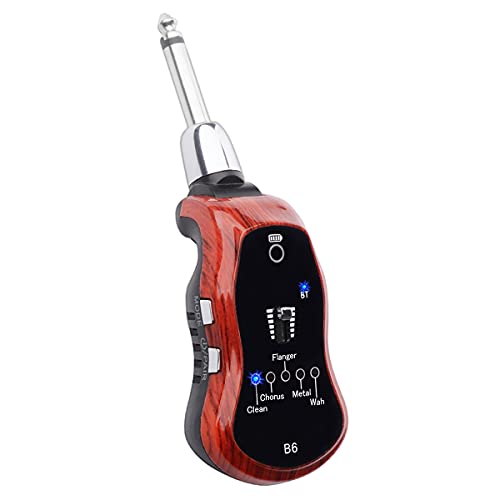
The Kithouse B6 is a compact guitar headphone amp intended for practice and travel. It functions as a Bluetooth receiver (not a transmitter) and provides a 1/4″ guitar input and 3.5mm output for headphones or speakers. Built-in rechargeable battery supports more than 8 hours of operation.
- Features: Clean, Chorus, Flanger, Metal, Wah effects; 1/4″ input; 3.5mm output; volume control; rechargeable battery.
- Who It’s For: Electric guitarists wanting a pocket practice amp that can play backing tracks via Bluetooth to headphones or an external speaker.
- Limitations: Because it’s an RX device, you cannot use it to transmit guitar audio wirelessly to a Bluetooth speaker without additional transmitter gear.
YMOO Bluetooth 5.3 Transmitter Receiver For TV/Airplane

The YMOO adapter is a 2-in-1 transmitter/receiver with Bluetooth 5.3 and Qualcomm support for multiple codecs including aptX, aptX-LL, and aptX-HD. In TX mode it can send audio from a non-Bluetooth source (like a guitar amp line-out or mixer AUX) to Bluetooth headphones or speakers.
- Features: Bluetooth 5.3, aptX/aptX-LL/aptX-HD support, multi-codec decoding, TX/RX modes.
- Use Case: To transmit guitar line-level output (or a mixer send) wirelessly to Bluetooth speakers or headphones with reduced latency when paired with compatible codecs.
- Notes: Latency advantage depends on both transmitter and speaker/headphone codec support; ensure devices support aptX-LL or aptX Adaptive for best sync.
Xvive P3 XLR Bluetooth Receiver

The Xvive P3 is a pro-grade XLR Bluetooth receiver designed to bring wireless audio to active PA speakers, mixers, or DJ gear. It’s intended for high-fidelity playback with a 16-bit/48kHz DAC and offers mono or linked stereo configurations (with the dual unit).
- Features: XLR connector for direct PA/speaker input, 16-bit/48kHz DAC, stereo-link options (P3D for dual units).
- Who It’s For: Venues, performers, or home studios that need reliable Bluetooth reception into pro audio systems without extra converters.
- Practical Note: This is a receiver—use it to accept Bluetooth instrument playback or backing tracks on speakers; for wireless instrument transmission to PA, pair with a compatible transmitter or a wireless instrument system.
Kadjuh Wireless XLR Transmitter And Receiver

The Kadjuh T92 is a UHF wireless system with XLR compatibility, designed to handle microphones and instrument signals across up to 196ft. It supports multiple channels and built-in rechargeable batteries, and includes modes for 0V/5V/48V, expanding compatibility with different microphone and instrument types.
- Features: UHF 16 channels, ~196ft range, built-in rechargeable batteries, multi-voltage XLR support.
- Use Case: Ideal for stage use when you need cable-free transmission from instrument or mic to an XLR-equipped receiver/PA without relying on Bluetooth frequency bands.
- Comparison: UHF systems typically offer longer range and less interference for live performance than Bluetooth transmitters, but they operate on different wireless standards and aren’t Bluetooth-compatible.
BAISHUN Bluetooth Transmitter Receiver For TV And Stereo
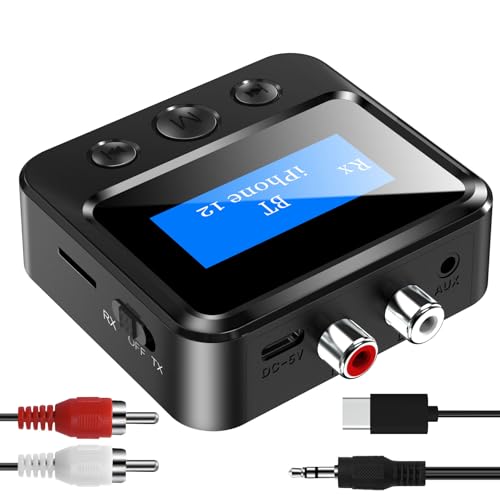
The BAISHUN adapter adds Bluetooth TX/RX capability to TVs, vintage stereos, and other line-level devices. It supports RCA and 3.5mm connections and can function as a transmitter to send audio to Bluetooth speakers, or as a receiver to play smartphone audio on wired speakers.
- Features: RCA & AUX inputs/outputs, TF card playback, TX/RX modes, plug-and-play operation.
- When To Use: Useful for connecting a guitar amp’s line-out or mixer output (via 3.5mm or RCA) to a Bluetooth speaker when low-latency performance is not critical.
- Limitations: Codec and latency specifics are not as advanced as dedicated aptX-LL devices; not optimal for live monitoring where lip-sync/latency matters.
Buying Guide: How To Choose A Bluetooth Guitar Transmitter To Bluetooth Speaker
Choosing the right solution depends on intended use: practice, stage performance, or playback. Below are the primary considerations and comparison perspectives to evaluate before purchasing.
1. Transmission Type: Bluetooth vs UHF
Bluetooth is widely compatible with consumer speakers and headphones but can have limited range and codec-dependent latency. UHF
2. Latency And Codec Support
For live playing or video sync, low latencyaptX-LL, aptX Adaptive, or Apple AAC and ensure both transmitter and receiver/headphones support the same codec.
3. Input/Output Connections
Check for the proper physical connections: 1/4″ instrument input, 3.5mm AUX, RCA, or XLR. For connecting guitars directly, a 1/4″ or instrument‑level input is preferable. To feed PA speakers or mixers, XLR outputs are ideal.
4. Power And Battery Life
For portable use, prioritize rechargeable batteries and long run time. Stage systems often include mains power or larger batteries; check stated working hours and charging method.
5. Sound Quality And DAC Specs
For high-fidelity playback into speakers, devices with higher-resolution DACs (like 16-bit/48kHz) and wide codec support will preserve clarity. Professional receivers often deliver better dynamic range than generic consumer dongles.
6. Range And Interference
Bluetooth range varies by class and environment; walls and other electronics reduce range. UHF systems typically offer extended range and more channels to avoid interference, useful for stage setups.
7. TX/RX Flexibility
Devices with 2-in-1 TX/RX modes add versatility: you can transmit a guitar/mixer output to Bluetooth speakers (TX) or receive smartphone audio into wired speakers (RX). Confirm whether the unit is a transmitter (TX) if you intend to send guitar audio to a Bluetooth speaker.
8. Professional vs Consumer Use
For live performance, prioritize XLR connectivity, proven low-latency workflows, and UHF reliability. For home practice or streaming backing tracks to a Bluetooth speaker, a consumer Bluetooth TX with aptX-LL may be sufficient.
9. Compatibility And Pairing
Ensure the target Bluetooth speaker or headphone supports required codecs and can pair with third-party transmitters. For PA systems, verify XLR or line-level input compatibility if using receivers like the Xvive P3.
10. Multiple Devices And Stereo
If you need to connect two headphones or speakers simultaneously, look for dual-link support. For stereo audio across pro systems, consider matching dual units or stereo-link capabilities.
Use these points to match device features to your use case—practice, streaming, stage, or studio—and choose the adapter or system that offers the right balance of latency, connectivity, range, and audio fidelity.