
Speaker spikes help reduce vibration, improve bass definition, and protect floors when used under speakers, subwoofers, amplifiers, and turntables. Below is a quick comparison of the selected options to help you choose the right 1/4-20 compatible spikes and pads.
| Product | Material / Key Feature | Includes Pads |
|---|---|---|
| Flushbay 4 Pack Speaker Spikes | Carbon Iron, adjustable height | No |
| Monosaudio Speaker Spikes (4 pcs) | 316L Stainless Steel, adjustable | No |
| Preffair Stainless Steel Speaker Spike Pads | 304 Stainless Steel base cones, high damping | Yes (base cones) |
| MECCANIXITY Black Speaker Spike Kit (4 pcs) | Copper spikes with pad mat, adjustable | Yes (pads included) |
| Tertullus Speaker Spike Floor Protectors (4 pcs) | 304 Stainless + graphite polymer pads, full set | Yes (isolation pads + adhesive) |
Flushbay 4 Pack Speaker Spikes Floor Protectors (M6)

Material & Finish: Carbon iron with polished, twice-plated surface to resist oxidation and provide a smooth finish. Adjustability: Height fine-tuning balancing nut for leveling on uneven floors. Compatibility: Intended for HiFi speakers, subwoofers, CD/DVD players, turntables, and chassis that accept compatible threads (M6 / 1/4-20 equivalent in many applications).
Use Case: Good where a sturdy metal spike is needed and where cosmetic finish matters. No included adhesive pads, so additional floor protection or isolation discs may be required for delicate surfaces.
Monosaudio Speaker Spikes, 4 Pcs HiFi Anti-Vibration (M6)

Material & Durability: Made from 316L stainless steel for high hardness, scratch resistance, and corrosion resistance. Each spike weighs about 10g. Adjustability: Fine-tuning counterbalance nut for height adjustments. Vibration Reduction: Designed to be placed under speakers or vibration panels to minimize harmful vibrations.
Use Case: Best for audiophiles or installations needing corrosion-resistant spikes with a polished look. No spike pads included, so pair with protective discs if placing on hardwood or tile.
Preffair Stainless Steel Audio Speaker Spike Pads Mats
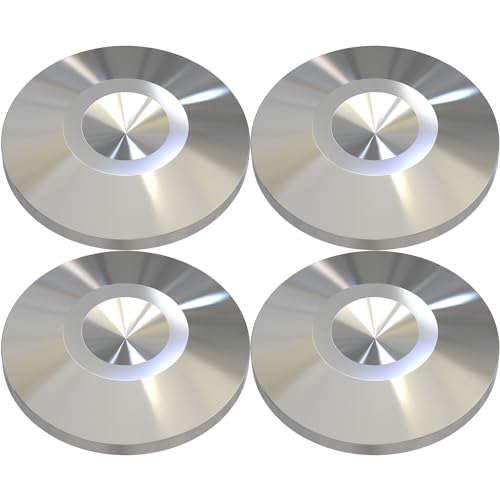
Construction: CNC-machined 304 stainless steel bases (4 mm height, 25 mm diameter). Damping & Load: Low harmonic vibration point and high damping; claimed weight-bearing capacity per set is substantial. Sound Impact: Designed to separate the audio component from the supporting surface to reduce resonances and tighten bass.
Use Case: Suited where a robust floor interface and damping are desired without exposed pointed spikes contacting the floor. These bases serve as stable feet or pads under spikes or directly under equipment that accepts feet.
MECCANIXITY 4pcs Black Speaker Spike Kit With Pads

Materials & Design: Copper spikes with shock-absorbing pad mats; spikes sized and structured for height adjustment using a balance nut. Protection & Isolation: Pads protect floors while the spikes provide acoustic decoupling. Durability: High-hardness copper resists bending and enhances shock absorption.
Use Case: Good option for users who want spikes plus integrated pads for protection and improved isolation from vibrations in home audio setups.
Tertullus Speaker Spike Floor Protectors With Isolation Pads
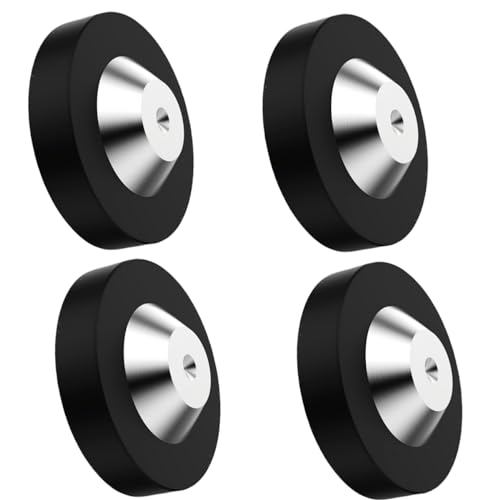
Complete Set: Includes 4 spikes, 4 isolation pads, and 8 self-adhesive black pads. Materials: 304 stainless steel spikes combined with graphite polymer pads for damping. Versatility: Designed for speakers, amplifiers, turntables, and other audio gear requiring acoustic decoupling.
Use Case: Ideal when you want a single kit that provides both spikes and protective pads, reducing the need for additional accessories while improving vibration control.
Buying Guide: How To Choose 1/4-20 Speaker Spikes
Thread Size And Compatibility: Confirm the spike thread (1/4-20) matches your speaker’s threaded inserts or adapter feet. M6 threads are common and often equivalent; verify pitch and diameter if exact fit is required.
Material Matters: Stainless steel (304 or 316L) offers corrosion resistance and a polished look. Copper and carbon steel provide different resonance characteristics; copper can add damping while steel is very rigid.
Adjustability: A fine-tuning balancing nut is useful for leveling speakers on uneven floors. Choose spikes with easy-to-access adjustment features if your setup requires precise leveling.
Floor Protection: If placing spikes on hardwood, tile, or sensitive finishes, use dedicated pads, cones, or adhesive discs to prevent scratches and distribute weight. Kits that include pads simplify installation.
Damping And Isolation: Some bases and pads use materials like graphite polymer or machined stainless cones to absorb and decouple vibrations. Consider pads when you want reduced floor-borne resonance without losing acoustic decoupling.
Weight Capacity And Stability: Ensure the spikes or base cones can support your speaker or subwoofer weight. Heavier speakers benefit from larger-diameter bases or more robust spike designs.
Acoustic Goals: Decide whether you prioritize maximal isolation (point contact spikes), improved damping (pads or cones), or a balance of both. Point contact tends to reduce cabinet-to-floor coupling, improving clarity; pads can reduce tonal coloration from floor resonance.
Installation And Maintenance: Check whether spikes come with instructions, installation hardware, or adhesive pads. Periodically check tightness and surface condition under spikes to prevent damage and maintain performance.
Aesthetics And Finish: Choose a finish that complements your speaker cabinets and room décor—polished stainless, chrome, black, or copper finishes are common.
Comparison Perspectives:
- Budget vs. Performance: Simple metal spikes (carbon steel) offer low cost and rigidity; stainless or copper with CNC machining often cost more but add longevity and refined acoustic behavior.
- Padded Kits vs. Bare Spikes: Kits with pads are safer for finished floors and easier to install; bare spikes may deliver the greatest point-contact decoupling but need separate floor protection.
- Speaker Type: Smaller bookshelf speakers may perform well with compact spikes or pads; large floorstanders and subwoofers need larger bases or heavy-duty spikes for stability and load distribution.
- Room Surface: On carpet, spikes can penetrate to reach a firmer surface below; on hard floors, use isolation pads to prevent marking and to tune damping characteristics.
Final Tip: Match spike thread and size to your equipment, choose materials and pads based on floor type and desired acoustic outcome, and ensure stable installation to get consistent results.