Best 1/4 Patch Cables for Pedalboards and Studio Setups
The right 1/4 patch cables ensure clean signal transfer, minimal noise, and a tidy pedalboard. This guide highlights five top 1/4-inch patch cables that deliver reliability for guitarists, bassists, and studio players. Best for compact pedalboards, live performers, and home studios, these options balance durability, shielding, and flexibility. Below, you’ll find direct comparisons, ideal-use cases, and practical buying tips to help you choose.
| Product | Best For | Key Benefit |
|---|---|---|
| Amazon Basics 6 in Patch Cable (6-pack) | Beginner to intermediate pedalboards | Value pack, right-angle-to-right-angle, OFC shielding |
| MXR Patch Cable 6 in (3 Pack) | Live rigs needing clarity | 20-AWG OFC wire, durable jacket |
| GOGHOST 12 Inch Patch Cables (6 Pack) | Organized boards with flat design | Flat ribbon cables save space, low capacitance |
| Cable Matters 2-Pack 6ft TS to TS | Longer runs, studio or stage | Braided shielding, durable connectors |
| LuminologyPro 5 in Patch Cables (6 Pack) | Ultra-compact boards | Ultra-low profile, reduced hum with double shielding |
Note: All listed products are commonly used to connect guitar and bass pedals, amps, and outboard gear. They vary in length, shielding, and profile, so match your pedalboard layout and noise tolerance to your needs.
Amazon Basics 1/4 Inch Right-Angle Patch Cable (6 in) — 6 Pack

Best for: Budget-conscious setups that still require reliable connections. These six 6-inch cables use right-angle connectors to minimize pedalboard clutter and fit tight spaces.
- 6-inch length; 6-pack for multiple pedal connections
- 1/4-inch right-angle-to-right-angle configuration
- Oxygen-free copper (OFC) spiral shield with conductive PVC shield
Why chosen: Value-focused option offering essential shielding and low-profile connectors that reduce space between pedals. Use for standard effects chains where budget is a priority. Caution: Short length limits routing flexibility in larger pedalboards.
MXR Patch Cable 6 in (3-Pack) — 15 cm
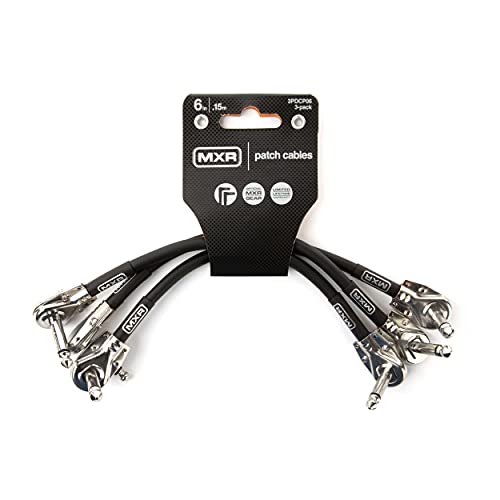
Best for: Players needing clear, balanced tone across pedal chains without signal loss. These cables emphasize rigidity against wear and emphasize tone clarity.
- 20-AWG OFC wire with PE insulation
- Extra-thick PVC jacket for durability
- Designed to maintain warm, natural tone with clarity
Why chosen: Strong choice for touring or busy pedalboards where signal integrity is critical. Caution: Short length may require careful placement on crowded boards.
GOGHOST 12 Inch Patch Cables (6 Pack) — 1/4″ TS Right Angle
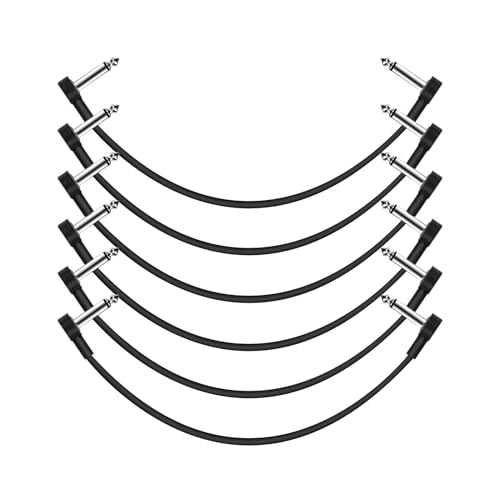
Best for: Pedalboard layouts that need space-saving, flat cables for organized rigs. The flat design reduces clutter and improves pedal spacing.
- 12-inch straight connections with right-angle routing
- Flat ribbon construction for space savings
- Oxygen-free copper conductors with shielding
Why chosen: Ideal when you need to keep a clean board with minimal wiring bulk. Caution: Longer length reduces portability for ultra-compact boards.
Cable Matters 2-Pack 6ft Patch Cable — 1/4 Inch TS to TS

Best for: Studios or live rigs needing longer runs between gear, amplifiers, or outboard devices. These cables combine durability with a sturdy shield.
- 6 ft length; straight-to-straight connectors
- Braid shielding to minimize EMI noise
- Heavy-gauge OFC conductors; polyethylene insulation
Why chosen: Strong option for longer patch runs without compromising signal. Caution: Longer cables can add capacitance, potentially affecting high-end frequencies if used extensively in a dense chain.
LuminologyPro 5 Inch Patch Cables (6 Pack)
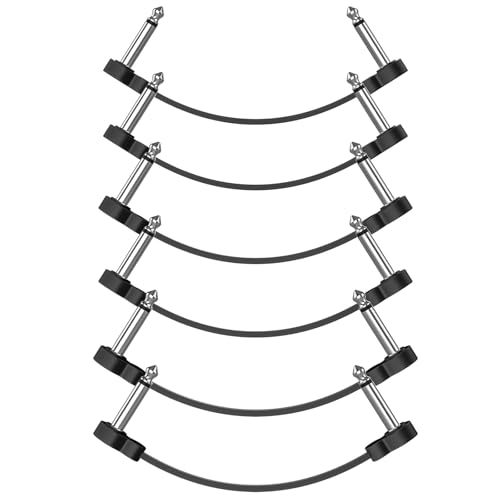
Best for: Ultra-compact pedalboards where space is premium. These slim cables reduce crowding while maintaining signal integrity.
- Ultra-low profile: 0.24 inches thick
- Oxygen-free copper core with double shielding
- Short 5-inch length for clean, consistent tone between pedals
Why chosen: The best choice when pedal placement requires extreme space savings. Caution: Very short length can limit routing in larger rigs or multiple-row boards.
Buying Guide: Key Considerations For 1/4 Patch Cables
- Length: Choose lengths that fit your pedalboard layout. Short cables save space but limit routing; longer cables reduce clutter but may introduce more capacitance.
- Shielding: OFC shielding and additional shields reduce EMI/RFI noises. Higher shielding benefits noisy environments or complex pedal chains.
- Connnectors: Right-angle versus straight connectors affect pedal proximity and space on the board. Right-angle plugs are better for tight spaces; straight plugs are versatile for larger layouts.
- Conductors: Oxygen-free copper (OFC) provides clearer signal and less loss over short runs. Polyethylene insulation helps high-frequency response.
- Durability: Look for flexible jackets and rugged plugs for live performance or frequent pedal swaps. A thicker jacket often resists wear better.
- Color coding: Multi-color cables can help with signal routing in studio or stage environments, reducing confusion in complex rigs.
- Cable management: Flat or low-profile designs help keep pedals aligned and reduce wobble on stage.
Frequently Asked Questions
- What length should I choose for a small pedalboard?
Answer: 4–6 inches or 5–6 inches are common for tight pedalboard setups to minimize clutter while maintaining signal integrity. - Do patch cables affect tone?
Answer: Yes, shielding, conductor quality, and cable length influence signal clarity and high-frequency response, especially in dense pedal chains. - Are flat patch cables better than round ones?
Answer: Flat cables save space on crowded boards and reduce spacing between pedals, but both types can perform equally well in proper shielding. - Should I buy a multi-pack or individual cables?
Answer: Multi-packs offer cost savings and convenient replacements for new boards or gigs; individual cables suit customized setups. - What is the best choice for a studio patch bay?
Answer: Balanced or TS cables with strong shielding and durable connectors are preferred to minimize interference in studio environments. - Can I mix patch cable brands on a single pedalboard?
Answer: Yes, but consistency in shielding and conductor quality helps maintain uniform tone across the chain.
All product descriptions above are based on listed features and typical use scenarios. Consider your pedalboard size, the number of pedals, and the environment where you perform when selecting cables. This guide aims to help you identify cables that deliver reliable signal transfer while fitting your layout and budget.