
Best 1 Ohm Monoblock Amplifier Options for Serious Subwoofer Power
Looking for the best 1 ohm monoblock amplifier to push a subwoofer hard without overheating? This guide highlights five top options designed for demanding low-end performance. Each choice is explained for who it’s best for and why it stands out. If you’re building a high-power bass system, these amplifiers deliver clean, consistent output at 1 ohm with efficient Class D design and flexible tuning.
The following table summarizes the featured models, including their best-fit use case and what sets them apart. Use this quick reference to compare core strengths at a glance.
| Product | Best For | Why It Stands Out |
|---|---|---|
| Skar Audio RP-1200.1D | Powerful single-driver subwoofers | High peak and solid RMS at 1 ohm; bass EQ boost |
| Skar Audio RP-800.1D | Compact high-output builds | Strong 800W RMS at 1 ohm; portable footprint |
| AUDIOZERONE ZE1000.1 | 1–4 ohm flexible subs | 1000W RMS at 1 ohm; broad compatibility |
| Taramps BASS 1200 1 Ohm | Deep bass with clean control | 1200W RMS at 1 ohm; precise bass tuning |
| ORION CBA2000.1D | Durable and efficient mono power | 2000W max; robust Class D mono |
Skar Audio RP-1200.1D Monoblock
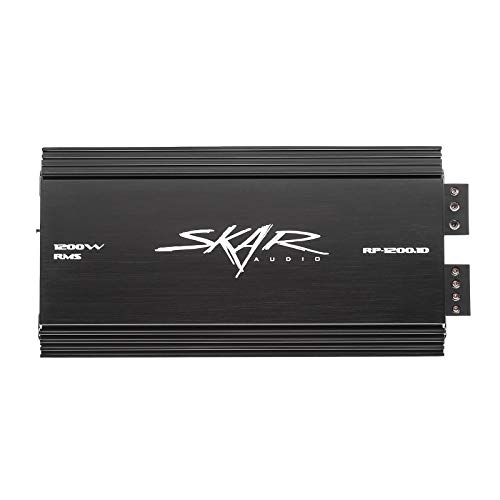
Features: Class D MOSFET monoblock power amplifier; Peak power at 1 ohm: 1,600 watts; RMS power at 1 ohm: 1,200 watts; frequency response 20 Hz–250 Hz; on-board bass EQ switch with +6 or +12 dB boost at 45 Hz.
Best for: Enthusiasts seeking maximum bass with a single, high-output amp feeding one subwoofer. This model’s 1 ohm stability and high RMS rating make it a strong choice for bass-heavy setups demanding loud, controlled low end.
Why selected: It combines strong power delivery at 1 ohm with built-in EQ, allowing on-the-fly bass shaping to suit a wide range of subwoofers.
Caution: The high power output requires careful electrical and enclosure design to avoid overheating and to ensure proper cooling in enclosed spaces.
Skar Audio RP-800.1D Monoblock

Features: Class D MOSFET monoblock; Peak power at 1 ohm: 1,200 watts; RMS power at 1 ohm: 800 watts; 20 Hz–250 Hz frequency response; on-board bass EQ switch with +6 or +12 dB boost at 45 Hz.
Best for: Compact high-output builds where space is limited but strong 1 ohm performance is needed. Ideal for smaller trunks or sedans with a single, dedicated subwoofer.
Why selected: Delivers solid 1 ohm performance with tuning capability in a smaller footprint than larger models.
Caution: The 1 ohm load still demands adequate cooling and electrical supply to maintain stable performance over extended use.
AUDIOZERONE ZE1000.1 2000W

Features: Power – 2000 watts max x 1 at 1 ohm; 1000 watts RMS x 1 at 1 ohm; 650 watts RMS x 1 at 2 ohms; 400 watts RMS x 1 at 4 ohms; class D; 1 ohm stable; compact design with MOSFET power supply.
Best for: Builders needing a flexible, high-power amp capable of driving subwoofers across 1–4 ohms while preserving efficiency.
Why selected: Offers substantial RMS power at 1 ohm and broad compatibility with various subwoofer impedances.
Caution: The data shows very high output; ensure proper electrical upgrades and thermal management to sustain performance.
Taramp’s BASS 1200 1 Ohm
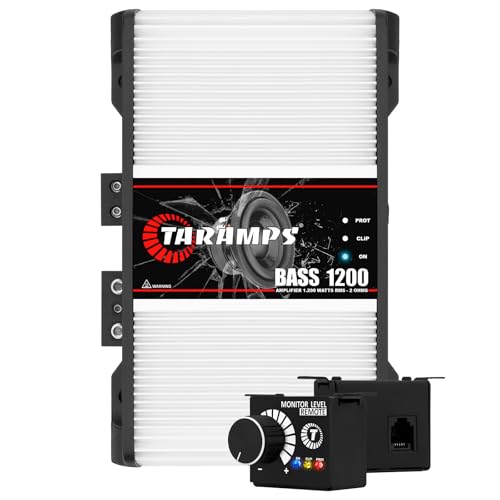
Features: 1200W RMS at 1 ohm; 8 Hz–250 Hz deep low-end response; parametric bass boost from 35–60 Hz with up to +10 dB for shaping low-end power.
Best for: Bass-focused builds that require precise shaping of the sub-bass region to achieve punchy, controlled low frequencies.
Why selected: Its dedicated bass boosting capability helps tailor the output for specific enclosures or listener preferences.
Caution: Higher bass boost requires careful tuning to avoid overpowering the enclosure or causing distortion at high volumes.
ORION CBA2000.1D Cobalt Mono

Features: Class D mono amplifier; 2000W max; 1 ohm continuous power delivery; low-level RCA inputs; designed for efficient power delivery to subwoofers.
Best for: Installers seeking a robust, efficient mono block with simplified wiring and solid 1 ohm performance for larger subs.
Why selected: The cobalt aesthetic and emphasized efficiency make it a practical, durable option for long-running bass channels.
Caution: The emphasis on max power means careful electrical and wiring setup to avoid heat buildup in smaller compartments.
Buying Guide
What to look for in a 1 ohm monoblock amplifier
Power rating at 1 ohm is the primary consideration. Look for RMS wattage that meets or exceeds your subwoofer’s continuous needs for clean, undistorted bass. A high peak rating can indicate strong transient response, but RMS is the essential measure for daily use.
Heat management matters. Class D designs are efficient, but test setups should include adequate ventilation and, if possible, a heatsink or fan to prevent thermal throttling during long play sessions.
Impedance compatibility
Ensure the amp is stable at 1 ohm and that your subwoofer is compatible. Some models also support other impedances, offering flexibility as your system evolves.
Bass tuning features, such as built-in EQ or bass boost, can help tailor the response to your enclosure and room acoustics. Use these features to dial in tight, accurate low end rather than simply increasing gain.
Integration and installation considerations
Check mounting space, wiring gauge requirements, and fuse ratings. Higher wattage amps may require thicker power and ground cables and a more robust power supply in the vehicle.
Consider a remote bass control for easier on-the-fly adjustments from the driver’s seat, especially in systems where the woofer is under a seat or in a trunk.
What not to overlook
Avoid overloading your electrical system. If your alternator or battery struggles to supply peak current, you may need a power upgrade. Also verify enclosure compatibility; a high-power amp is only as good as the sub and enclosure it drives.
FAQ
- What does 1 ohm stability mean? It means the amplifier can continuously power a load of 1 ohm without overheating or malfunctioning, allowing for very low impedance subwoofers.
- Is RMS power more important than peak power? Yes. RMS represents continuous, real-world output, while peak power reflects short bursts that may not be sustainable.
- Do I need extra cooling for a 1 ohm amp? Often yes. Even efficient Class D amps can overheat under heavy use, so ensure adequate airflow or cooling in the install location.
- Can I mix 1 ohm amps with 2 ohm or 4 ohm subwoofers? Some models support multiple impedances, but verify each product’s specifications before wiring; mismatches can affect performance and safety.
- What is a remote bass control, and should I use one? A remote control lets you adjust bass output without reaching to the trunk. It’s convenient for tuning while driving and is recommended for complex setups.
- How do I choose between these amps? Base the choice on RMS power at 1 ohm, enclosure size, subwoofer compatibility, and whether you need features like built-in EQ or a remote bass control.