
Best Soft Dome Tweeters for Crisp Car Audio
Soft dome tweeters deliver smooth, detailed highs with low distortion, making them ideal for upgrading a stock car audio system. This guide targets three buyer types: DIY installers seeking easy upgrades, audiophiles chasing cleaner treble, and budget-conscious shoppers needing good value. The selected products emphasize neodymium magnets, high sensitivity, and compact footprints for simple mounting and versatile integration. Use the quick comparison table below to visualize key choices at a glance.
| Product | Key Benefit | Best For | Approx. Power (per pair) |
|---|---|---|---|
| Dayton Audio ND25FA-4 | Flat treble, low distortion | Balanced, natural highs | High |
| Skar Audio TWS-01 | Compact, strong magnet | Budget-friendly, higher output | 80W RMS |
| Timpano TPT-ST1 | Solid construction, wide band | All-around car use | 70W RMS |
| Digital Designs D-T25a | Smooth, extended high end | Audiophile-grade listening | 93.6dB sensitivity |
| PRV AUDIO TW100SD-4 | Flush-mount, efficient | Factory replacements |
Dayton Audio ND25FA-4 1″ Soft Dome Neodymium Tweeter

This 1-inch soft dome tweeter uses a neodymium motor for high sensitivity and low distortion. The compact round faceplate simplifies installation and it includes a heatsink with ferrofluid cooling for reliable performance. Best for: installers wanting a clean, unobtrusive upgrade that preserves refined highs. Limitation: precise mounting may require compatible housings or adaptors in some vehicles.
Skar Audio TWS-01 1-Inch Neodymium Silk Dome Tweeters (Pair)

These 1-inch tweeters are part of a two-tweeter package with a strong neodymium magnet and a silk dome for smooth highs. Best for: budget-conscious builds that still demand higher output and solid clarity. Limitation: power handling sits around 80W RMS for the pair, so avoid pushing extreme amplifier levels with low-impedance systems.
Timpano TPT-ST1 Soft Dome Tweeter Set (Pair)

This pair features a 1-inch soft dome with a frequency response of 5,000–20,000 Hz and 180W max per pair at 4 ohms. Best for: car audio enthusiasts wanting a robust, smooth high-end with straightforward mounting. Limitation: data notes 4-ohm operation; verify your amp/impedance compatibility before upgrading.
Digital Designs D-T25a 1″ Soft Dome Tweeters

These 25mm textile dome tweeters are designed for smooth highs with a copper-clad aluminum voice coil and a vented gap for cooling. Best for: listeners seeking extended high-frequency response with efficient, distortion-free output. Limitation: some setups may require careful crossover tuning to avoid sibilance in certain music styles.
PRV AUDIO TW100SD-4 Soft Dome Tweeter Pair
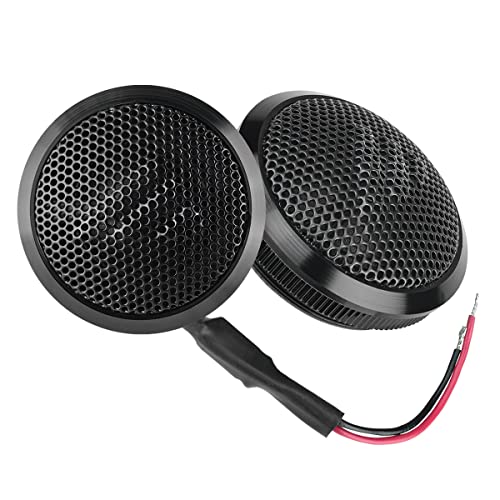
These 28 mm dome tweeters use neodymium magnets in a compact flush-mount design, with a built-in capacitor for attenuation and a lightweight profile. Best for: upgrading factory 2-way systems where space is tight and a refined top-end is desired. Limitation: flush-mount depth should be checked against vehicle panels to avoid clearance issues.
Dayton Audio AN25F-4 1″ Soft Dome Neodymium Car Tweeter Pair
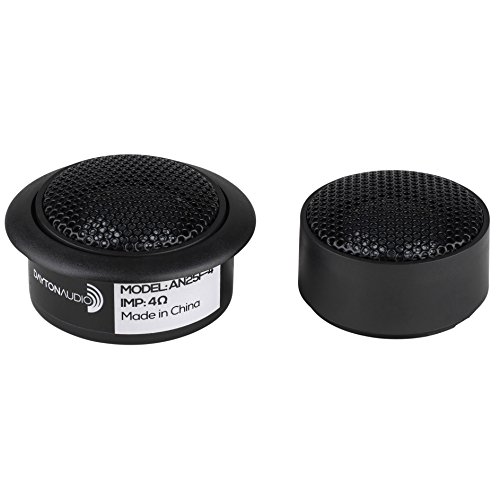
This pair offers ultra-high sensitivity (96 dB) for strong output with modest power. The ferrule-free neodymium motor provides low distortion and compact size. Best for: users prioritizing high efficiency and clean treble without heavy amplification. Limitation: extremely sensitive tweeters can reveal harshness in poorly recorded tracks if the rest of the system isn’t tuned well.
Sundown Audio SA-1T v4 1″ Soft Dome Tweeter Pair

These tweeters feature a high-fidelity soft dome with 92 dB sensitivity and flexible crossover options. Best for: audiophiles seeking precise highs with configurable power handling up to 65W RMS per pair. Limitation: higher sensitivity means your amp choice matters to avoid harsh highs on bright recordings.
Buying Guide
What makes a soft dome tweeter a good choice? Soft domes minimize edge harshness and break-up at high frequencies, delivering smoother detail than some metal domes. Look for a dome size around 1 inch, good high-frequency bandwidth, and a suitable crossover. Power handling should align with your amplifier and overall system design.
Key factors to compare
- Impedance: Most car tweeters use 4 ohms; confirm compatibility with your amp and speaker crossovers.
- Sensitivity: Higher dB ratings mean louder output with less power, but may reveal recording quality.
- Magnet type: Neodymium magnets boost efficiency and reduce weight, often supporting smaller, compact designs.
- Mounting depth: Check flush-mount or surface-mount depth to fit your vehicle’s doors or dash panels.
- Crossovers: Some tweeters include built-in capacitors; others require external crossovers to tailor high-end response.
Common install scenarios
Best fits include upgrading factory two-way systems, replacing aging tweeters in doors or dash locations, and building a more refined two-channel or multi-woofer setup. For small cabins, a compact push-on mount is advantageous; for larger doors, a slightly larger faceplate can improve mounting stability and sound staging.
What to ask before buying
- Will the tweeter’s impedance match your amp/cower system?
- Do you need a pre-attached crossover or a separate one?
- Is the mounting depth compatible with your vehicle’s panels?
- Does the woofer/tweeter combination align with your desired sound signature?
FAQ
- What is a soft dome tweeter? A soft dome tweeter uses a textile or polymer dome to deliver smooth, detailed highs with reduced harshness compared to metal domes.
- Do neodymium magnets matter for car tweeters? Yes, they improve efficiency and reduce weight, allowing smaller formats with strong output.
- Is a separate crossover needed for all tweeters? Many are compatible with built-in capacitors, but some setups benefit from external crossovers for precise tuning.
- How do I know if a tweeter fits my car? Check mounting depth, mounting style (flush vs. surface), impedance, and compatibility with your existing amplifier.
- Can high-sensitivity tweeters cause harsh highs? They can if the rest of the system isn’t tuned; proper crossover and amp matching help prevent this.
- What’s a good starting point for tuning? Start with a moderate crossover, listen to a variety of music, and adjust gradually to achieve balanced highs without sibilance.