
Best 10 Channel Digital Mixer: Top Picks for Stage, Studio, and Live Streaming
Answering the search for a versatile 10-channel digital mixer, this guide highlights models that balance program flexibility, connectivity, and ease of use. These picks are ideal for small venues, home studios, podcasters, and mobile performers who need clean preamps, reliable effects, and practical routing. The top five selections span USB/audio interface features, built-in effects, wireless options, and robust control surfaces. Each product is presented with who it’s best for, plus practical pros and a potential limitation to consider.
Summary of chosen products
| Product | Main Strength | Best For |
|---|---|---|
| Yamaha MG10XU 10-Input Stereo Mixer with Effects | Built-in SPX effects, studio-grade D-PRE | Small venues and home studios needing effects |
| Pyle PMXU128BT | 12 channels, USB audio interface, Bluetooth | Live DJ sets and basic recording |
| Behringer X AIR XR18 | 18 channels, Midas preamps, built-in Wi‑Fi | Remote control and studio/live hybrid setups |
| Mackie ProFX10v3+ | Bluetooth, USB recording, GigFX | Live sound with quick streaming/recording |
| Donner DAM-1000 | 10 channels, premium preamps, ASIO driver | Pro-grade analog feel with DAW integration |
Yamaha MG10XU 10-Input Stereo Mixer with Effects

The Yamaha MG10XU is a 10-channel mixer with USB and SPX digital effects, designed for compact live and home studio use. It features studio-grade discrete D-PRE preamps with inverted Darlington circuitry for clean bass and smooth highs. A three-band EQ plus high-pass filters give solid control over feedback and noise. This model is best for performers who want built-in effects without adding external processors, and for small venues needing a simple USB recording path.
Who it’s best for: small bands, solo artists, podcasters, and hobby studios seeking integrated effects and a straightforward USB workflow. Why selected: the combination of reliable preamps, easy routing, and compact hardware makes it a strong all-in-one solution.
Limitations to consider: no Bluetooth streaming, and the built-in effects cover common needs but may not replace dedicated outboard effects in larger setups.
Pyle PMXU128BT 12-Channel Console Style Mixer

The Pyle PMXU128BT is a 12-channel console-style mixer with USB audio interface capabilities and Bluetooth streaming. It offers a robust set of inputs (12 XLR/Combo) plus a USB path for direct computer connection, making it suitable for home studios and beginner-to-intermediate setups. It can serve as a portable DJ/mixing station with wireless playback and a versatile I/O layout.
Who it’s best for: bedroom studios, entry-level broadcast setups, and mobile DJs who desire wireless streaming and simple computer integration. Why selected: it blends USB recording ability, Bluetooth, and multiple input options into a single, affordable package.
Limitations to consider: not a high-end, professional-grade console; output routing and effects are more basic relative to higher-tier digital mixers.
Behringer X AIR XR18 18-Channel Digital Mixer
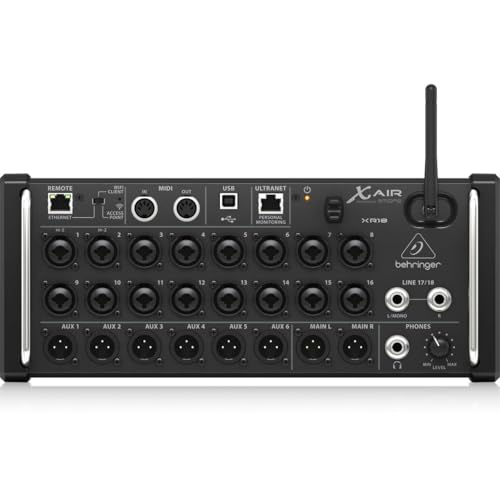
The Behringer X AIR XR18 is a versatile 18-input digital mixer aimed at both studio and live applications. It features 16 Midas-designed preamps for high-quality sound, and an integrated Tri-mode Wi‑Fi router for direct control without extra hardware. The XR18 is a strong choice for users who want tablet or mobile control and scalable I/O in a compact physical footprint.
Who it’s best for: producers, live technicians, and small venues that benefit from mobile control and sophisticated preamps. Why selected: comprehensive remote operation, robust preamps, and flexible routing make it a leader for tech-forward setups.
Limitations to consider: higher price point and more complex setup may be daunting for beginners or users focusing strictly on 10 channels.
Mackie ProFX10v3+ 10-Channel Mixer

The Mackie ProFX10v3+ is a compact 10-channel mixer featuring Bluetooth playback and USB recording via GigFX DSP effects. It’s designed for live performance and simple streaming workflows, offering easy out-of-the-box connectivity with microphones and instruments. The GigFX engine provides a suite of effects and media-friendly routing options.
Who it’s best for: solo performers, small bands, and event hosts who need quick Bluetooth playback, straightforward USB capture, and reliable on-device effects. Why selected: the integration of Bluetooth plus USB recording in a 10-channel format suits flexible, on-the-go gigs.
Limitations to consider: deeper editing of effects may require external processors, and the 10-channel limit can constrain larger setups.
Donner DAM-1000 10-Channel Analog Mixer

The Donner DAM-1000 is a 10-channel analog mixer with premium LAXY-PRE mic preamps, 48V phantom power, and BT 5.3 for wireless input. It supports a 48kHz/24-bit sample rate and ASIO driver compatibility, making it a viable option for DAW integration and precise live sound without relying on digital effects. This model emphasizes clean, natural sound with a traditional mixer workflow.
Who it’s best for: users who prefer analog signal flow with high-quality preamps and need solid DAW integration through ASIO. Why selected: strong preamps and straightforward control are appealing for studios and live rigs that prioritize sound fidelity over onboard effects.
Limitations to consider: no built-in USB audio interface or digital effects; users will rely on external processing or software for effects and multitrack recording.
Buying Guide: Key Considerations for a 10-Channel Mixer
- Channel count and type: Confirm 10-channel capability with the right mix of mic and line inputs for your setup. Do you need XLR inputs, combo jacks, or instrument-level connectors?
- Preamps and sound quality: Look for reputable mic preamps (e.g., D-PRE, Midas), phantom power, and headroom to avoid distortion on loud performances.
- Routing and I/O: Consider the available outputs (main, control room, sub, USB, Bluetooth, and virtual outputs) and how you’ll route audio to speakers, recorders, or software.
- Built-in effects vs. external processing: If effects are essential, check the type and depth of onboard DSP. Otherwise, ensure you can integrate external effects without hassle.
- USB and DAW compatibility: For recording and playback, ensure the mixer offers a straightforward USB audio interface with low-latency ASIO/Core Audio support if needed.
- Wireless features: Bluetooth can simplify playback but verify latency and compatibility with your devices if synchronization is critical.
- Size, build quality, and portability: Match the form factor to your venue or studio space. Consider rack-mount options if you need a fixed setup.
- Software control and networking: Some mixers offer tablet/phone control, Wi-Fi streaming, or app-based configuration. These features improve flexibility but may require setup time.
Frequently Asked Questions
- What is the difference between a digital and analog mixer?
Digital mixers provide built-in effects, multi-channel routing, and USB interfaces, while analog mixers offer direct signal paths and often preferred for their simplicity and warmth. - Do I need built-in effects on a 10-channel mixer?
Not necessarily. Built-in effects are convenient for quick setups, but many users prefer external processors or software for more advanced processing. - Can these mixers connect to a computer for recording?
Most listed models offer USB audio interfaces or USB recording paths, making direct recording to a computer feasible. - Is Bluetooth playback or control important for live use?
Bluetooth is useful for quick playback from mobile devices but can introduce latency; prioritize it if you frequently cue tracks from a phone or tablet. - Which mixer is best for small venues with a laptop**?**
The Behringer X AIR XR18 or Mackie ProFX10v3+ provide strong external control options, reliable preamps, and flexible routing suitable for laptop-based setups.