Best Ten Full-Range Speakers for DIY Audio Enthusiasts
Discover a curated selection of full-range speakers suitable for DIY projects, HiFi setups, and small multimedia systems. This guide highlights compact drivers and multi-pack options that deliver clear mids and natural highs without a separate tweeter. Each pick is evaluated for universality, power handling, and ease of integration into enclosures or repair projects. The following five products represent strong all-around choices across sizes and configurations.
Summary of chosen products:
| Product | Brand | Key Points |
|---|---|---|
| Visaton R10S 4″ Full Range Speaker 8 Ohm | Best Price Square | Compact 4″ driver; 8 Ohm; ceiling-mount capable |
| ACEIRMC 2″ 4Ohm 10W Full Range Speaker (2pcs) | ACEIRMC | Two-pack; 2″ size; suitable for compact builds |
| ACEIRMC 2″ 4Ohm 10W Full Range Speaker (10pcs) | ACEIRMC | Bulk quantity; versatile for multi-unit projects |
| Shutao 4Pcs 2″ 10W Full Range Speaker Drivers | Shutao | Four-pack; small footprint; good for repairs |
| 4PCS 10W Mini 3″ HiFi Full Range Speaker 8 Ohm | ACEIRMC | 3″ diameter; anti-magnetic; high sensitivity |
Visaton R10S 4″ Full Range Speaker 8 Ohm

The Visaton R10S is a compact 4-inch full-range driver designed for universal applications. With an 8 Ohm impedance and a nominal output around 20 watts, it suits small enclosures, ceiling installations, or DIY sound panels where a full-range voice is desired without a crossover. Its mounting options and grille compatibility make it a flexible choice for ceiling or wall installations in compact stereo or multi-room builds. The driver aims to deliver balanced midrange and smooth highs suitable for spoken word, podcasts, and casual listening.
ACEIRMC 2inch 4Ohm 10W Full Range Speaker (2pcs)
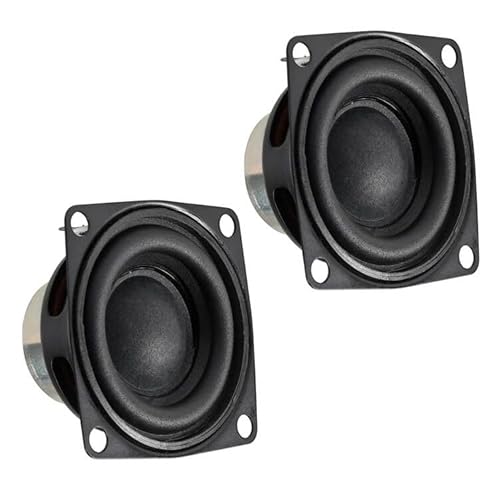
This ACEIRMC model provides two compact 2-inch drivers, each 4 Ohms and 10 watts. The small footprint makes it suitable for Arduino-based audio projects, hobbyist DIY audio, or compact multimedia systems where space is at a premium. The full-range design aims to deliver a clear, though modest, sound across a broad frequency range, making it a practical choice for small speaker projects or compact enclosures.
ACEIRMC 2inch 4Ohm 10W Full Range Speaker (10pcs)

This bulk pack scales up the two-inch full-range concept for projects requiring multiple identical drivers. The 4 Ohm impedance and 10W rating per unit ensure consistent performance across several channels, walls, or compact enclosures. It is well-suited for DIY satellite speakers, portable speaker arrays, or classroom audio projects where uniform drivers are advantageous.
Shutao 4Pcs 2 Inch 10W Full Range Speaker Drivers
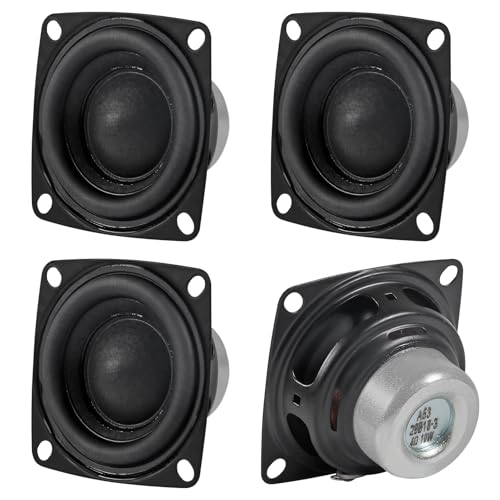
The Shutao 4-pack features compact 2-inch drivers, each rated at 10 watts with a 4 Ohm impedance. They are positioned for repair work or small DIY builds, offering a straightforward route to expanding a system with uniform full-range sound. The compact size supports sharing loud, clear audio in tight spaces or multi-room projects where higher wattage per unit is not required.
ACEIRMC 4pcs 2inch 4Ohm 10W Full Range Speaker (4pcs)

This quartet of two-inch full-range speakers offers a scalable solution for compact desktop systems or small bookshelf setups. With each driver rated at 10W and 4 Ohms, you can form a small array or distribute units across multiple enclosures. It is a practical option for budget-conscious DIY audio projects where uniform drivers are required for consistent performance.
4PCS 10W Mini 3″ HiFi Full Range Speaker 8 Ohm

This set features a 3-inch driver with 8 Ohms impedance and a 10W rating per unit. The anti-magnetic design helps protect nearby electronics and reduces interference in sensitive listening environments. Its moderate size and sensitivity make it a good fit for DIY mini-systems, compact boombox builds, or satellite speaker projects requiring a clear, balanced sound footprint.
Buying Guide: Key Considerations For Selecting Full-Range Speakers
- Power handling and impedance: Match the driver’s wattage and impedance to your amplifier or audio source. Higher wattage ratings support louder playback, while impedance affects efficiency and compatibility with amplifiers.
- Size and enclosure needs: Small drivers fit compact enclosures or enclosures with limited mounting space. Larger drivers deliver fuller low end but require larger cabinets or baffles.
- Frequency response: Full-range speakers aim to cover a broad spectrum, but check the usable range. Some designs emphasize midrange clarity or treble brightness, which can influence enclosure design and crossover needs.
- Applications and mounting: Ceiling, wall, desk, or bookshelf mounting options impact driver selection. Consider grille compatibility and mounting hardware when designing an installation.
- Quantity and scalability: Bulk packs are cost-effective for multi-room setups or multiple speaker builds. Ensure consistent performance across units when using several drivers.
- Magnetic and electrical considerations: Anti-magnetic designs help reduce stray field interference in home electronics and recording environments. This can be a practical feature in DIY setups near sensitive gear.
- Compatibility with crossovers: Some full-range drivers are designed to work without crossovers, while others benefit from a simple high-pass network to preserve clarity and reduce distortion at high volumes.
- Price-to-performance balance: For DIY projects, balance budget with driver performance, enclosure material, and build quality. A modestly priced, well-matched driver can outperform a more expensive, poorly matched choice.
When planning a project, assemble a short list of requirements: enclosure type, target listening environment, space constraints, and whether multiple drivers will share an enclosure or be distributed across several units. This will help align picks with performance goals and ensure a more straightforward assembly process.