Best 10 Inch Studio Monitors for Accurate Mixing and Mixing in Small Rooms
Answering the search for 10 inch studio monitors, this guide highlights five solid options that balance bass extension, clarity, and fit for varying budgets. Best for professional studios needing deep lows, the VEGA10SB-PR stands out for its 3-way design. Subwoofers like JBL LSR310S and KRK S10.4 complement nearfield monitors when you’re mixing in larger rooms or needing extended low end. In tighter desktop setups, PreSonus Eris 8 delivers solid midrange accuracy. This selection is aimed at producers, engineers, and musicians seeking reliable low-frequency monitoring and a clear overall mix translation across genres. Below is a quick reference table of the featured products.
| Product | Where It Shines | Best For |
|---|---|---|
| CERWIN-VEGA! VEGA10SB-PR | 10″ woofer, 3-way design, DSP control | Pro studios needing deep bass and precise high/mid range |
| JBL LSR310S | 10″ powered subwoofer, extended LF | Pairing with nearfield monitors for bass-heavy genres |
| KRK S10.4 | 10″ powered subwoofer, strong bass extension | Studio setups needing substantial low end in larger rooms |
| PreSonus Eris 8 | 8″ woofer, wide sweet spot, compact | Desktop studios and small rooms |
| Adam Audio T7V | 7″ woofer, high-resolution imaging | Nearfield use with accurate mid/high detail |
CERWIN-VEGA VEGA10SB-PR 10″ 3-Way Monitor Pair

The VEGA10SB-PR uses a dedicated 140W triple-channel Class D amplifier and spans 30 Hz to 20 kHz for clear highs, robust mids, and deep bass. This 10″ three-way design is ideal for professional studios that require precise sub-bass performance alongside accurate midrange. The HUB unit adds Bluetooth 5.0+ and SKAA/SKAA Pro wireless inputs, while the SAT satellite handles wireless sources, enabling flexible multi-room setups. Best for larger control rooms or projects needing studio-grade low-end response with modern wireless integration. Caution: the complexity of the system may be more than needed for small desk setups.
Key takeaways:
– Best for: mid-to-large rooms, projects needing deep bass and multi-source flexibility.
– Notable: advanced wireless options can simplify room reconfiguration.
– Limitation: setup may be more involved than simpler two-way monitors.
JBL LSR310S Studio Subwoofer, 10-Inch
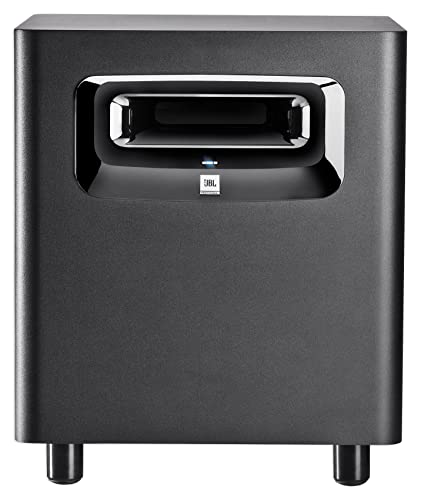
This JBL subwoofer is designed to partner with two-way monitors, adding deep, controlled low-end extension without muddying mids. The patented JBL port layout supports dynamic bass with minimal port noise, and the XLF setting invites club-like bass tuning for dance and electronic tracks. Best for: producers needing reliable bass authority in a compact control room. Limitation: as a sub, it does not provide full-range monitoring by itself; pairing with suitable monitors is essential.
KRK S10.4 10″ Subwoofer

The S10.4 offers a 10″ glass aramid composite woofer with bass extension down to 28 Hz and a max SPL of 117 dB, ideal for studios seeking deep, clean lows in rooms with enough space to accurately render bass. A footswitch control for turning the sub and crossover filter on/off is listed (note: footswitch not included). Best for: larger rooms or mix sessions requiring substantial LF energy. Caution: some users report needing careful placement to avoid localization of bass in small desks.
PreSonus Eris E8 (Eris 8) Studio Monitors

These 8″ powered monitors provide a broad, natural sound with a 120° horizontal and 60° vertical waveguide for a wide sweet spot. The Eris line emphasizes accurate high-frequency reproduction and clean midrange — useful for nearfield desktop setups or small studios where space is at a premium. Best for: desktop producers who need honest monitoring without excessive room treatment. Limitation: not a 10″ woofer, so it lacks the extended low-end some users expect from 10″ systems.
ADAM Audio T7V (7″ Nearfield) Bundle
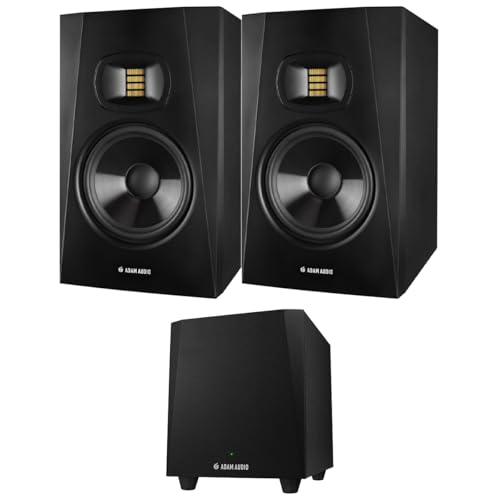
Adam Audio T7V monitors offer a precise, high-resolution monitoring experience with a 7″ woofer and U-ART tweeter. The bundle includes a T10S subwoofer, delivering a complete nearfield monitoring system with extended low end. This setup is best for: engineers who need accurate imaging and a tight bass foundation for mixing and mastering. Caution: the 7″ woofer may not match the raw LF output of larger 10″ systems in very bass-forward tracks.
Buying Guide
What makes a 10″ monitor or subwoofer pair effective?
Low-frequency extension, accurate midrange, and controlled porting are essential. A 10″ woofer typically provides deeper bass than smaller monitors, but pairing with the right subwoofer and proper room treatment determines final clarity at loud levels.
Which setup suits small rooms or desktops?
Compact nearfield monitors (like the Eris 8) paired with a sub can deliver solid bass without overwhelming the room. For many desktop applications, a 2.1 or 2.0 setup with a reliable sub provides the best balance between space and bass accuracy.
How important are wireless options?
Wireless inputs offer convenience in multi-room studios or flexible layouts. However, for critical mixing, wired connections typically provide the most stable signal and lowest latency.
What should you consider when choosing a 10″ system?
- Room size and treatment: larger rooms benefit from strong LF extension, smaller rooms require accurate imaging and a tight bass.
- Monitor vs. sub-first approach: decide whether you need full-range monitoring or a dedicated sub for bass support.
- Power and headroom: ensure amplifiers match your room’s SPL needs without causing distortion.
How do I place these monitors for best results?
Place monitors at ear height, equidistant from each other, and form an equilateral triangle with your listening position. For subwoofers, place away from walls or corners to reduce bass buildup, and use any built-in room-correction features if available.
FAQ
- Can I use 10″ subwoofers with any monitors? Yes, but ensure the monitors have compatible input options and a properly matched crossover.
- Is a 10″ woofer necessary for all genres? Not always; genres with heavy bass benefit, but midrange accuracy and imaging matter more for many productions.
- Should I choose an all-in-one 10″ system or separate monitors and sub? Separate monitors plus a dedicated sub offer more flexibility and often better room matching.
- Do wireless inputs affect audio quality? In most cases, wired connections provide lower latency and more stable signal, though modern wireless tech is improving.
- What room treatments optimize performance? Start with bass traps, treated first reflections, and speaker toe-in to balance imaging and reduce room resonances.
- Are 10″ monitors worth the extra cost? For rooms needing deep bass and high headroom, yes; for smaller desks, 8″ or 6″ monitors with a sub can be more practical.