
Best 12 Bass Guitar Speaker Options for Stage and Studio
If you’re choosing a 12-inch bass guitar speaker, you’re optimizing for deeper lows, punchy midrange, and reliable handling in compact enclosures. This guide highlights five solid 12″ choices, showing who each is best for and why it matters. Ideal buyers include studio players building small rigs, live performers needing reliable stage sound, and hobbyists seeking upgradeable cabinet components.
| Product | Best For | Highlights |
|---|---|---|
| CELESTION Pulse 12 | Balanced tone lovers | Warm low end, 200W |
| Sound Town STLF-12GA | Budget builds and PA/Bass combos | High power handling, versatile 8-ohm match |
| Eminence Legend BP122 | Small enclosures, home studios | Warm, rich tone, 250W |
| Celestion Pulse 12 (Bass 12)” | Stage-ready versatility | Kevlar loaded cone, reliable |
| Eminence BASSLITES2012 | Vented cabinets, multi-speaker builds | 8 ohm, 150W |
Below are five Amazon-sourced 12″ bass guitar speakers. Each entry covers who it’s best for, why it’s a solid pick, and a practical caveat. This structure helps you compare tone, power handling, and enclosure compatibility at a glance.
Celestion Pulse 12 Bass Guitar Speaker
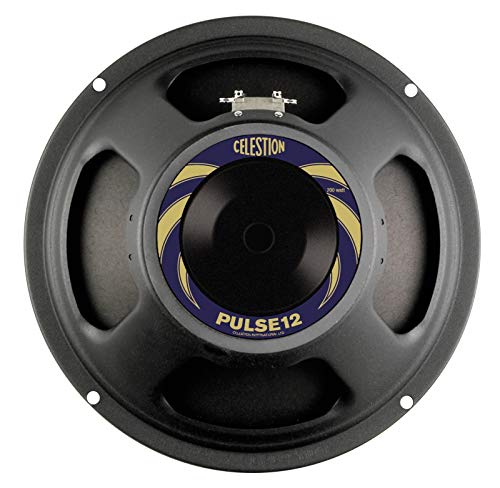
The Pulse 12 is designed for players seeking a tight, defined bass response with sturdy midrange. It handles up to 200 watts and presents an 8-ohm impedance, making it a straightforward drop-in for many 1×12 or compact 2×12 enclosures. Best for players who want reliable rock-to-blues tones with minimal cone breakup, especially in smaller rigs. A potential limitation is that very modern ultra-tight bass responses may require careful cabinet tuning to avoid overemphasized highs in some setups.
Sound Town 12” 300W Cast Aluminum Frame Woofer

This woofer is suitable for builders assembling PA, DJ, or bass guitar cabinets and emphasizes robust power handling with a 8-ohm nominal impedance. It offers a wide frequency response listed as 55 Hz to 4 kHz, which translates to solid bass extension with reasonable mids for guitar use. Best for budget-conscious setups that still demand high output. Choose this if you want a high-widelity, budget-friendly option but be mindful of potential stiffness in tight enclosures at extreme levels.
Eminence Legend BP122 12″ Bass Speaker
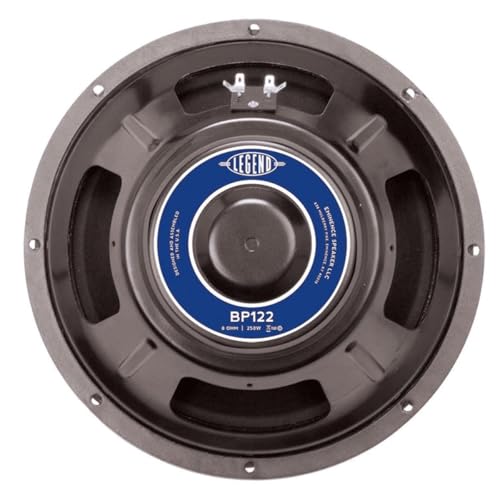
The BP122 delivers a warm, rich tone with a 250W rating, well-suited for small sealed enclosures or compact hi-fi and pro-audio applications. It’s best for players who want a natural, musical response rather than an overly aggressive attack. This model is a strong pick for home studios and small-stage rigs. A caveat is that it may not deliver the ultra-low-end slam some aggressive metal or slam-heavy setups require, unless paired with the right enclosure and porting.
Celestion Pulse Bass 10″ Speaker

Although listed as a 10″ speaker, this model is often considered in 12″ discussions for its kevlar-loaded cone and durable construction. It is a strong option for players seeking a robust, stage-ready option with solid sensitivity and dependable power handling for moderate volume gigs. Best for players who want a resilient construction with consistent performance in live environments. The 10″ designation means you’ll need to pair it with an appropriate cabinet to match your 12″ needs or consider it within a mixed speaker setup.
EMINENCE BASSLITES2012 12-Inch Bass Speaker

Designed for vented 1×12, 2×12, and 4×12 enclosures, this 8-ohm speaker is rated at 150W, making it a sensible option for multi-speaker cabinet builds or compact bass rigs. Best for builders creating larger enclosures or stacked cabinet setups where phase alignment and impedance matching matter. A notable limitation is the 150W rating, which is lower than some peers and may require careful system planning for high-output gigs.
Buying Guide: Key Purchase Considerations
What speaker size and impedance should you choose? For bass guitar, 12″ speakers often offer a balanced mix of low-end extension and midrange presence. Impedance typically ranges from 8 ohms, matching many standard guitar and bass cabinets, to 4 ohms for higher power, so plan your amp head or cabinet pairings accordingly.
How important is power handling? If you play loud venues or use a bass amp with high headroom, pick models with higher wattage ratings or capability to handle peak transients. For studio use or small gigs, 150–250W options can be sufficient when paired with an efficient cabinet design.
What enclosure type matters? Sealed enclosures tend to produce tighter bass and more controlled lows, while vented designs extend low-end response and provide more efficient bass output. The intended use and cabinet size guide the best choice for your setup.
Which cone materials and construction affect tone? Kevlar-loaded cones (as seen in some Celestion models) tend to resist cone flex and deliver punchier tone, especially at higher volumes. Paper or treated paper cones can convey warmer, more natural textures but may require careful handling at extreme SPLs.
Are you building or upgrading a rig? For DIY cabinets, consider the total impedance of the speaker set and how it interacts with your amplifier. Matching the speaker’s impedance to the amp ensures optimal power transfer and tone consistency across the band.
Practical considerations for buyers
- Test in a similar enclosure or setup as your intended rig to judge tone and efficiency.
- Account for cabinet tuning and porting when targeting specific low-end response.
- Plan for future expansion by choosing drivers that align with common cabinet standards.
Frequently Asked Questions
- What does 8 ohms mean for a bass speaker? It describes the electrical impedance, affecting how much power a cabinet can safely draw from an amplifier.
- Is a 12″ speaker better than a 10″ for bass? A 12″ can extend lower frequencies and offer deeper bass, but performance depends on the cabinet and driver design.
- Can I use a 12″ bass speaker in a guitar cabinet? Yes, but ensure the enclosure is designed for bass frequencies and that the amp can drive it without distortion.
- Should I choose higher wattage or better efficiency? Higher wattage provides headroom for loud play; efficiency affects perceived loudness per watt. Balance both for your needs.
- What’s more important: tone or durability? Both matter. Look for drivers with reliable construction and a tonal profile that fits your genre and venue demands.
- Do I need to replace just the speaker or the cabinet too? If tone or power handling is limited, upgrading the driver can help. In some cases, a cabinet redesign may also be beneficial.