
Best 12 Channel Snake Cable Options for Stage, Studio, and Live Sound
Looking for a reliable 12-channel snake cable to connect stage boxes to mixers or audio interfaces? This guide highlights five solid options, each suited to different setups and budgets. Best for performers and technicians who need organized, noise-reduced connections with clearly labeled channels. Top picks include long-run Livestream or studio rigs, compact stage boxes, and rugged live-sound configurations.
| Product | Length | Best For |
|---|---|---|
| PRORECK 12-Channel Low Profile XLR Send Circuit Board Snake Cable (50 ft) | 50 ft | Large venues, permanent installations, or mobile stages requiring long runs |
| Seismic Audio 12 Channel XLR Snake Cable (15 ft) | 15 ft | Small to mid-size venues and quick setups |
| PRORECK 12-Channel Low Profile XLR Send Circuit Board Snake Cable (25 ft) | 25 ft | Balanced, medium-length studio or stage runs |
| Seismic Audio 12 Channel Low Profile XLR Send Sub Snake Cable (25 ft) | 25 ft | Quiet, sub-snake style runs to subs or monitors |
| Melltimbro 12-Channel 50 ft Low Profile XLR Snake Cable | 50 ft | Low footprint setups with longer runs and multiple returns |
PRORECK 12-Channel Low Profile XLR Send Circuit Board Snake Cable, 50 Feet

The PRORECK 50-foot 12-channel snake cable uses a circuit board for solid, low-noise connections. It includes four XLR female connectors at the box end and twelve XLR male connectors at the fantail. Each channel is numerically labeled for quick identification, aiding stagehand setup and troubleshooting. Best for large venues, multi-track studios, or touring rigs requiring long cable runs. Caution: longer lengths may require careful coil management to minimize handling noise.
Seismic Audio 12 Channel XLR Snake Cable 15 Feet
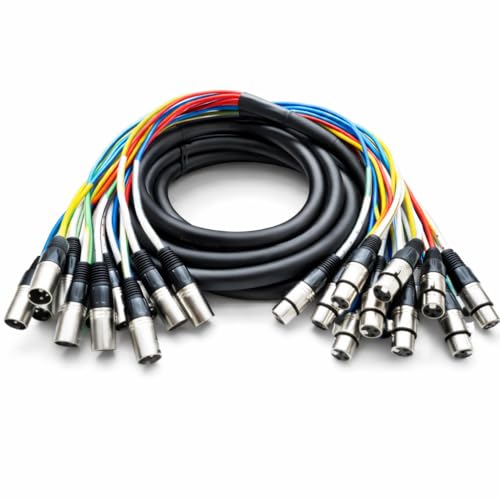
Seismic Audio’s 15-foot 12-channel snake uses numerically labeled channels for quick setup. It features 12 XLR connectors in and out and 22-gauge copper wire. Best for compact stages, small venues, or studio environments with shorter cable runs. Limitation: shorter length may not fit larger rooms without extra adapters or extensions.
PRORECK 12-Channel Low Profile XLR Send Circuit Board Snake Cable, 25 Feet

This 25-foot PRORECK model offers the same circuit-board enhanced connection and channel labeling as the 50-foot version, but in a mid-length footprint. Best for mid-sized stages or studio spaces that require more reach than a compact cable but less than a full-stage run. Caution: mid-length cables may still require careful routing to minimize tangling and noise from movement.
Seismic Audio 12 Channel Low Profile XLR Send Sub Snake Cable, 25 Feet

This 25-foot sub snake cable emphasizes noise rejection and robust connections. It uses individually shielded conductor pairs and a sub-snake design to help maintain clean signal between stage and mixer. Best for professionals needing quiet performance in fixed installations or mobile gigs. Limitation: bulkier than ultra-compact options and may require careful storage on tight racks.
Melltimbro 12 Channel 50 ft Low Profile XLR Snake Cable

The Melltimbro 50-foot model combines a low-profile stage box, 12 channels, and four female XLR on the box with male fantails. It emphasizes circuit-board reliability and offers a range of length and connection options in its product family. Best for users who need long runs without sacrificing a compact footprint. Caution: ensure proper cable management to prevent tripping hazards on busy stages.
Buying Guide
Key considerations when choosing a 12-channel snake cable:
- Length needs: Measure stage-to-mixer distances to pick the right run length (5–50 ft are common).
- Connector type: XLR (standard on most pro gear) vs TRS 1/4″ (needed for some interfaces). Ensure compatibility with your stage box and mixer.
- Channel labeling: Numerically labeled ends help speed up setup and reduce mispatches.
- Noise reduction: Look for a circuit-board design and shielded conductors to minimize external noise and interference.
- Footprint and weight: Low-profile stage boxes save space on crowded stages; heavier cables require proper routing to avoid wear.
- Durability: Rugged jackets and shielded wiring are important for live performances and tours.
- Maintenance: Serviceable ends and flexible options help with stretching or reconfiguring setups.
What to consider if you’re choosing between XLR vs TRS snake cables
- XLR snakes are standard for mic-level and line-level pro audio; they’re common in live sound and studios. Choose XLR when your equipment uses XLR inputs and outputs.
- TRS snakes are common for line-level gear like some audio interfaces and patch panels. They can be a good fit when TRS connections are standard on your gear.
For不同 types of buyers
- High-need stage setups: Prefer longer runs with robust shielding and numerically labeled channels (e.g., 50 ft PRORECK or Melltimbro options).
- Studio environments: Mid-length cables (25 ft) with strong circuit boards help minimize noise and simplify patching.
- Casual or temporary gigs: Shorter cables (15 ft) for quick setups and easy storage.
FAQ
- What is a snake cable used for?
It combines multiple audio channels into a single shielded cable, simplifying connections from a stage box or patch bay to a mixer.
- Why is channel labeling important?
Numerical labels help technicians quickly identify and connect the correct channels, reducing stage time and errors.
- Are longer snake cables more prone to noise?
Length can affect signal integrity, but high-quality circuit boards and shielding mitigate most noise in professional cables.
- What should I consider when choosing between XLR and TRS snakes?
Match connector types to your gear; XLR is standard for mics and pro audio, while TRS is common on some interfaces and line-level equipment.
- Can I use any snake cable for live performances?
Choose cables with robust construction, proper shielding, and channel labeling to ensure reliability under stage conditions.
- Do these cables come with warranties?
Warranty information varies by seller; check product pages or manufacturer guidelines for specifics.