Best 12 Gauge Speaker Cable for Any Setup: 5 Top Choices for Home Theater, Car Audio, and More
Looking for a reliable 12 gauge speaker cable to connect your speakers to an A/V receiver, amplifier, or car audio system? This guide highlights five top options that balance price, flexibility, and conductivity. Each product suits different buyers—from DIY enthusiasts to pro installers. Below, you’ll find clear comparisons, practical buying tips, and a quick reference table to help you decide.
Comparison At A Glance
| Product | |||
|---|---|---|---|
| Install Link 12 AWG 30 ft | 30 ft | CCA (Copper-Clad Aluminum) | Short-range home theater or car installations |
| Amazon Basics 200 ft 12-Gauge | 200 ft | OFC Copper | Long runs, general purpose |
| DS18 SW-12GA-100RB 100 ft | 100 ft | CCA | Professional-grade installs and flexible layouts |
| Kinter 100 ft 12-Gauge | 100 ft | CCA | Home theater, HiFi, car audio |
| GEARit 12 Gauge 100 ft | 100 ft | CCA | DIY installs with polarity markings |
Note: All products use 12 AWG, a common choice for balancing flexibility and current-carrying capability. The table highlights lengths, conductor type, and the typical buyer each option serves.
Install Link 12 AWG Gauge Speaker Wire Cable (30 Feet)

Best for compact rooms or quick-connect setups. This double-conductor cable uses a copper-aluminum composition (CCA) to offer cost-effective performance with good conductivity. It is flexible, easy to strip, and features clear polarity identification—helpful for quick DIY projects. Suitable for home theaters, car audio, or small studio applications where shorter runs are needed. If you’re mounting under floors or behind walls, consider longer lengths or OFC options for reduced signal loss. Ideal for budget-conscious buyers who still want dependable performance.
Amazon Basics 12-Gauge Speaker Wire Cable, 200-Foot
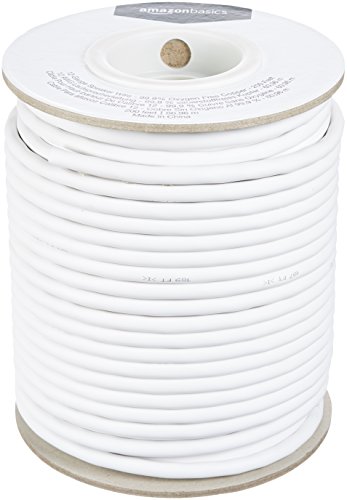
This is a long-run option featuring 99.9% oxygen-free copper (OFC) for clearer, more undistorted signals. The 200-foot roll is well-suited for larger rooms or multi-speaker setups where wiring runs across a room or ceiling are required. Best for homeowners planning multiple speaker connections or installers needing bulk stock. A limitation is heavier unwieldy cables in long spans, so plan routing carefully and consider splitting into smaller runs if possible.
DS18 SW-12GA-100RB 12-GA Ultra Flex, 100 ft

Designed for professional-grade installations, this 100-foot roll emphasizes flexibility and robust build quality. The copper-clad aluminum conductor provides economical power transfer, and the wire’s flexibility makes it suitable for tight spaces or curved runs. Choose this if you need a cost-effective, pliable cable for longer distances. Limitations include potential higher resistance versus OFC with long runs, so consider OFC for critical low-noise paths in high-fidelity systems.
Kinter Cable 100ft 12-Gauge Audio Wire

Ideal for home theater and HiFi setups, this 100-foot Kinter run uses copper-clad aluminum with a red polarity stripe for easy identification. A 105-strand count and a soft jacket improve flexibility and ease of routing around furniture or through walls. Best for budget-conscious buyers who still want a durable, pliable cable. A potential drawback is the CCA conductor, which may have higher resistance than pure OFC in very demanding systems.
GEARit Speaker Wire 12 Gauge 100 ft
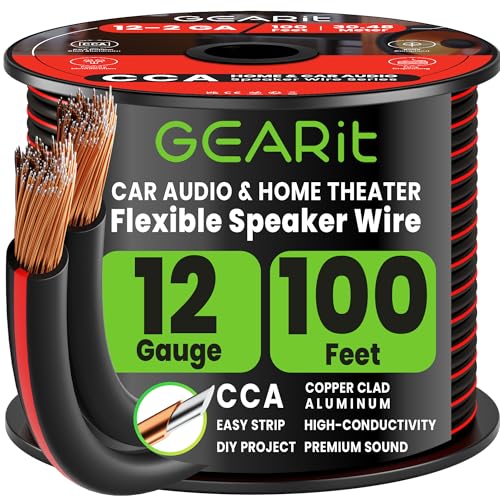
GEARit offers 100-foot runs with foot markers and polarity markings for precise cutting and quick connections. The braided jacket adds a professional look and helps protect finishes on delicate equipment. This option is best for DIY installs and home theaters where quick, repeatable setup is a priority. Be aware that some users may prefer OFC for the best possible signal clarity in high-end setups, but CCA provides a cost-effective alternative for most consumer applications.
Buying Guide
- Conductor material matters. OFC (oxygen-free copper) delivers the clearest signal with lower resistance. CCA (copper-clad aluminum) is more affordable but can have higher resistance, affecting long runs or high-demand setups.
- Length and routing. Longer runs increase resistance. Plan routes to minimize unnecessary length and avoid sharp bends that could damage the jacket.
- Insulation and jacket. A soft, flexible jacket eases installation around furniture and through walls. Rigid jackets resist kinking but can be harder to route in tight spaces.
- Polarity clarity. Cables with clear polarity markings or color-coded jackets help prevent miswiring, reducing installation errors.
- Compatibility. For surround systems or multi-room installations, ensure the cable length matches your layout and speaker impedance requirements.
- Budget vs. performance. If you’re wiring a large home theater, consider longer runs of OFC for improved fidelity. For casual setups, high-quality CCA cables can suffice.
Frequently Asked Questions
- What does 12 AWG mean for speaker cables? It indicates the wire gauge, with lower numbers meaning thicker conductors capable of carrying more current with less resistance.
- CCA vs. OFC: which to choose? OFC offers better conductivity and lower resistance, ideal for high-fidelity systems. CCA is budget-friendly and adequate for typical home use, especially in shorter runs.
- How long can a 12 AWG cable be before signal loss becomes noticeable? It depends on speaker impedance and system power. In typical home theater setups, runs up to 100 feet are common; longer runs may require higher-quality conductors.
- Should I use banana plugs or bare wire? Banana plugs simplify connections and reduce the risk of frayed strands. If your receiver or amplifier supports bare wire, ensure solid terminal connections.
- Can I mix cable brands in a system? Yes, but try to keep the same gauge and optimize for consistent resistance across channels to avoid imbalanced sound.
- Is thicker always better? Not always. 12 AWG is a practical balance for most rooms. Very long runs or high-power setups may benefit from longer, higher-quality cables.