
Best 12-Gauge Electric Guitar Strings for Rich Tone and Stability
Answering the search for 12-gauge electric guitar strings, this guide highlights options that balance tension, tone, and longevity. The top picks below are well-suited for players who want strong, chunky leads, detuning stability, or heavy rhythm riffs. Ideal buyers include players who use drop tunings, players seeking durable strings, and those chasing a classic Slinky or XL-style feel with a thicker gauge. The quick-reference table summarizes each product to help you compare at a glance.
| Product | Brand | Gauge | Best For |
|---|---|---|---|
| Ernie Ball Not Even Slinky Nickel Wound Electric Guitar Strings, 12-56 | Ernie Ball | 12-56 | Detuning-friendly rhythm and classic feel |
| Ernie Ball Not Even Slinky Nickel Wound Electric Guitar Strings 3-pack, 12-56 | Ernie Ball | 12-56 | Value-conscious, detuning-friendly sets |
| Ernie Ball Magnum Slinky Nickel Wound, 12-56 | Ernie Ball | 12-56 | Heavier feel with strong tension for drops |
| Ernie Ball Mammoth Slinky Nickel Wound, 12-62 | Ernie Ball | 12-62 | Ultra-low tunings and extra bass feel |
| D’Addario NYXL1260, 12-60 | D’Addario | 12-60 | Stability, stronger core, bright tone |
Ernie Ball Not Even Slinky 12-56 – 12-56 Gauge

Product overview: Not Even Slinky set in 12-56 gauge pays homage to the classic Slinky feel with detuning-friendly tension. It is widely used by legendary players and ships in Element Shield Packaging to prolong life. Best for players who detune frequently or want a traditional, bold electric tone.
Who it’s best for: guitarists seeking a robust, traditional Slinky feel with stable tuning in mid-to-low tunings. Why selected: the 12-56 gauge is a versatile middle-ground for aggressive riffs without excessive stiffness. Caution: detuning beyond typical standard tunings may affect feel for players who prefer lighter gauges.
Ernie Ball Not Even Slinky 3-Pack – 12-56 Gauge

Product overview: This 3-pack provides three individually wrapped sets of 12-56 gauge strings. It suits players who want extended value and multiple backup sets for regular gig-care. Best for budget-minded players and touring musicians who change strings often.
Who it’s best for: players who want consistent tone across multiple packs and easy replacement. Why selected: same Not Even Slinky feel across three sets. Caution: bulk packaging may require careful handling to maintain freshness until use.
Ernie Ball Magnum Slinky 12-56

Product overview: Magnum Slinky strings feature a heavier gauge with a wound G, delivering stronger tension. They’re designed for players who want a beefier feel and excellent sustain, especially for drop tunings and heavy riffs.
Who it’s best for: players who crave a higher-tension feel and heavier rhythm tones. Why selected: better for detuned downtuned riffs and down-tuned drop tunings. Caution: heavier tension may be less comfortable for beginners or players with lighter picking dynamics.
Ernie Ball Mammoth Slinky 12-62
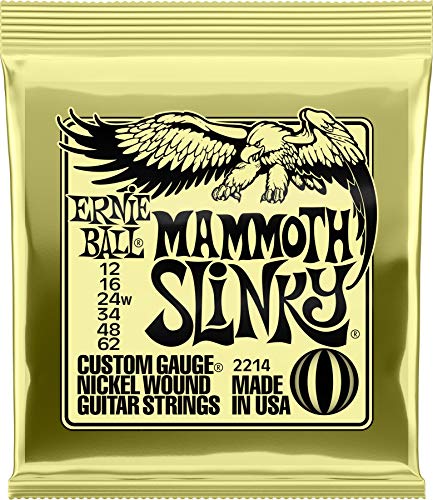
Product overview: Mammoth Slinky balls out with 12-62 gauge, ideal for ultra-low tunings like drop A, drop B, or C Standard. The packaging helps preserve string life, keeping them fresh.
Who it’s best for: players using extended-range setups or detuned tunings who want maximum thickness and tension. Why selected: the extra gauge provides pronounced bass and firm grip for aggressive playing. Caution: may feel too stiff for players who prefer lighter gauges or fast bending at higher tunings.
D’Addario NYXL1260 – 12-60

Product overview: NYXL1260 is a premium uncoated set with enhanced mid-range and tuning stability. The wrap wire boosts presence to help your guitar cut through the mix, while the hex-core design supports consistent intonation.
Who it’s best for: players seeking strong tuning stability and a bright, articulate tone with robust mid-range. Why selected: NYXL strings are designed for reliability and durability under heavy playing. Caution: uncoated strings may wear faster in acidic sweat conditions or high-gain environments.
Buying Guide
What should you consider when choosing 12-gauge electric guitar strings?
- Gauge and tension: 12-56, 12-60, or 12-62—thicker gauges provide more tension and a heavier feel, which helps in detuning and heavy riffing, but can be tougher for beginners.
- Tone and brightness: nickel-wrapped strings emphasize brightness and cut through the mix. Heavier gauges often deliver more sustain and body, especially in lower tunings.
- Intonation stability: strings with hex-core construction or premium wraps tend to stay in tune longer, crucial for players who use detuned or altered tunings.
- Durability and packaging: packaging like Element Shield or long-lasting wraps can keep strings fresh longer, reducing setup disruptions during tours or frequent changes.
- Playing style: consider your preferred feel—slightly looser for bending and speed, or stiffer for chugging riffs and detuned riffs.
Quick considerations by use case
- Detuned rhythm and mid-range crunch: 12-56 or 12-60 gauges from Ernie Ball or D’Addario NYXL1260.
- Heavy riffing in drop tunings: 12-56 or 12-62 gauges, Magnum or Mammoth options.
- Budget-friendly backups: 3-pack Ernie Ball Not Even Slinky offers multiple sets.
FAQ
- What gauge should I start with for detuned playing?
12-56 or 12-60 sets are common starting points, offering enough tension for stability without overwhelming beginners. - Are coated strings better for longevity with 12-gauge sets?
Coating helps longevity in some cases, but several 12-60 and 12-62 sets use uncoated designs that preserve tone. - Do heavier gauges affect tuning stability?
Yes, heavier gauges can improve stability in detuned tunings but may require adjustments to truss rod and nut slots for optimal setup. - Which brand provides the best tension for drop tunings?
Brands like Ernie Ball and D’Addario offer 12-56 to 12-60 sets that balance tension for detuned play. - Is there a noticeable tone difference between 12-56 and 12-62?
Yes, 12-62 offers a thicker feel and tighter low end, which can enhance chug and sustain in detuned riffs.