
Best 12 Inch Aero Port Solutions for Subwoofer Enclosures
Looking for 12 inch aero port options to maximize bass response in a subwoofer enclosure? This guide highlights top 12″ aero port solutions that balance airflow, turbulence reduction, and install practicality. Best for DIY audio builders, car audio enthusiasts, and home theater projects seeking tight, punchy lows. The following picks emphasize build quality, tuning options, and clear installation benefits. A quick buyer’s table is provided to compare core attributes at a glance.
| Product | Best For | Key Benefit |
|---|---|---|
| Adjustable Length Aero Ports for Subwoofer Enclosure | DIY installs | Built-in coupling mount, easy installation |
| 12 in Single Aero Port Enclosure for Rockford P2/P3 | Precision-tuned bass | Rigid MDF construction, tuned to 32 Hz |
| RECOIL AP3 3-Inch Aero Port Kit | Flexible length tuning | Flared, low-turbulence design |
| RECOIL AP4 4-Inch Aero Port Kit | Versatile box tuning | Flared, 12″ reinforced pipe included |
| Aero Phoenix Airport Ahead Sign | Aesthetic/novelty uses | Metal reflectivity, 12″ x 12″ |
Adjustable Length Aero Ports for Subwoofer Enclosure (8″, 10″, 12″) (12″)

Best for hands-on installers who want a mountable, adjustable port system. The design emphasizes ease of installation and a secure coupling mount, making it suitable for custom enclosures that require a precise tuning range. Made in the USA, this option is ideal for hobbyists and small shops building 12″ subwoofers with a need for stable air flow. A potential limitation is that the package may require exact cut sizing to reach the intended tuning; verify your enclosure dimensions before installation.
12 in Single Aero Port Enclosure for Rockford P2/P3 Subwoofers – Proudly USA Built.

Best for precision-tuned bass enthusiasts who run single 12″ woofers in a tightly crafted cabinet. Constructed from premium MDF with CNC-cut, miter-joined panels, it delivers a rigid structure and clean bass alignment. Net internal volume is about 1.6 cubic feet per sub, with a tuning around 32 Hz for tight lows. Choose this if you prioritize stable enclosure geometry and predictable port behavior. Limitation: a larger enclosure requires careful space planning when upgrading or pairing with other drivers.
RECOIL AP3 3-Inch Aero Port Kit

Best for adjustable length tuning and low turbulence. The AP3 kit uses a flared design to reduce air turbulence significantly compared to standard tubes, contributing to punchier, cleaner bass. The reinforced 12″ cardboard pipe supports robust installations and allows cutting to the exact length needed for box tuning. Use this when you want a flexible port length without committing to a fixed diameter. Limitation: cardboard pipe durability may be less than metal alternatives in humid environments.
RECOIL AP4 4-Inch Aero Port Kit
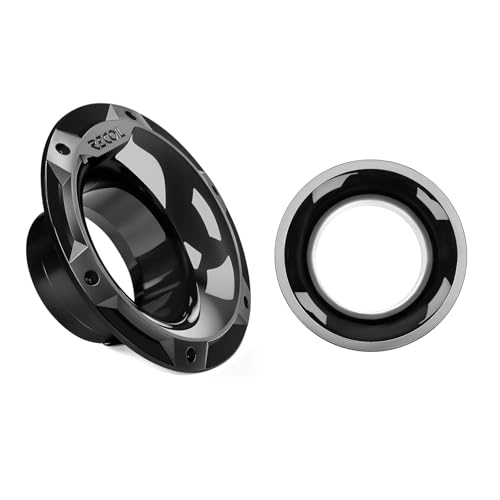
Best for bigger boxes or higher bass demands with a 4-inch port. The AP4 kit mirrors the AP3’s flared design to minimize turbulence and avoid chuffing, while including a heavy-duty reinforced 12″ cardboard pipe for straightforward length adjustments. Best for owners upgrading older enclosures or building larger cabs that require stronger port volume. Caution: ensure the enclosure volume aligns with the 4″ port’s tuning range to prevent over- or under-ported bass.
Aero Phoenix Airport Ahead – Metal Reflective Road Sign

Best for decorative or display purposes rather than audio tuning. While not a subwoofer port, this metal road sign offers a 12″ x 12″ footprint and a metal finish suitable for unique installations or thematic setups. Best for collectors or styling accents in a custom studio or car audio shop. Limitation: not a functional port or enclosure component, so it should not be used as a substitute for a true aero port in a speaker build.
Buying Guide
What port diameter should you choose? For 12″ subwoofers, a 3″ to 4″ port diameter is common, with 1–2 ports often used for tuning flexibility. Consider whether you need a fixed length or an adjustable system; adjustable options simplify tuning as you test different box volumes and listening preferences.
Which port material suits your environment? Metal ports are robust and durable, while cardboard or reinforced cardboard tubes offer easy cutting and cost savings. If the enclosure is in a humid area or a car interior with temperature fluctuations, durability becomes a priority.
How does port tuning affect bass response? Port tuning sets the low-end extension and transient response. A lower tuning (e.g., around 32 Hz) tends to deliver deeper bass, while higher tuning can produce quicker response at higher SPL. Always match tuning to box volume and sub driver compatibility.
What installation considerations matter? Built-in coupling mounts and precise CNC-cut panels aid repeatable results. Ensure that the enclosure dimensions, internal volume, and port length are aligned with the woofer’s specifications and your listening goals.
FAQ
- What is an aero port?
An aero port is a tuned vent that channels air in and out of a subwoofer enclosure, improving efficiency and reducing turbulence for cleaner bass.
- What tuning frequency should I aim for with a 12″ sub?
Common tuning targets range from about 32 Hz to the mid-30s Hz, depending on enclosure volume and desired bass character.
- Is adjustable length better than fixed length?
Yes, for experimentation and precise tuning. It allows you to dial in the best bass response for your specific enclosure and listening room.
- Are there risks with using cardboard ports?
Cardboard ports offer flexibility and lower cost but may degrade in humid environments or under heavy use. Consider coating for durability if needed.
- Can I mix different aero port kits in one system?
Mixing port sizes is possible but requires careful tuning and enclosure analysis to avoid conflicting resonances.