
Best 14-Gauge Electric Guitar Strings for Baritone Players
Choosing 14-gauge electric guitar strings tailored for baritone setups ensures stable tension, clear intonation, and extended sustain. This guide highlights five top options, clarifying who each is best for and why. Perfect for baritone players seeking consistent feel, bright or balanced tone, and durable construction.
Buying at-a-glance: the following table summarizes the five recommended 14-gauge options, including gauge range, best use, and why each stands out for baritone playing.
| Product | Gauge Range | Best For | Why It Stands Out |
|---|---|---|---|
| D’Addario XL Nickel EXL157 | 14-68 | Bright, versatile tones | Hex-Core design; perfect intonation and durability |
| Jim Dunlop Nickel Wound Baritone | 14-68 | Modern tone and aggression | Engineered for baritone needs with strong projection |
| Stringjoy 14-64 Baritone | 14-64 | Stable tuning and balanced tension | Consistent playability across frets |
| HAVENDI 6-String Baritone | 6-string set, nickel-coated | Durable, smooth playability | German design; good tuning stability |
| C. B. Gitty 14ga Plain Steel | 14 gauge | Plain-steel option for baritone basics | Made in USA; reliable unwound plain strings |
D’Addario XL Nickel EXL157 Electric Guitar Strings

Gauge range: 14-68. Brand: D’Addario. Features: Perfect intonation, versatile bright tone from nickel-plated wrap, Hex-Core for consistent feel and durability. Best for players who want reliable tuning stability and a bright overall voice across genres. Limitation: may feel looser or brighter at lower tunings for those who prefer heavier, fatter tones.
Jim Dunlop Nickel Wound Baritone Strings (14-68)

Gauge range: 14-68. Brand: Jim Dunlop. Features: Engineered for modern playing, consistent volume across strings, comfortable tension. Best for players seeking a focused baritone voice with strong midrange and reliable durability. Caution: data notes emphasize playability; tension may feel stiffer for players with lighter picking style.
Stringjoy 14-64 Baritone Signature Strings
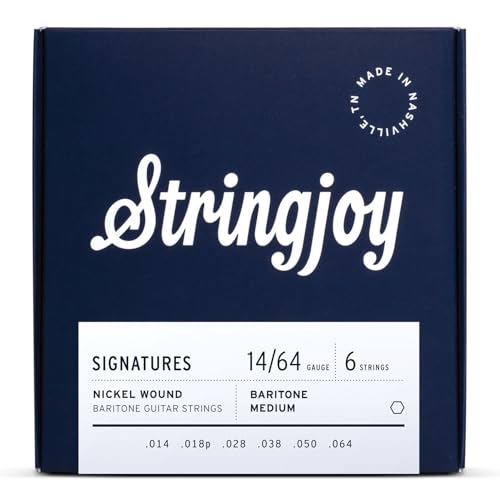
Gauge range: 14-64. Brand: Stringjoy. Features: Optimal tuning stability, balanced tension across the fretboard, rich full tone. Best for players who prioritize precise intonation and smooth playability in lower tunings. Limitation: may not be as bright as lighter gauges in highly aggressive styles.
HAVENDI Baritone Electric Guitar Strings

Gauge range: 6-string set, nickel-coated. Brand: Havendi. Features: Designed in Germany, durable steel strings with good tuning stability and rust resistance; smooth playing feel. Best for players who want a modern feel with durable construction. Caution: product description emphasizes design heritage; expect standard electric guitar tension rather than a true baritone-tuned tension profile.
C. B. Gitty 14ga Plain Steel Strings

Gauge: .014 plain steel. Brand: C. B. Gitty. Features: High-quality plain steel unwound strings, Made in the USA for Crafter Supply, 14-gauge plain string. Best for players seeking a traditional, bright attack with straightforward replacement options. Limitation: does not include wound low strings, which can affect overall tone compared to heavier wound sets.
Buying Guide: 14-Gauge Electric Strings For Baritone Players
- Gauge and tension: Baritone setups often require slightly heavier gauges to maintain string tension at lower pitches. Look for 14-68 or 14-64 sets for a balanced feel and stable intonation.
- Core and wrap materials: Nickel-wound sets tend to be bright and durable, while phosphor bronze or pure steel options shift tone more toward bite or warmth. Consider your genre and amp settings when choosing.
- Tone goals: If you want bright attack and strong lead clarity, lean toward brighter nickel or mixed-core sets. For thicker rhythm and sustain, heavier gauges with robust wind construction are preferable.
- Durability and longevity: Hex-core constructions, like several major brands use, can improve intonation stability and durability under aggressive playing. Consider packaging that emphasizes life extension and string freshness.
- Maintenance: For baritone tuning stability, regular cleaning and wiping the strings reduces corrosion. Coated options last longer but may alter feel for players with very light touch.
- Installation tips: When switching to a 14-68 or 14-64 set, consider nut and bridge slot clearance. If the strings bind at the nut slots, lightly widen the slots or seek a set designed for baritone scale length.
FAQ
- Q: What does 14-68 mean for string sets? A: It indicates the low to high string gauges range; 14 gauge on the low string up to 68 gauge on the high string in some sets, offering heavier tension for baritone tuning.
- Q: Are 14-gauge strings better for baritone guitars? A: They are commonly preferred for baritone setups due to increased tension and stability at lower tunings, which helps with tone and sustain.
- Q: Should I choose a baritone-specific string set or standard sets? A: Baritone-specific sets optimize tension for lower tunings. If you play similar to standard tuning, a 14-68 or 14-64 set can still work.
- Q: How important is the coating for baritone strings? A: Coating extends string life and reduces corrosion but can slightly alter feel and brightness; choose based on playing style and sweat levels.
- Q: How often should I change 14-gauge baritone strings? A: It varies by playing style and environment; players who play aggressively may replace more often, while lighter players can stretch the life with proper care.
- Q: Can I mix gauges for a baritone setup? A: Yes, some players prefer asymmetric gauges (e.g., heavier low strings, lighter high strings) for comfort and tone. Experiment cautiously.