
Best 16 Channel USB Mixers for Live Sound and Recording
Finding the right 16-channel mixer with USB recording can simplify live sound and on‑site recording. This guide highlights five strong options, clarifying who each is best for and why. If you need rugged stage mixers with Onyx or D‑PRE preamps, or compact models with USB‑streaming and built‑in effects, these picks cover a range of budgets and uses—from bands and venues to podcasters and mobile DJs.
Summary of chosen products
| Product | Brand | Channels | USB / Recording | Ideal For |
|---|---|---|---|---|
| Mackie ProFX16v3 | Mackie | 16 | USB Recording | Bands and venues needing quick setup with multitrack capability |
| Yamaha MG16XU | Yamaha | 16 | USB with SPX effects | Studio/Live hybrid users who value clean preamps |
| W IN-MIX DX16 | W IN-MIX | 16 | USB Recording, Bluetooth | DJ/streaming setups needing built‑in DSP and Bluetooth |
| TKLBLS 16-Channel | TKLBLS | 16 | USB Recording, 99 DSP Effects | Live performers and podcasters seeking effects on board |
| XTUGA 16 Channel CT160 | XTUGA | 16 | USB / Bluetooth | Multi‑source mixing with compact form factor |
Mackie ProFX16v3 16-Channel Mixer
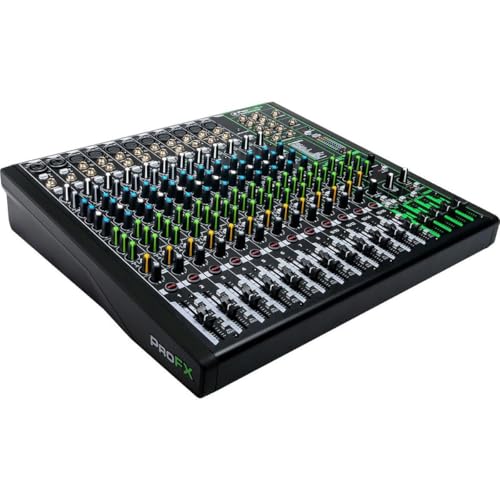
Best for bands and venues needing 16 channels with a straightforward learning curve. This model supports room mixes and multitrack recording simultaneously. Onyx preamps provide clean gain on every microphone input, which helps preserve vocal clarity in live settings. It’s well suited for performers who want quick setup and reliable sound without navigating complex menus.
Who it’s best for: small to mid‑sized bands, clubs, and worship teams that require simple USB recording and dependable mic preamps. Caution: It lacks some advanced onboard effects controls found on higher‑end models, which may limit creative shaping on stage.
Yamaha MG16XU 16-Input Mixer

Best for users prioritizing studio‑grade preamps and integrated SPX digital effects on a 16‑channel frame. The D‑PRE preamps deliver a crisp, clean sound, and the 3‑band EQ plus high‑pass filters offer strong tone control. USB connectivity supports straightforward recording and playback, making it suitable for small studios and live performances that demand a polished mix.
Who it’s best for: project studios, live sound engineers, and performance setups that want reliable, studio‑like tone. Caution: Effects are on the modest side compared to dedicated outboard processors, which may affect certain effect‑driven acts.
W IN-MIX DX16 Professional 16-Channel

Best for live setups needing 99 DSP effects and Bluetooth streaming. Each channel has independent EQ and gain, with USB recording for capturing performances. The 48V phantom power on every channel supports condenser mics, making it versatile for varied vocal and instrument inputs. This model is well suited for DJs and content creators who want built‑in processing and easy Bluetooth playback.
Who it’s best for: DJs, podcasters, and live performers who want integrated effects and wireless audio streaming. Caution: DSP effects can dominate if you aren’t careful with level matching on multiple sources.
TKLBLS 16-Channel USB Mixer

Best for multi‑source live setups needing 99 DSP effects and per‑channel 48V phantom power. Each channel has independent 3‑band EQ, mute, and gain, enabling precise control. The USB connection supports direct recording, and onboard effects simplify setups for performances without external processors. This is a good choice for mobile events and studios on a budget.
Who it’s best for: live performers, podcasters, and mobile engineers who want a feature‑dense mixer with built‑in effects. Caution: The included effects can be busy; balance them with the main mix to avoid mud.
XTUGA CT160 16 Channel Mixer

Best for compact setups that still require 16 channels and USB/Bluetooth streaming. The CT160 emphasizes a slim build with sealed rotary knobs for dust resistance, plus 48V phantom power on each channel. It suits mobile performers, small venues, and streaming studios where space is limited but multi‑source mixing remains essential.
Who it’s best for: traveling DJs, podcasters, and small‑venue engineers needing a portable 16‑channel solution. Caution: The ultra‑slim chassis may feel less sturdy under heavy use over time.
Buying Guide: 16‑Channel Mixers With USB
- Preamps and gain: Look for XLR mic inputs with at least 60 dB of clean gain for dynamic mics and adequate headroom for loud voices.
- USB recording capabilities: Confirm whether the mixer supports multitrack USB recording, stereo USB recording, or just playback. Decide based on your project needs.
- Onboard effects and processing: DSP effects can simplify live setups but may add noise or color. Choose based on whether you value versatility or clean transparency.
- Phantom power: If you use condenser mics, ensure per‑channel or global 48V phantom power is available and reliable.
- Connectivity: Assess compatibility with Bluetooth, USB, and external devices (phones, laptops, DJ gear) for your workflow.
- Size and portability: For mobile use, prioritize slim chassis without sacrificing essential controls and durability.
- Ease of use vs. control: Some models emphasize rapid setup with fewer menus; others offer deep control suitable for engineers who adjust settings frequently.
FAQ
- Do these mixers require separate audio interfaces for recording? Many 16‑channel USB mixers have integrated USB interfaces, enabling direct recording to a computer. Check the product’s USB specification to confirm multitrack support if needed.
- Is 16 channels enough for live bands? For most small to mid‑sized venues and bands, 16 inputs accommodate multiple mics and instruments, but larger acts may need more channels or a separate stage box.
- Are onboard effects essential? They’re convenient for quick on‑the‑fly shaping but aren’t a replacement for external processors in critical recording applications.
- Can I use condenser mics with these mixers? Yes, if each channel has 48V phantom power, you can run condenser mics. Individual channel phantom control offers flexibility.
- Which mixer is best for beginners? The Mackie ProFX16v3 and the Yamaha MG16XU balance straightforward operation with reliable preamps, making them solid beginner‑friendly options.
- Which model best supports Bluetooth streaming? The W IN‑MIX DX16 and XTUGA CT160 include Bluetooth connectivity, useful for wireless playback during performances or podcasts.