
Best 16-Channel Mixers With Direct Outs for Stage and Studio
Looking for a 16-channel mixer with direct outs that’s easy to learn and quick to deploy for gigs, rehearsal spaces, or home studios? The following options are selected for versatility, connectivity, and value. They’re well-suited for live stage crews, podcasters, and multi-source recording setups. The table below highlights each model’s key strengths to help you compare at a glance.
| Product | Best For | Key Strength |
|---|---|---|
| Mackie ProFX16v3 | Bands and venues needing 16 channels with simple workflow | Onyx mic preamps and built-in USB recording |
| XTUGA CT160 | Multi-source setups and mobile gigs | Bluetooth, multiple inputs, low-noise design |
| MIZISNR 16-Channel | Professional-sounding live and studio use | 99 DSP effects and 7-band main EQ |
| W IN-MIX DX16 | Streaming and hybrid production | 99 DSP effects, Bluetooth, USB recording |
| Mackie DL16SE | Digital, rack-mounted control with wireless app | Onyx+ preamps and Master Fader SE control |
Mackie ProFX16v3 16-Channel Mixer
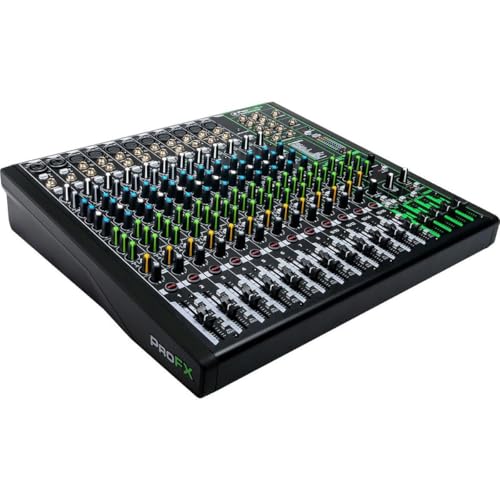
The Mackie ProFX16v3 is designed for bands and venues that need a 16-channel mixer with a straightforward workflow. It supports USB recording and live mixing with integrated effects. Onyx preamps provide clean gain on every mic channel for clearer vocals and instruments. This model is best for performers who want quick setup and reliable sound without a steep learning curve. A practical drawback is that advanced multi-tracking features may require some learning for complex flows.
XTUGA 16 Channel Audio Mixer (CT160)

The XTUGA CT160 offers effortless compatibility with multiple devices, including iOS, Android, tablets, and MP3 players. It supports 6/8/12/16 channel inputs and stable Bluetooth streaming, making it a strong choice for mobile setups, podcasts, or DJ events. The gold-plated XLR ports and +48V phantom power help minimize noise, while the ultra-slim build makes transport simple. Limitations include its feature set being slightly less deep on stage automation compared with larger, dedicated live desks.
MIZISNR 16 Channel Mixer with 99 DSP Effects

The MIZISNR 16-channel mixer excels where versatility and built-in effects matter. Each channel has independent gain, EQ, AUX, and pan controls, plus a mute for quick silence. It includes 99 DSP effects and a 7-band master EQ, helping shape stage and studio sound without extra processors. This model is well-suited for live performances and recording, but its array of effects may be more than some users need for straightforward mixing.
W IN-MIX DX16 16-Channel Mixer

The W IN-MIX DX16 emphasizes 16 independent channels with 99 DSP effects, 7-band EQ on the master, and 48V phantom power per channel. It supports Bluetooth streaming and USB recording for quick capture and playback. This mixer is best for content creators and live performers who want a feature-rich unit without external processors. A potential limitation is that the abundance of effects may tempt users away from manual EQ tuning if not carefully managed.
Mackie DL16SE 16-Channel Digital Rack Mixer

The Mackie DL16SE is a digital rack mixer with Onyx+ mic preamps and a dedicated wireless Master Fader SE app for control. It routes 16 input channels to eight separate outputs and offers a flexible, networked workflow for stage and studio use. Best for users who want remote control from tablets or phones. A caveat is that wireless control can introduce latency if the network is unstable, so a stable router setup is recommended.
Pyle PMXFR16 16-Channel Mixer
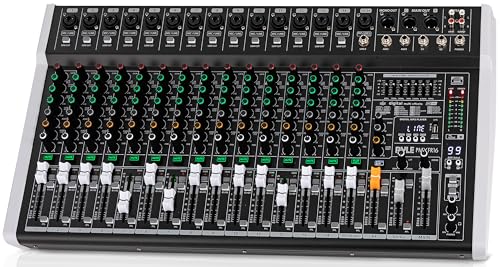
The Pyle PMXFR16 provides a seven-band stereo graphic EQ, Bluetooth, USB recording, and a built-in MP3 player. XLR/mic/line inputs with +48V phantom power support condenser mics, and there are dedicated send/return and main outputs. Best for small venues and mobile setups where precise tone shaping and simple USB capture are priorities. It may be heavier on tone shaping than needed for minimal setups.
Buying Guide
What matters most when choosing a 16-channel mixer with direct outs?
- Channel count and input types: Ensure you have enough mic/XLR and line inputs for your source devices, plus direct outs if you need multitrack recording or external routing.
- Internal effects and processing: Decide if built-in DSP and EQ are essential or if you prefer external processors for flexibility.
- Connectivity: Look for USB recording, Bluetooth, and network control options if you plan to integrate laptops, mobile devices, or remote control.
- Portability and footprint: For stage use, consider weight, footprint, and chassis durability. Slim designs help transport, but ensure stability on gigs.
- Control interface: A clear, tactile control surface with accessible EQ and gain knobs improves live performance reliability.
- Direct outs and routing: Direct outs can simplify multitrack recording or external bus feeding; verify their presence on the channels you need.
What’s the best choice for a live band?
For a live band needing 16 channels with straightforward operation, the Mackie ProFX16v3 stands out due to its familiar Onyx preamps and integrated USB recording, combining simplicity with reliable stage sound.
What’s the best choice for mobile setups or streaming?
For mobile setups, Bluetooth and USB recording are valuable. The XTUGA CT160 and W IN-MIX DX16 both emphasize wireless connectivity and versatile input options, making them strong picks for concerts, podcasts, and streaming.
What’s the best option for studio-quality tone?
If precise tone shaping with DSP effects on multiple channels is desired, the MIZISNR 16-channel mixer offers 99 DSP effects and a 7-band master EQ, suitable for both stage performances and studio sessions.
Are digital racks worth it for remote control?
The Mackie DL16SE provides a digital, rack-mountable workflow with wireless Master Fader SE control. It’s ideal for technicians who want centralized control from tablets or laptops, but ensure a stable wireless setup to minimize latency.
What should I consider about direct outs?
Direct outs simplify sending each channel’s signal to a multitrack recorder or external mixer. If your live or studio workflow requires independent per-channel feeds, verify that each model offers reliable direct outs or easily accessible direct path routing.
FAQ
- Do these mixers support phantom power on all channels? Yes, models like XTUGA CT160 and W IN-MIX DX16 provide +48V phantom power on selected inputs or per channel, suitable for condenser mics.
- Can I record while mixing live? Several options, including Mackie ProFX16v3 and MIZISNR 16-channel, offer USB recording to capture the live mix alongside the performance.
- Are there wireless control options? Yes, several units support Bluetooth or wireless app control, such as the Mackie DL16SE and XTUGA CT160, enabling remote adjustments.
- Is 16 channels enough for a full band? For many small to medium setups, 16 channels cover multiple mics and line sources; assess your stage layout and number of inputs beforehand.
- Do these mixers include built-in effects? Many do, including 99 DSP effects on some models, reducing the need for external processors during performances.
- Which one is best for beginners? The Mackie ProFX16v3 and certain XTUGA models are designed with a more intuitive workflow ideal for learners and quick setups.