
Find the Right 18-Inch Subwoofer Cabinet for DJs, live events, home theaters, and PA systems. Below is a quick comparison of the selected 18″ speaker cabinets chosen for their relevance, power, and build.
| Product | Type | Key Feature |
|---|---|---|
| PRORECK PR18 18 inch Powered Subwoofer | Powered | 2000W peak, 18″ woofer, XLR/RCA I/O |
| PRORECK SP-18X Active Powered Subwoofer | Powered | 3000W peak, Class-D amp, DSP presets |
| ALTO TS18S 18″ Powered Subwoofer | Powered | 2500W, 6 DSP modes, phase control |
| Rockville SBG1184 18″ Passive Subwoofer | Passive | 1000W peak, 4-Ohm, MDF cabinet |
| Rockville PBG18 18″ Passive Subwoofer | Passive | 2000W peak, 8-Ohm, robust MDF build |
PRORECK PR18 18 Inch 2000W P.M.P.O Active Powered PA DJ Subwoofer Cabinet
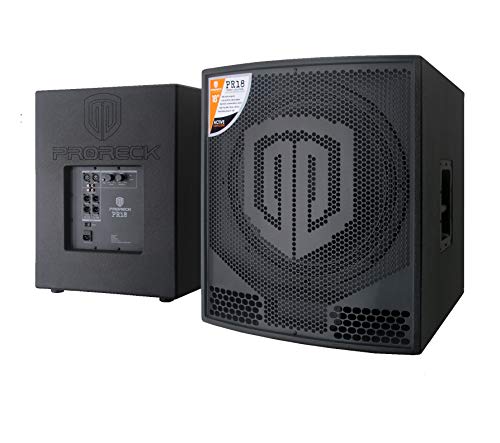
Type: Powered Subwoofer. This unit offers a dedicated amplifier and an 18″ low-frequency driver rated at 400W RMS / 800W Program / 2000W Peak. The 3″ voice coil and 60oz magnet aim to deliver reinforced bass for parties and PA use.
Connectivity & Controls: Balanced XLR combo input, stereo RCA input, XLR output (full-range and filtered), selectable phase (0°/180°) and crossover adjustable from 40Hz–160Hz. Power and max volume indicators aid front-of-house setup.
Use Cases: Designed for medium-sized venues, events, and home theater augmentation where an active subwoofer with on-board crossover and balanced I/O is needed. The selectable phase and filtered outputs help integrate with tops and mixers.
PRORECK SP-18X Active Powered PA DJ Subwoofer Cabinet 18 Inch

Type: Active powered subwoofer with Class-D amplifier. Specifications list 800W RMS / 3000W Peak, an 18″ driver with an 80oz magnet, and a 3″ voice coil for increased excursion and low-frequency output.
DSP & I/O: Three DSP presets (Monitor, DJ, Live) plus an electronic crossover from 35Hz–120Hz. XLR input and output available, with XLR high-pass output above 120Hz for satellite speakers.
Design Notes: Includes side handles for portability and is built for live performance situations requiring transportable, high-output low end. The DSP presets and Class-D amp optimize performance for different stage roles.
ALTO TS18S 2500W 18″ Subwoofer, Powered PA Speaker

Type: Active powered subwoofer featuring a 3″ voice coil and a high-efficiency Class-D amplifier. Rated at 2500W with three selectable DSP EQ modes and a Phase Alignment control to address low-frequency cancellation.
Features: Multiple DSP modes (EQ Off, Live & DJ) for tailored response, plus an easy setup design intended to pair cleanly with tops. Phase alignment helps in aligning multiple subs or integrating with mains.
Intended Users: Pros and semi-pro users who need selectable DSP options and phase alignment to match venues, clubs, or mobile systems without external processors.
Rockville SBG1184 18″ 1000W Passive 4-Ohm Subwoofer

Type: Passive subwoofer, 18″ high-excursion driver. Rated at 1000W peak and 4-Ohm impedance for pairing with external power amplifiers and powered mixers.
Build & Performance: Rugged MDF cabinet and reinforced steel grille provide durability for live events and mobile DJs. Frequency coverage extends low (20Hz–500Hz cited), focusing on impactful low-end presence.
System Integration: With a 4-Ohm load, this cabinet expects a compatible amplifier channel or bridged amplifier configuration. Useful for users who prefer separate amplification or want to match specific amp characteristics.
Rockville PBG18 2000W 18″ Passive Subwoofer 8 Ohm

Type: Passive 18″ subwoofer with an 8-Ohm impedance and a listed 2000W peak capability. The design targets DJs, venues, and studios needing a sturdy passive cabinet.
Durability: Constructed with sturdy MDF and reinforced grille for transport and frequent use. The 8-Ohm rating makes it straightforward to pair with many professional amplifiers without high current draw.
Use Case: Best for system builders or venues that prefer separate amplification and want a passive cabinet with robust excursion and durability for repeated events.
Buying Guide: How To Choose The Right 18-Inch Speaker Cabinet
Selecting an 18″ speaker cabinet depends on intended use, system type, and integration needs. Below are the main considerations to compare units effectively.
Powered vs Passive
- Powered (Active): Built-in amplifier, DSP, and crossover simplify setup. Ideal for mobile DJs, small venues, and users who want plug-and-play operation.
- Passive: Requires separate amplification and processing, offering flexibility for system designers who prefer dedicated amps or custom tunings.
Power Ratings And Thermal Limits
- RMS vs Peak/PMPO: Prioritize RMS (continuous) power when available. Peak figures show short-term capability; RMS indicates real-world handling.
- Match amplifier output to speaker RMS rating (for passive) and ensure adequate headroom to avoid clipping and damage.
Driver Specs And Build Quality
- Voice Coil & Magnet: Larger voice coils (e.g., 3″) and heavier magnets (e.g., 60–90oz) typically improve thermal handling and excursion for stronger low-end output.
- Cabinet Material: MDF or plywood with bracing reduces unwanted resonances. Reinforced grilles help in transport and live performance.
Impedance And Amplifier Compatibility
- 4-Ohm vs 8-Ohm: Lower impedance draws more current—ensure your amplifier supports the cabinet. 8-Ohm cabinets can be easier to drive with a wider range of amps.
- For multiple passive subs, plan amplifier channels or bridging carefully to avoid overload.
Connectivity, Crossover, And DSP
- Balanced I/O (XLR): Preferred for pro audio to reduce noise and allow daisy-chaining or filtered outputs.
- On-Board Crossover/DSP: Useful for integration with mains; presets (DJ/Live/Monitor) speed setup for different roles.
- Phase Controls: Phase switching or alignment helps prevent cancellation when using multiple subs or stacked mains.
Portability And Physical Considerations
- Check weight and handles for transport. Some powered cabinets include wheels or heavy-duty handles for frequent setup.
- Cabinet footprint and pole-mount options matter if combining subs with satellite tops.
Performance Perspectives
- Live Music/DJ Events: Look for high excursion drivers, robust RMS power, and DSP/crossover flexibility to match different venues.
- Fixed Install/Churches/Venues: Consider powered units for simplified maintenance or passive units if centralized amplification is preferred.
- Home Theater/Studio: Powered subs with adjustable crossover and phase alignment provide easier integration and precise tuning.
Compare the products above by weighing power delivery, on-board processing, impedance, and build durability to choose the best 18″ cabinet for your application.