Best 2.1 Receiver With Subwoofer Output for Home Audio
The right 2.1 channel receiver or amplifier can deliver immersive, bass-rich sound for TVs, computers, and small home theaters. This guide highlights five reliable 2.1 channel options with dedicated subwoofer outputs, emphasizing notable features such as Bluetooth, multiple inputs, and user-friendly bass controls. Each product is chosen for delivering solid power, clear sound, and versatile connectivity to fit desks, shelves, and entertainment setups.
| Product | |
|---|---|
| Fosi Audio BT30D Pro | TPA3255 chips, 165W x2 + 350W, two sub outputs, bass/treble control |
| Rockville BLUAMP 21 | 200W peak/150W RMS, Bluetooth 5.1, RCA/AUX inputs, passive sub output |
| Pyle 2.1 CH Wireless | 200W peak, Bluetooth 5.0, USB player, subwoofer output |
| Facmogu KS-33BT | Active subwoofer output, 60W x2, multiple inputs, karaoke-ready |
| Douk Audio M1 PRO | 320W total, Bluetooth, U-Disk music, treble/bass control |
Fosi Audio BT30D Pro Subwoofer Amp

The BT30D Pro integrates two high-quality Texas Instruments TPA3255 Class-D chips to deliver up to 165W per channel plus a 350W sub channel. It provides two passive speaker outputs and one passive subwoofer output, enabling a true 2.1 setup for desktop, outdoor, or bookshelf systems. Bass control is precise, featuring a SUB FREQ knob (0–300 Hz) and a SUB VOL knob for fine-tuning. This configuration suits gaming, movies, or music with a tight, natural bass response and clean midrange clarity.
SOBATTY AV-302 2.1 Channel Amplifier

SOBATTY’s AV-302 delivers stereo amplification with a built-in Bluetooth 5.0 receiver and a dedicated subwoofer output. It supports multiple input options including USB, RCA, and coaxial, and includes two microphone inputs for karaoke or home studio use. Its impedance handling of 4–16 ohms makes it suitable for a range of passive speaker setups, providing a balanced sound profile ideal for living rooms or game setups where a simple 2.1 solution is desired.
Pyle 2.1 CH Wireless Stereo Power Amplifier
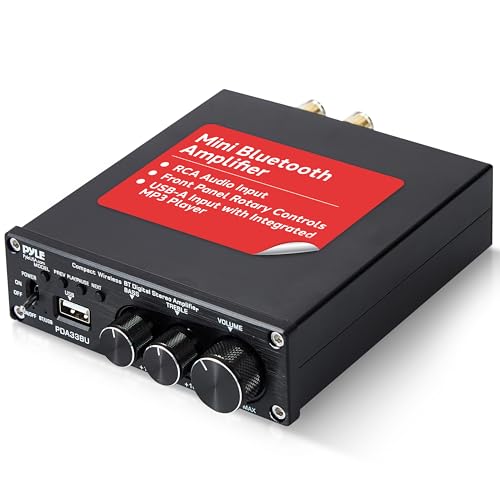
This compact 2.1 amplifier delivers up to 200W of peak power and includes Bluetooth 5.0, a USB drive player, and a dedicated subwoofer output. The design emphasizes space efficiency without compromising bass response, making it an attractive option for small living spaces, dorm rooms, or desktop setups where wireless streaming and easy USB music access are priorities.
Rockville BLUAMP 21 Silver 2.1 Amplifier

Rockville BLUAMP 21 provides 200W peak (150W RMS) across two main channels plus a 100W sub channel. It features Bluetooth 5.1 for reliable wireless streaming and flexible connectivity with RCA and 3.5mm AUX inputs. The device is designed for straightforward integration with modern TVs and classic stereo components, offering a robust 2.1 experience with minimal setup.
Facmogu KS-33BT 2.1 Channel Amplifier

The KS-33BT includes an active subwoofer output and RMS 60W x2 with a maximum 400W2 for sub channels. It offers Bluetooth 5.0, multiple inputs (RCA, MIC, USB, SD, AUX, FM), and a compact footprint suitable for compact entertainment areas. The mix of features makes it a practical karaoke-ready option for living rooms, bedrooms, or classrooms where both music and voice input are needed.
Douk Audio M1 PRO 320W Power Amplifier

The M1 PRO uses the TDA7498E chip to deliver up to 160W per channel with a combined peak around 320W, supporting a 2.1 configuration suitable for active subwoofers. It combines Bluetooth input, USB/U-disk playback, and a strong bass/treble control set, enabling detailed tone shaping. It pairs well with a variety of bookshelf or outdoor speakers and is noted for stability and range in typical home setups.
Buying Guide: Key Purchase Considerations
Power and headroom matter: Look for a 2.1 system with enough peak power to drive your subwoofer and main speakers without distortion. Class-D amplifiers are common for compact units and efficient operation, but verify distortion ratings and cooling design for longer sessions.
Subwoofer output options: Ensure there is a dedicated subwoofer channel and intuitive bass controls. Some models offer selectable crossover frequencies, phase controls, and independent sub volume so you can tailor the bottom end to your room and listening taste.
Input versatility: Bluetooth 5.x, USB, AUX/RCA, and coaxial inputs cover most connection scenarios. A few units also include FM/SD or mic inputs, which are helpful for karaoke or home studio uses.
Sound tuning: Look for tone controls (bass/treble), and if you plan to pair with a TV or PC, verify there are appropriate EQ or DSP features to adjust for dialogue clarity and overall balance.
Form factor and ease of use: Compact designs fit desks and small media cabinets, but ensure the layout allows easy access to volume, bass, and crossover controls. A clear user manual helps during setup and room calibration.
Compatibility with bookshelves and active subs: If you already own passive speakers, confirm the amp supports passive speaker outputs compatible with your model, and check impedance compatibility (commonly 4–8 ohms).
Value and build quality: Compare construction materials, heat management, and warranty coverage. The best options provide reliable components (like reputable TI chips) and durable connectors that resist wear from daily use.