Best 2 Channel Integrated Amplifier for Clear, Versatile Sound
Looking for a reliable 2-channel integrated amplifier that balances power, connectivity, and value? This guide highlights five top options across budget to mid-range prices, with practical reasons to choose each for different listening setups. Whether you want a compact desktop amp, a warm tube character, or a battle-ready DJ-friendly unit, there’s a fit here. The buyer intent focus below helps you pick the best match for your speakers, room size, and source devices.
Overview of top picks (quick reference):
- Best all‑around for versatility: Yamaha A-S301BL
- Best digital-analog balance with Bluetooth: Denon PMA-600NE
- Best for pro-sounding output in compact form: JBL CSA280Z
- Best value with flexible inputs and tone controls: Fosi TB10D
- Best for warm tube flavor without breaking the bank: Dayton Audio HTA200
Note: This article focuses on 2-channel integrated amplifiers with various connections (RCA, optical, coax, phono). Each product section explains who it’s best for, why it was selected, and a practical caveat to consider. The information is presented in a format that supports quick comparison and AI-friendly extraction.
Product Overview Table
| Product | Key Strengths | Best For |
|---|---|---|
| Yamaha A-S301BL | Natural sound, multiple analog inputs, digital connections | Listeners seeking clear, balanced music with flexible inputs |
| Denon PMA-600NE | Built-in DAC, selectable analog mode, Bluetooth off for pure analog | Analogue purists who still want digital sources |
| JBL CSA280Z | 80W per channel, 70V/100V support, compact 1U design | Professional-style installation or compact setups |
| Fosi TB10D | High power, tone controls, flexible use with bass shaker or turntable | Small spaces needing strong drive and customization |
| Dayton Audio HTA200 | Hybrid tube preamp, 100W per channel, multiple inputs | Warm tube character with digital inputs |
Yamaha A‑S301BL Natural Sound Integrated Amplifier

Best for: General listening rooms that need a balanced, natural tone with proven reliability. The Yamaha A‑S301BL offers a straightforward setup with Digital Coax and TOSLINK optical inputs alongside analog connections, meeting the needs of users who have both modern digital sources and classic analog gear.
Why selected: Yamaha’s reputation for musical clarity is evident in the A‑S301BL’s sound profile. The build is solid for everyday use, and its input options cover a wide range of sources without forcing adapters. This makes it a strong all‑rounder for living spaces or small home studios.
Caution: The amplifier is heavier than some compact models, so placement should account for shelf or stand load. Also, room acoustics will influence perceived warmth and detail, so consider speaker placement accordingly.
Denon PMA-600NE Bluetooth Stereo Amplifier
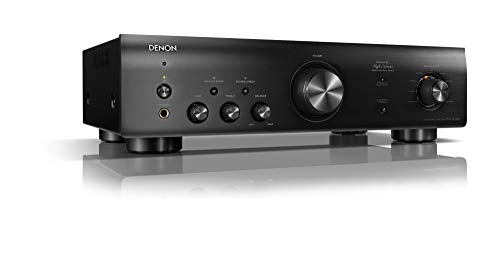
Best for: Buyers who want a clean analog pathway with optional Bluetooth and multiple digital inputs. The Denon PMA-600NE provides an integrated DAC and the ability to disable digital circuitry for an undivided analog experience, helpful for purist listening from CDs or turntables.
Why selected: The PMA‑600NE’s discrete analog signal path and easy source switching make it a good choice for hybrid setups. It supports two optical inputs, a coaxial input, and a phono input, expanding compatibility with modern players and vinyl enthusiasts alike.
Caution: At higher impedance loads, performance varies with speaker pairing. Bluetooth off mode is useful for purists but requires manual source management if used with multiple devices.
JBL CSA280Z Commercial Series Two-Channel Amplifier
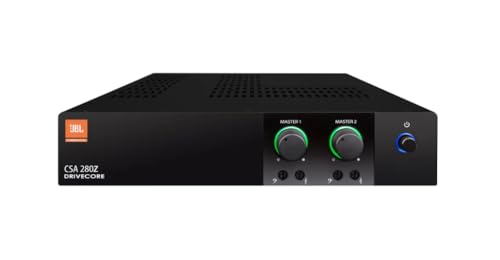
Best for: Settings requiring higher power in a compact footprint, such as small venues, studios, or speaker arrays with 80W per channel and built‑in 70V/100V integration.
Why selected: The CSA280Z’s space-saving 1U design makes it attractive for rack setups or tight installations. It’s a practical bridge between pro‑style reliability and home listening needs, with flexible output options.
Caution: This unit is designed with professional usage in mind; for casual home listening, the output headroom might exceed typical room needs, making efficient volume control important to avoid overpowering smaller speakers.
Fosi TB10D 2 Channel Stereo Amplifier

Best for: Those who want robust power in a compact package with tone controls and versatility for small rooms, desktops, or hobbyist setups.
Why selected: The TB10D uses a strong TPA3255 chip delivering up to 600W total, making it capable of driving bookshelf speakers from 2–8 ohms. Tone controls and a dedicated power switch provide practical customization for personalized sound.
Caution: Some users may prefer units with more refined chassis for high‑end audio systems; the compact form factor prioritizes space efficiency over premium build aesthetics.
Fosi BT20A Bluetooth Stereo Amplifier
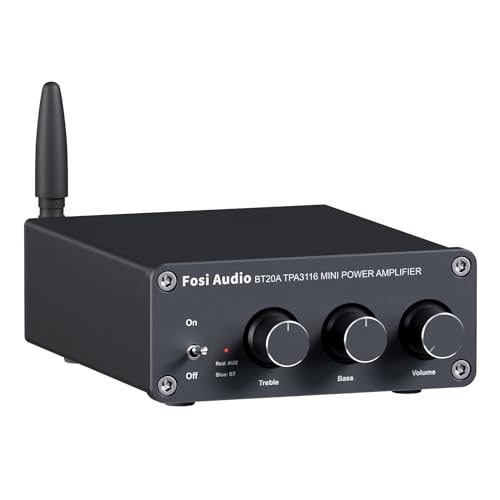
Best for: Small spaces that want wireless streaming with solid power for passive speakers. The BT20A provides 100W per channel maximum output with Bluetooth for easy source pairing.
Why selected: It’s an approachable entry point for wireless audio setups and simple playback. The one‑button power and straightforward bass/treble controls make it convenient for casual listening or a bedroom system.
Caution: Bluetooth may introduce latency or compression depending on the source; for critical listening, use a wired input when possible and avoid crowded wireless environments.
Buying Guide: Key Purchase Considerations
What power level and speaker impedance should you prioritize? Consider the typical speaker impedance (4–8 ohms) and the amplifier’s continuous power rating at your speaker load. Matching wattage to your speakers helps prevent distortion and ensures clean dynamics in your listening room.
Which inputs do you actually need? If you own vinyl records, a phono input is essential. If you rely on digital streaming, built‑in DACs and optical/coax inputs can simplify your setup. Bluetooth is convenient but may be undesirable for purists; some models offer a switch to disable digital circuitry for analog purity.
Do you want tube warmth or a purely solid‑state sound? Tube hybrids like the Dayton HTA200 deliver warmth and musical texture, while transistor designs (Yamaha, Denon, JBL, Fosi) emphasize precision and dynamics. Your room and preferred genres influence this choice.
Is space a factor? Compact 1U or small-form amps handle tight spaces but beware heat and ventilation. Heavier, feature-rich amps may require sturdy shelves or racks to support weight and airflow.
What about installation and compatibility? If you’re integrating a home theater or a multi‑source system, look for amps with multiple input options and flexible output configurations (including 70V/100V if you plan distributed audio). Pro models like JBL CSA280Z can work well in professional or DIY setups, while consumer‑oriented models prioritize ease of use and accessibility.
FAQ
- What is an integrated amplifier? An integrated amplifier combines a preamplifier and power amplifier in one unit, using line inputs to drive speakers directly.
- Do I need a DAC in an integrated amp? If you will be using digital sources (streaming, CDs, computers), a built‑in DAC is convenient. If you prefer a higher‑end external DAC, check compatibility.
- Is Bluetooth quality good enough for audiophiles? Bluetooth is convenient but may add compression. For best quality, use wired inputs whenever possible and reserve Bluetooth for casual listening.
- What is 70V/100V in JBL CSA280Z about? These are common in professional distributed audio and allow the amplifier to drive multiple speakers with long runs without excessive voltage drop.
- Can I use any bookshelf speakers with these amps? Most bookshelf speakers in the 2–8 ohm range pair well with these amps. Always check the speaker’s impedance and power handling to avoid clipping or overheating.
- How should I position an integrated amp for best sound? Place it on a stable surface with good airflow, away from heat, and ensure cables are neatly routed to minimize interference. Room acoustics will strongly influence perceived sound quality.