
Best 2-Channel Mixing Board for Small Setups
Answering the question: a 2-channel mixing board is ideal for compact studios, live streaming, podcasts, and small performances. The top picks below are best for solo creators, podcasters, or small bands needing reliable sound control without complexity. Each option prioritizes portability, simple routing, and solid mic preamps. The quick-reference table shows who each product is best for to help you compare at a glance.
| Product | Best For | Key Benefit |
|---|---|---|
| Kaschun 4-Channel DJ Audio Mixer | Mobility & mobile podcasts | USB audio interface, Bluetooth streaming, compact design |
| Mackie Mix5 5-Channel | Home studios & small venues | High headroom, low-noise, studio-grade mic preamp |
| TAVOSOP DJ Audio Mixer | Wireless streaming & USB recording | Integrated MP3 module, Bluetooth, versatile inputs |
| Cooidea 2 Channel Mini | Ultra-compact travel setup | 3.5mm interface, strong bass, metal housing |
| Astatic M2 2-Channel | Podcasting & small broadcasts | USB interface, +48V phantom power, XLR inputs |
Kaschun 4-Channel DJ Audio Mixer, Bluetooth Sound Board with USB MP3 Input

The Kaschun mixer combines USB audio interface, XLR, and 6.35mm jacks with a +48V phantom power supply. It supports USB recording and MP3 playback, plus Bluetooth input for wireless audio. Best for mobile podcasters or on-the-go musicians who need plug-and-play setup and compact transport.
Best for: mobile podcasters, travelers, and solo musicians who require easy USB recording and Bluetooth playback in a small package. Caution: Bluetooth input only, not output; plan wired guests or instruments if you need wireless mic routing.
Mackie Mix5 5-Channel Compact Mixer, Black

The Mackie Mix5 offers 5 channels with high-headroom and low-noise performance, including a mic/line input with studio-grade tone shaping, 2-band EQ, and phantom power for condenser mics. This is a reliable choice for small studios or home setups needing clean, professional-sounding mixes.
Best for: home studios and small venues seeking a straightforward, high-quality mic preamp and flexible input options. Caution: 6- and 8-channel options are available if you anticipate future expansion.
TAVOSOP DJ Audio Mixer, 4 Channel with Bluetooth
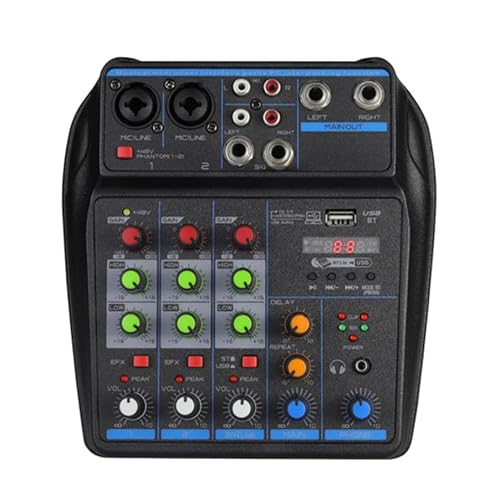
This mixer integrates an MP3 player module and Bluetooth streaming, allowing wireless music from smartphones. It supports USB/MP3 inputs and has versatile connection options for iPads, PCs, and flash drives. Best for: DJs or streamers who want easy wireless music integration and flexible device compatibility.
Limitation: Bluetooth supports input only, so plan to use wired connections for certain mics or instruments.
Cooidea 2 Channel Stereo Mini Audio Mixer

This compact 2-channel mixer uses a classic 97220 chip with a capacitor-free output for strong bass and clear mids. It supports standard 3.5mm inputs and outputs, making it ideal for portable setups with headphones or powered speakers. Best for: travelers and school projects needing ultra-compact gear with decent bass response.
Caution: The small form factor may limit output power; choose higher-output devices if you need room-filling sound in larger spaces.
Astatic M2 2-Channel Mixer with USB Interface

The Astatic M2 provides USB connectivity and +48V phantom power, making it suitable for small venues, broadcasting, podcasting, or home recording. It features two XLR combo inputs for mics or instruments and a USB output for direct computer recording. Best for: podcasters or small broadcast setups needing compact USB audio routing.
Limitation: As a 2-channel device, it may require additional gear for multi-mic productions or larger live sound needs.
Buying Guide
What to consider when choosing a 2-channel mixer
- Input types: Look for XLR or combo XLR/1/4″ inputs if you plan to use microphones and instruments. USB interfaces help recording directly to a computer.
- Phantom power: If you intend to use condenser mics, phantom power (+48V) is essential.
- Output options: Ensure your mixer provides suitable outputs for active speakers or headphones, and whether you need Bluetooth input or USB streaming.
- Built-in effects and EQ: Some models include DSP effects and 2-band EQ; decide if you need on-board processing or clean, uncolored gain.
- Portability: For on-the-go use, prioritize compact dimensions, lightweight builds, and integrated carrying options.
- Compatibility: Check whether the device supports USB audio class, driver-free operation, and compatibility with your operating system.
Frequently Asked Questions
- What is a 2-channel mixer best used for?
Two-channel mixers are ideal for small podcasts, solo performances, or simple streaming setups where you need basic mic and line inputs with straightforward control.
- Should I choose USB or Bluetooth inputs?
USB is best for computer recording and direct streaming; Bluetooth inputs offer wireless music playback but may have higher latency or limited mic support.
- Do I need phantom power for all mics?
Only condenser mics require phantom power. Dynamic mics do not need it, but many mixers include phantom power to support condensers.
- Is higher channel count better for small setups?
Not necessarily; a two- or four-channel mixer can be sufficient for most single-host or small-duet purposes, with less complexity and cost.
- Can these mixers be used for live streaming?
Yes, especially models with USB audio interfaces and easy routing for PC or Mac streaming software.
- What’s the main trade-off with compact mixers?
Trade-offs include fewer inputs, reduced headroom, and limited built-in processing compared to larger mixers.