
Choosing The Right 2 Channel Amplifier depends on power needs, connections, size, and whether you want Bluetooth or advanced chipsets. Below is a quick comparison of the five selected amplifiers from the provided list.
| Product | Brand | Key Feature |
|---|---|---|
| Fosi Audio BT20A Bluetooth Stereo Amplifier | Fosi Audio | Compact 100W×2 Bluetooth amp |
| Fosi Audio BT20A Pro Bluetooth 5.0 Amplifier | Fosi Audio | TPA3255 chip, Bluetooth 5.0, 300W×2 spec |
| Fosi Audio TB10D 2 Channel Stereo Amplifier | Fosi Audio | TPA3255, 300W per channel (600W total) |
| Facmogu F900S 160W Mini Bluetooth | Facmogu | TPA3116, 80W×2, Bluetooth/USB/AUX |
| Daakro AK45 Stereo Audio Amplifier | Daakro | Bluetooth, USB/SD/FM inputs, 300W peak |
Fosi Audio BT20A Bluetooth Stereo Amplifier
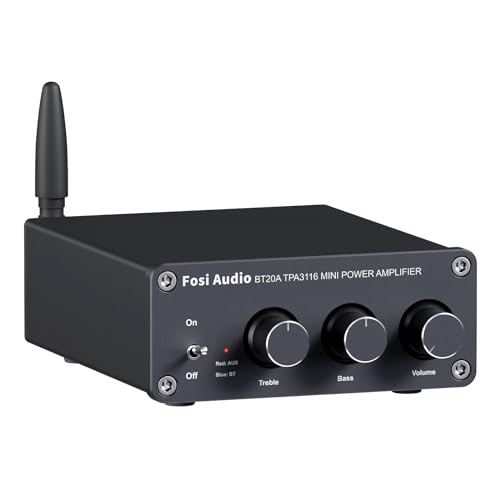
The Fosi Audio BT20A Is An Entry-Level Power Amplifier That Lists Up To 100W×2 Maximum Output. It Targets Small Rooms, Garages, Patios, And Bookshelf Speaker Setups. Setup Is Simple With A One-Touch Power Switch And Front-Facing Bass And Treble Controls.
- Use Case: Small home rooms, office, desktop systems.
- Connections: Bluetooth wireless input plus analog inputs for passive speakers.
- Tuning: Front panel bass and treble controls allow quick tonal adjustment.
Fosi Audio BT20A Pro Bluetooth 5.0 Amplifier
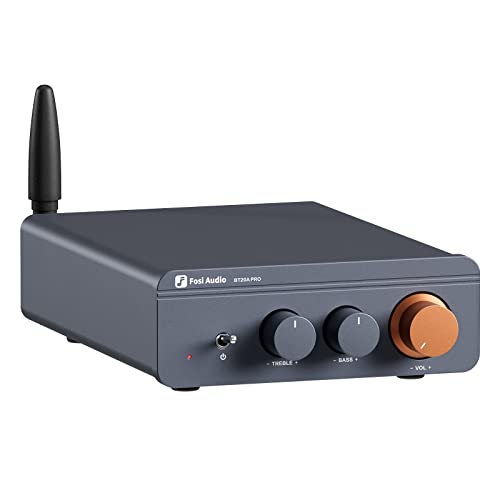
The BT20A Pro Uses A TI TPA3255 Chipset And Advertises High Efficiency With Low Idle Power. It Highlights Bluetooth 5.0, Replaceable Op-Amps For Sonic Customization, A High SNR (≥108dB), And Low THD (≤0.005%).
- Use Case: Users Seeking High-Efficiency Class D Performance And Op-Amp Tweaking.
- Flexibility: Swapable Op-Amps Let You Tailor Mid/High Characteristics.
- Performance Notes: The TPA3255 Design Focuses On Low Distortion And Thermal Efficiency.
Fosi Audio TB10D 2 Channel Stereo Amplifier

The TB10D Also Uses The TPA3255 Chip And Is Rated For 300W Per Channel (600W Total), Designed To Drive 2–8Ω Speakers. It Emphasizes Versatility For Home Audio, Bass Shakers, Or Integration With Turntables When A Phono Preamp Is Added.
- Use Case: Larger rooms Or Systems Needing More Headroom.
- Tuneability: Dedicated Bass And Treble Knobs For On-The-Fly Adjustment.
- Integration: Fits Into Existing Audio Ecosystems For Multiple Applications.
Facmogu F900S 160W Mini Bluetooth Amplifier
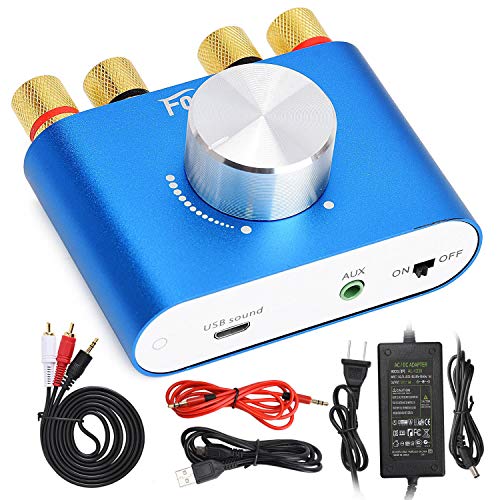
The Facmogu F900S Is A Compact TPA3116-Based Mini Amp Providing 80W×2 For 4–8Ω Loads. It Offers Bluetooth 5.0, USB, And 3.5mm AUX Inputs And Is Designed For Desktop Or Small-Room Use Where Footprint Matters.
- Use Case: Desktop Audio, Small Home Offices, Compact Bookshelf Systems.
- Connectivity: Multiple Inputs (Bluetooth/USB/AUX) For Versatility.
- Portability: Small Size Suits Tight Installations And Under-Monitor Placement.
Daakro AK45 Stereo Audio Amplifier

The Daakro AK45 Is Marketed As A Home Stereo Amplifier With Bluetooth 5.0, USB/SD Playback, FM Radio, Remote Control, And Peak Specs Around 300W. It States A Rated Output In The 40W×2 Range And Targets Karaoke, Home Theater, And Multi-Source Playback.
- Use Case: Users Wanting Multi-Source Playback (USB/SD/FM) In Addition To Bluetooth.
- Features: Remote Control And Multiple Inputs For Media Playback Convenience.
- Practical Notes: Bluetooth Range And Playback Formats May Affect Daily Use.
Buying Guide: How To Choose A 2 Channel Speaker Amplifier
Selecting The Best 2 Channel Amplifier Requires Evaluating Power, Impedance, Features, And Installation Context. Below Are Key Considerations To Compare Products Effectively.
1. Power Ratings And Real-World Needs
Look Beyond Peak Numbers. Check RMS Or Manufacturer-Stated Continuous Power Per Channel At A Given Impedance (e.g., 50W×2 @ 8Ω). Match Amp Power To Speaker Sensitivity And Room Size. Too Little Power Causes Distortion; Too Much Power Is Fine If You Control Volume.
2. Speaker Impedance Compatibility
Confirm The Amp Is Stable At Your Speakers’ Ohm Rating (4Ω, 6Ω, 8Ω). Some Class D Amplifiers Deliver Higher Power At 4Ω But May Run Hotter. Ensure The Amp’s Ratings Match Your Speaker specs To Prevent Overload.
3. Amplifier Topology And Chipset
Class D Amplifiers (TPA3255, TPA3116, Etc.) Offer High Efficiency And Compact Size. Higher-End Chips Tend To Offer Lower THD And Better Thermal Performance. Consider Replaceable Op-Amps If You Want To Fine-Tune Tonal Character.
4. Connectivity And Inputs
Decide Which Inputs You Need: Bluetooth (version matters for stability), RCA, AUX, USB, SD, Or High-Level Inputs For Car Installations. Bluetooth 5.0 Offers Improved Range And Stability Over Older Versions.
5. Controls And Usability
Front-Facing Bass/Treble Controls, Remote Control, And Power Switch Placement Affect Usability. If You Plan To Use The Amp In An AV Cabinet, Consider Remote Or App Control Features.
6. Size, Heat Dissipation, And Installation
Mini-Amps Save Space But May Have Limited Cooling. Larger Class D Units With Proper Heatsinking Are Better For Continuous High-Output Use. Ensure Ventilation If Mounting In Cabinets Or Small Enclosures.
7. Multi-Source Playback And Extra Features
If You Need USB/SD Playback, FM Radio, Or Built-In Media Controls, Choose An Amp With Those Inputs. For pure fidelity, a leaner signal path (RCA/Bluetooth) may be preferable.
8. Reliability, Warranty, And Support
Check Manufacturer Support, Warranty Terms, And User Feedback On Long-Term Reliability. Efficient Class D designs reduce heat-related failures when properly implemented.
9. Comparison Perspectives
- Performance-Focused: Prefer TPA3255-based amps for lower THD and higher headroom.
- Value-Focused: Look For Simple BT Class D Mini Amps With Essential Controls.
- Feature-Focused: Choose models With USB/SD/FM And Remote For Media Playback Convenience.
- Space-Focused: Select compact models (Facmogu, Small Fosi BT20A) For desktops or small cabinets.
Use The Table Above And The Buying Guide To Compare Power, Inputs, And Chipsets Against Your Speakers And Room Size. Objective Evaluation Of Specs And Features Helps Match The Right 2 Channel Amplifier To Your Setup.