
Best 24-Channel Monitor Mixers for Live and Studio Use
In today’s sound setups, a 24-channel monitor mixer offers ample input capacity, flexible routing, and robust vocal/instrument processing for venues, studios, and content creators. This guide highlights five top 24-channel options, detailing who they’re best for, their standout features, and potential limitations. Whether you’re a touring sound tech, home studio owner, or livestream producer, these mixers balance channel count with usability and sound quality.
Summary of chosen products
| Product | Best For | Key Benefit | Why It Stands Out |
|---|---|---|---|
| Mackie Onyx Series, 24-Channel Premium Analog Mixer | Pro studios & live venues | Multi-track USB recording with high-end preamps | Versatile USB I/O and premium Onyx preamps |
| Mackie 2404VLZ4 24-Channel 4-Bus | Broadcast & stage setups | Low-noise, high-headroom design | Excellent RF rejection for broadcast environments |
| StudioLive Series III SE 24 | Integrated studios & AV setups | 40-channel digital console with advanced networking | Seamless AVB/Dante connectivity |
| Allen & Heath QU-24C | Compact digital mixing | 24 analog inputs with modern touch controls | High-contrast UI and tactile control |
| Behringer XENYX X2442USB | Budget-friendly pro setups | Premium preamps and USB/FX | British EQs and solid workflow |
Mackie Onyx Series, 24-Channel Premium Analog Mixer

The Mackie Onyx Series 24-channel mixer centers on high-resolution 96kHz / 24-bit multi-track USB recording to Mac/PC, plus direct SD card stereo recording and playback. Its award-winning Onyx mic preamps provide up to 60dB of gain, paired with Perkins-style EQ featuring sweepable mids. A robust digital effects engine adds user-customizable reverbs and delays. Best for studios and live environments where high gain, pristine mic inputs, and flexible DAW integration matter. Note the analog-digital balance means traditional workflows remain straightforward even as you expand.
Who this is best for: professionals needing multi-track USB capture and high-gain preamps for diverse microphones; serious home studio owners who want studio-grade EQ and effects without complex routing. Caution: larger footprint and additional setup time may be more than casual users require.
Mackie ProFX22v3 22-Channel Mixer With USB

The ProFX22v3 offers 22 channels with 17 Onyx mic preamps and up to 60dB of gain, optimized for content creators who rely on high-gain, clean preamps. It supports 24-bit/192kHz recording quality and features a 2×4 USB I/O setup for creating two custom computer mixes. This is ideal for live sound, home recording, and live streaming where you need reliable vocal clarity and flexible playback routing. Limitation: 22 channels max, so if you truly need 24 channels, consider alternatives in this guide.
Who this is best for: content creators, podcasters, and live streamers who want strong preamps, simple USB workflows, and reliable 24-bit/192kHz capture. Choose this if you primarily need strong vocal performance with straightforward computer integration.
Mackie 2404VLZ4 24-Channel 4-Bus FX Mixer
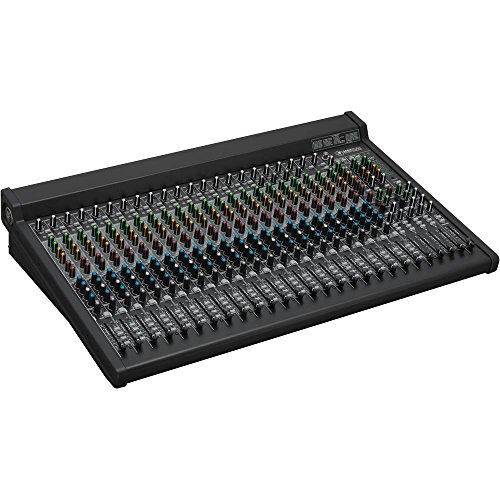
The 2404VLZ4 emphasizes high headroom and low noise with 20 Onyx mic preamps and improved RF rejection, making it a strong pick for broadcast or stages with challenging RF environments. It operates as a 24-channel, 4-bus mixer and remains a popular choice for its rugged build and familiar Mackie workflow. Caution: older digital features are limited compared to newer digital consoles, and it’s mainly analog-centric with straightforward routing.
Who this is best for: professionals requiring low noise and high headroom in live or broadcast settings, where RF interference could be an issue. Choose this if you value rugged reliability and traditional analog mixing with solid preamps.
Allen & Heath QU-24C 30 In/24 Out

The QU-24C combines 24 Analog inputs with a modern 5-inch touchscreen, high-contrast controls, and 800×480 color display for quick navigation. It offers 24 AnalogIQ preamps with precise gain staging and zero-crossing detection, making it suitable for compact digital workflows that still rely on analog reliability. Best for users who want a compact, feature-rich digital mixer with tactile control and clear visibility in low-light settings. Caution: advanced features may have a steeper learning curve for new users.
Who this is best for: engineers who want a compact, fully featured 24-channel mixer with a modern touchscreen interface and excellent visibility. Choose this if you value precise gain control and a clear, tactile workflow in tight spaces.
Behringer XENYX X2442USB

The X2442USB provides 24 input channels, premium XENYX preamps, and USB/FX integration, with British-style EQ on each channel. It’s a strong budget-friendly option that still delivers pro-sounding results and straightforward USB compatibility. Best for budget-conscious studios or live setups needing a reliable 24-channel option with effective EQ and built-in effects. Limitation: while feature-rich, it may lack some of the deeper digital networking options found on higher-end models.
Buying Guide
What should you consider when selecting a 24-channel monitor mixer?
- Channel count vs. future needs: Do you need exactly 24 channels now, or will you stage up later?
- Analog vs. digital: Do you value traditional analog signal paths or integrated digital effects, multitrack recording, and USB I/O?
- Preamps and gain: Are mic preamps clean at high gain, and do they support phantom power where needed?
- Routing and monitoring: How flexible is the aux, subgroup, and main mix routing for stage monitoring or in-ear monitors?
- Connectivity: USB/SD/AVB/Dante options matter if you integrate with DAWs, playback devices, or other gear.
- Build and reliability: Is the mixer robust enough for travel or fixed installations?
- Space and interface: Does the front panel provide clear labeling, easy access, and a readable display in your venue?
Frequently Asked Questions
- What is the main difference between analog and digital 24-channel mixers?
- Can these mixers record directly to a computer?
- Are built-in effects essential for a live setup?
- Do I need 24-bus routing on a 24-channel mixer?
- Which mixer is best for a small studio with occasional live gigs?
- Is RF rejection important for broadcast-friendly environments?
Each product in this guide offers distinct advantages for different buyers. The Onyx-based Mackie option provides high-gain preamps and USB multi-track recording for creative capture. The StudioLive SE line emphasizes integrated networking and digital workflow. Allen & Heath QU-24C focuses on tactile, modern control with a compact footprint. Behringer X2442USB delivers a budget-friendly, feature-rich package with classic EQ. The 2404VLZ4 balances rugged analog design with reliable preamps for broadcast-friendly environments. Choose based on your primary use: live sound, studio recording, streaming, or mixed needs where routing flexibility and interfaces drive the decision.