
Looking For 24 Inch Speaker Stands? This guide highlights reliable 24″ speaker stands suitable for home theater, studio, and desktop setups. Below is a quick summary table of selected stands to compare materials, load capacity, and notable features at a glance.
| Product | Material | Load Capacity / Notes |
|---|---|---|
| Pangea Audio LS300 | All Steel | Rigid triangular 3-column design; cone spikes; wide top plate |
| SoundArtist M5 | MDF (PVC Wood Finish) | Supports up to 150 lbs each; 50mm thick wood |
| TransDeco TD24B | Tempered Glass & Steel | Beveled glass top, adjustable spike feet, soft pad included |
| Dayton Audio SSMB24 | Steel Tubular | Three-tube design; hidden wiring channel; classic look |
| bimiti 24 Inch Wood Grain Stands | MDF With Wood Grain Finish | Sand-fillable hollow design, shock-absorbing mat, brass spikes |
Pangea Audio LS300 All Steel Floor Standing Speaker Stands

Construction: Super-rigid all-steel construction with three large diameter steel columns arranged in a triangular layout. The steel top plate (6″ x 6″) and heavy gauge base plate (10″ x 12″) create a stable platform.
Stability & Isolation: Four adjustable steel cone point spikes on the base provide leveling and decouple stands from floor surfaces. The rigid triangular support reduces resonant flex for improved speaker performance.
Compatibility: Top plate size and robust construction suit bookshelf-, monitor-, and rear-channel-style loudspeakers. The stand is designed to fit a wide range of speaker footprints and weights.
SoundArtist M5 Speaker Stands HiFi MDF Loudspeaker Racks

Material & Build: 50mm thick solid environmentally friendly MDF with a PVC wood finish and an engineered four-leg support design to mitigate speaker vibration.
Load Capacity: Designed to support heavy speakers with a stated capacity up to 150 lbs per stand. Self-assembly required; basic tools such as a hammer and screwdriver are needed.
Performance Intent: Aimed at HiFi listeners who want a solid platform to restore accurate sound reproduction by reducing cabinet movement and transient vibration.
TransDeco Speaker Stand 24″ TD24B

Design: Tempered glass top with beveled edges paired with heavy gauge steel columns finished in high gloss black for a modern aesthetic suitable for living rooms and studios.
Isolation Features: Adjustable spike feet allow leveling on uneven floors and improve speaker coupling to the floor while reducing distortion. A soft pad is included to protect speaker bottoms and help grip.
Use Cases: Good for speakers with flat bottoms that benefit from a hardened, inert top surface and optional decoupling via spikes or pad depending on room acoustics.
Dayton Audio SSMB24 24″ Speaker Stand Pair
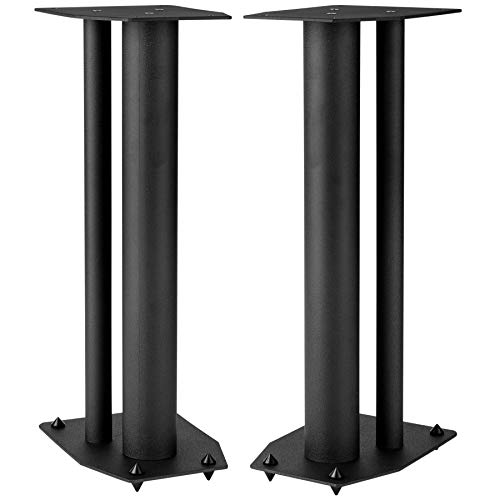
Structural Features: Three-tube design—two 1.5″ tubes and one 3″ tube—provides strength while keeping a relatively slim profile. Steel construction offers durability and low resonance.
Cable Management: Rear channel in the tube allows hiding speaker wire for a cleaner setup and reduced chance of cable-induced rattle.
Application: Suited for users who want a balance of stability and discreet appearance, ideal for both desktop and home theater bookshelf speaker setups.
bimiti 24 Inch Speaker Stands Wood Grain Universal Pair

Finish & Damping: Medium density fiberboard with a wood grain leather surface and furniture-grade paint aims to minimize resonance while offering an attractive finish.
Sand-Fill Hollow Design: Hollow chambers can be filled with sand to increase stability and damping. Shock-absorbing mat and included brass spikes prevent direct contact and reduce friction.
Practical Notes: Designed to elevate speakers to ear level and provide added mass and isolation when filled. Good option for those seeking a wood aesthetic with tunable stability.
Buying Guide: Choosing The Right 24″ Speaker Stands
Material And Resonance
- Steel Stands: Offer rigidity and low flex; typically best for minimizing resonant coloration and for heavier speakers.
- MDF/Wood Stands: Provide a warmer finish and can be sand-filled to tune damping; suitable for home decor integration.
- Glass Tops: Present a modern look with a hard, inert surface; pair with isolation pads or spikes depending on speaker base.
Load Capacity And Stability
- Match the stand’s rated load capacity to your speaker weight with margin for safety.
- Wide base plates, multi-column designs, and spike feet improve stability on carpet or uneven floors.
- Sand-fillable or weighted bases add mass and lower resonance for better bass control.
Top Plate Size And Mounting
- Confirm top plate dimensions suit your speaker footprint to avoid overhang and imbalance.
- Consider included pads, spikes, or screw-down options for secure mounting and improved coupling.
Isolation And Floor Interaction
- Spikes: Decouple the stand from flooring, useful on carpet and to reduce transmitted vibrations.
- Pads: Provide grip and reduce high-frequency ringing when spikes are not desired.
- Fill Options: Hollow stands that accept sand or other fill materials let you tune damping and center-of-mass.
Height And Listening Position
- 24″ stands generally position bookshelf speakers near typical seated ear height; verify against your seating and speaker tweeter location.
- If precise toe-in or toe-out is needed, ensure the stand allows slight adjustment or easy manual angling.
Cable Management And Aesthetics
- Integrated cable channels hide wiring for a tidy installation and reduce cable movement noise.
- Choose finishes and top materials that complement your room decor while meeting functional isolation needs.
Portability And Assembly
- Consider whether the stands need to be moved frequently; tubular or tripod styles are generally lighter and more portable.
- Self-assembly varies by model—check included hardware and required tools if ease of setup is important.
Comparison Perspectives
- Performance-Focused: All-steel multi-column designs (e.g., Pangea, Dayton) emphasize rigidity and minimal resonance.
- Value & Versatility: MDF stands with sand-fill options (e.g., SoundArtist, bimiti) blend aesthetics with tunable stability.
- Design & Décor: Glass-top stands (e.g., TransDeco) provide a modern look and inert surface for speakers with flat bases.
- Portability: Tripod and lightweight stands favor mobile setups but may trade off some damping and maximum load.