
Find stable, well-matched 28 inch speaker stands to place bookshelf speakers, satellite speakers, or studio monitors at ear height for better imaging and clarity. Below is a quick comparison of the selected speaker stands focused on 28-inch height, weight capacity, build, and cable management.
| Product | Height | Weight Capacity | Top Plate / Base |
|---|---|---|---|
| Monolith 28 Inch Speaker Stand (Monoprice) | 24″ (acoustically inert columns) | 100 lbs | Steel columns, spikes |
| Perlegear Universal Speaker Stands (PGSS6) | 27.5″ | 22 lbs | 7.79″ Top, 11.8″ Square Base |
| Rockville SS28D 28″ Home Speaker Stands | 28″ | 100 lbs | Dark wood grain finish |
| Rfiver 45° Swivel Speaker Stands Pair | 27″ | 22 lbs | Glass base, swivel top |
| YOMT Universal Speaker Stands Pair | 28″ | 22 lbs | Glass base, 7.8″ top plate |
Monolith 28 Inch Speaker Stand (Each) – Monoprice

Build And Isolation: Four steel support columns with a scratch-resistant black powder coat create a rigid, acoustically inert platform. Columns can be filled with sand or steel shot to increase damping and lower resonances.
Stability Features: Adjustable spikes are included to penetrate carpet and isolate the stand from floor vibrations. The satin finish resists scratches and is easy to clean.
Suitability: Rated for heavy loads up to 100 lbs, this option is appropriate for large bookshelf speakers or small floor monitors where maximal inertia and vibration control are priorities.
Perlegear Universal Speaker Stands For Surround Sound (PGSS6)
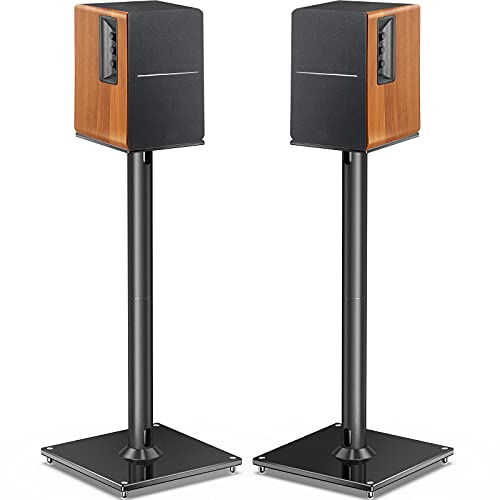
Compatibility And Top Plate: Features a 7.79″ x 7.79″ flat top plate and a 22 lb capacity. The top plate size accommodates a majority of bookshelf speakers regardless of brand or shape.
Stability And Vibration Control: An 11.8″ square wide base provides steadiness; four rubber pads on the top plate reduce shock and vibration while preventing speaker slippage.
Use Cases: Height of ~27.5″ is optimized for seated listening. Designed for home theater surrounds, studio use, and multimedia setups with included cable management provisions.
Rockville SS28D 28″ Home Speaker Stands

Capacity And Finish: Supports up to 100 lbs per stand and features a premium dark wood grain finish for aesthetic integration with home decor.
Height And Projection: 28″ height positions the speaker tweeter closer to ear level, improving sound projection for movies and music in living-room or hi-fi setups.
Design Notes: Emphasis on sturdy build and visual appeal; suitable for larger bookshelf or studio monitor speakers that require a stable platform at listening height.
Rfiver 45° Swivel Speaker Stands Pair

Swivel Top Plate: Glass top plate swivels up to 45° so you can aim speakers toward the listening position without moving the stand base.
Materials And Cable Management: Alloy steel pole and an 11.81″ one-piece molded glass base provide stability and a refined look. Built-in cable routing holes in the pole help keep wiring tidy.
Capacity And Placement: Each stand supports up to 22 lbs; the 27″ pole is effectively at ear level for seated listeners and useful for surround/satellite speaker placement.
YOMT Universal Speaker Stands Pair

Universal Fit And Height: 28″ tall stands designed to suit major brands including Klipsch, Bose, Sony, Polk, and more. The height aligns tweeters with typical seated ear height.
Feet Options And Stability: Includes both metal and rubber feet for different floor surfaces, protecting floors and optimizing stability. A 7.8″ square glass top plate with rubber pads reduces vibration and slippage.
Construction: Premium alloy steel pole with glass base and cable management make these stands a practical choice for living rooms, bedrooms, and studio spaces where tidiness matters.
Buying Guide: How To Choose The Right 28 Inch Speaker Stand
Height And Listening Position: Choose stands that position the speaker tweeter at or near seated ear height for accurate imaging. 27–28 inches is ideal for most sofas and chairs.
Weight Capacity And Speaker Size: Match the stand capacity to your speaker weight. Heavy monitors or large bookshelf speakers benefit from higher capacity stands (50–100 lbs); smaller satellites work with 20–30 lb stands.
Top Plate Size And Footprint: Ensure the top plate dimensions fit the speaker footprint. Wider top plates or spike adapters improve mechanical coupling for speakers with small bases.
Stability And Base Design: Wide bases or multi-column designs increase stability. Consider stands with options for adding sand/shot or using spikes to dampen vibration and resist tipping.
Vibration Damping And Fill Options: Stands that allow filling columns with sand or shot, or that have rubber isolation pads, reduce cabinet resonance and improve fidelity by lowering unwanted vibration.
Cable Management: Integrated cable channels or hollow columns keep wiring hidden and reduce trip hazards. This is especially useful for living-room setups and visible installations.
Materials And Finish: Steel columns and MDF or glass bases are common; pick finishes that match room decor. Glass bases provide a modern look while MDF or wood-grain bases blend with furniture.
Adjustability And Aiming: Some stands offer tilt or swivel top plates for precise speaker aiming — beneficial for surround channels or asymmetric room layouts.
Floor Type And Feet Options: If you have hardwood or tile, rubber feet protect floors; spikes can be used on carpet for better isolation. Some stands include interchangeable feet for flexibility.
Application And Use Case: Identify primary use: stereo listening, home theater surrounds, studio monitoring, or multimedia. Heavier-duty and acoustically inert stands are preferred for critical listening; lighter, aesthetic stands work for casual use.
Comparison Perspectives: Compare stands by capacity vs. weight, top-plate size vs. speaker base, stability features (spikes, wide base) vs. floor protection (rubber feet), and acoustic control (fillable columns, isolation pads) vs. aesthetics (wood grain, glass base).