Best 3/4 Left Handed Guitars for Young Players and Beginners
Finding a 3/4 left-handed guitar that fits small hands and budget can be challenging. This guide highlights five solid options tailored for left-handed beginners, kids, and travelers. Each pick is rated for ease of play, build quality, and value, with clear guidance on who benefits most. Use the buying guide to compare features like scale length, material, and included accessories to choose the best fit for your needs.
| Product | Type | Best For |
|---|---|---|
| Pyle Left Handed Beginner Acoustic Guitar Kit, 3/4 Junior Size | Acoustic, 3/4 scale | Young beginners and adults seeking a full kit |
| Pyle Left Handed Classical Acoustic Guitar Kit, 3/4 | Classical, 3/4 scale | Kids who prefer nylon strings or classical tone |
| WINZZ HAND RUBBED Series Left Handed 3/4 Acoustic | Acoustic, 3/4 scale | Budget-conscious learners needing a complete bundle |
| Family Series 3/4 Size Left-Handed Nylon Classical Guitar | Nylon, 3/4 scale | Kids focusing on classical technique and nylon string feel |
| Traveler Guitar Ultra-Light Left-Handed | Travel, 3/4 scale, headless | Travel-ready players needing portability and full scale |
Pyle Left Handed Beginner Acoustic Kit

This 3/4 scale acoustic is designed for left-handed players ages 7–11 or adults seeking easier fingering. It includes a full accessory bundle with picks, adjustable strap, cleaning cloth, and a zip case with backpack-style straps. Best for beginners who want a complete starter kit and easy handling due to the smaller neck and body size.
Best for: Young students and learners who benefit from a full starter kit without needing additional gear. Caution: The smaller neck and body may feel cramped for taller adults with longer reach.
Pyle Left Handed Classical 3/4 Kit

This left-handed 3/4 scale classical guitar targets beginners who prefer nylon strings or a classical tone. The kit features a glossy finish and an all-wood construction with a comprehensive accessory set, including a carrying case and shoulder strap. Best for: Kids and beginners who want a nylon-string, classroom-friendly option. Caution: Nylon-string tension is different from steel; beginners may need time adjusting finger pressure.
WINZZ Hand Rubbed Series 3/4 Acoustic
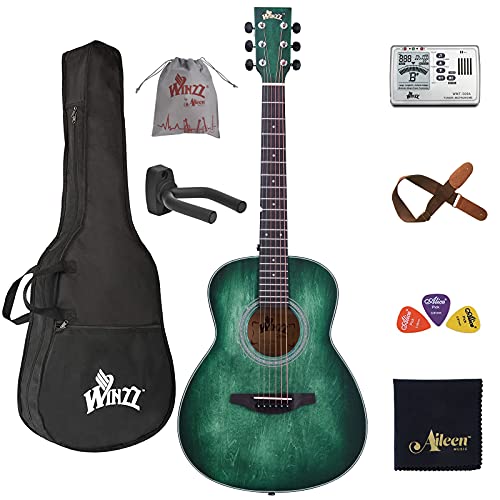
This budget-friendly 3/4 dreadnought offers balanced sound and a high-density fingerboard for smoother playing. The bundle includes metronome, tuner, wall hanger, strap, picks, and cleaning cloth. Best for: Beginners who want a complete travel-friendly package at an affordable price. Caution: Basic hardware and finish may show wear with heavy use over time.
Ortega Family Series 3/4 Left-Handed Nylon

This nylon-string 3/4 left-handed guitar is suited for young players aged 8–11 and beginners seeking a classical sound. It features cedar top, mahogany back and sides, and a satin finish with a walnut fretboard. Best for: Students leaning toward classical technique and nylon-string comfort. Caution: Nylon-string guitars can have higher finger pressure requirements for beginners compared to steel strings.
Traveler Guitar Ultra-Light LH

This travel-oriented left-handed guitar is built for portability. It features a headstock-free tuning system and a removable lap rest, maintaining a full 24 3/4″ scale and 22 frets. Best for: Frequent travelers or commuters needing a compact, road-ready instrument. Caution: The compact design may feel different to players accustomed to a full-size guitar neck and body.
Buying Guide: Key Considerations For 3/4 Left Handed Guitars
- Guitar Type: Decide between steel-string (bright, versatile tones) and nylon-string (softer feel, classical tones). Nylon-string guitars are often gentler on beginner fingertips but require different technique.
- Scale And Size: A 3/4 scale (about 36 inches total length) suits kids 7–11 or adults with smaller hands. Ensure the neck width and string spacing feel comfortable for your hand size.
- Left-Handed Layout: Confirm the instrument is truly left-handed or convertible. Some kits assume a standard right-handed setup and may require restringing or reconfiguration.
- Included Accessories: Starter kits with straps, picks, tuners, and cases reduce upfront costs. Check bag quality and strap length to ensure comfortable transport.
- Portability: For travel or practice on the go, consider light-weight builds with protective cases or travel-focused designs like headstockless tuners or detachable rests.
- Build Quality: Look for solid wood or laminated top, durable back and sides, and reliable machine heads. Untested hardware can impact tuning stability and longevity.
- Playability: Check neck profile and fingerboard radius. A slim neck typically suits beginners and players with smaller hands for easier fretting.
- Intended Use: If the goal is early classical training, nylon-string guitars can be advantageous. For rock or pop styles, a steel-string 3/4 guitar may be preferable.
Frequently Asked Questions
- What does 3/4 scale mean for a left-handed guitar?
– It refers to a shorter neck and overall body size, making it easier for smaller hands to reach frets and chords. - Are nylon-string 3/4 guitars better for beginners than steel-string?
– Nylon strings are typically gentler on fingertips and easier to press, which can help beginners, especially kids. However, steel-string guitars offer more versatile tone for future playing styles. - Should I buy a complete kit or a bare guitar?
– Complete kits are convenient for beginners who want everything in one purchase. Bare guitars may be cheaper upfront but require additional accessories later. - Is a left-handed 3/4 guitar suitable for adults?
– Yes, many adults with smaller hands find 3/4 guitars more comfortable, though lengthier reach might still feel restrictive for some players. - What is the best option for travel?
– Travel-focused models like headless or ultra-light designs are most portable, but ensure they still meet your playing needs and comfort preferences. - How important is a case or bag?
– A padded case protects the instrument during transport and storage, extending life and reducing damage risk.